


Kyoto Day Tour|Walking in Kyoto|Kifune Shrine Arashiyama Sanzen-in Temple|Small Group Tour (Departing from Osaka/Kyoto)
- You can book a hotel/B&B in the five districts of Osaka Loop Line. Pickup service is available in Naniwa, Chuo, Nishi, Tennoji, and Umeda areas.
- Arashiyama, Sanzen-in Temple, Kifune Shrine, Strolling in Kyoto, Unlocking the Secret Place of Beautiful Red Leaves in Autumn
- 4-9 people exquisite small group to provide you with quality service
Package Options


Sightseeing Tours
| Tour Type | Shared tour |
| Transportation method | Transfer from meeting point, Hotel transfer |
| Luggage limit | 1 piece |
| Minimum participant requirement | 4 travelers |
| Meal arrangement | Arrange yourself |
| Sightseeing type | Natural sights, Temples & shrines, Bus tour |
| Transport | Bus tour |
Product Info
The content of this product is provided by machine translation and may not reflect the actual information, please take this into consideration before booking.
- Vehicle service time: within 10 hours (Japanese law)
- Driver-guide service (small group of 4-9 people, actual number will be adjusted according to the number of people on the day)
- Reference vehicle type: 5-7 seater car: Toyota Alphard; 10 seater car: Toyota HAICE or equivalent. The above vehicles are for reference only and will be adjusted according to the number of people in the group on the day.
- It is not recommended to bring luggage for a one-day tour. If you need to bring luggage, each person can bring one piece for free, regardless of size. Please make a note when registering. If you do not make a note when registering or if you bring more than one piece of luggage per person, an additional 2,000 yen will be charged for each piece of luggage. If you do not specify the number of luggage in advance, resulting in insufficient space in the car and overcrowding, the driver has the right to refuse boarding and the fee will not be refunded.
- Guests who have booked hotel pick-up and drop-off services are required to confirm with customer service twice when placing an order. If they choose to disband at the meeting point on the return trip, it will be deemed that they have automatically waived the pick-up service.
- Due to the unpredictability of traffic conditions, weather, festivals or crowds on the day, the arrival time of each itinerary may change. According to Japanese law, the maximum working time of the driver is 10 hours. In order to ensure the safety of the driver and the stability of driving, the itinerary may be adjusted according to the actual situation, including reducing the time for visiting attractions, adjusting the order of attractions or canceling certain attractions. We sincerely hope that all passengers can understand and support the adjustments we make under the premise of ensuring safety. In the case of the above or other force majeure factors, we deeply regret the inconvenience that may be caused to you. Please understand our position that we will not be able to provide a refund service for this reason. This decision is made out of responsibility for the safety of drivers and passengers and to ensure the smooth operation of the entire team. We are always committed to providing you with the best travel experience, but in some cases, we need to flexibly adjust the itinerary plan according to actual conditions. Thank you for your understanding and support.
Sanzen-in Temple: Located in Ohara, Rakuhoku, Kyoto, it is one of the five temples of the Tendai school, known for its tranquil natural scenery and long history. The temple grounds are covered in ancient trees and moss, with babbling brooks, offering picturesque views in all four seasons: cherry blossoms in spring, hydrangeas in summer, and autumn foliage. The two pond-style gardens—Yusei-en and Juhei-en—offer the best views. The main statue of Amida Buddha and the statues on either side are important national cultural properties, possessing immense artistic value. (Reference admission fees: Adults 700 yen, junior high/high school students 400 yen, elementary school students 150 yen) Nearby dining recommendations: Kyobi Chaya (soba noodles and tofu dishes), Ichifuku Chaya (udon noodles), Rokawa Chaya (yuba dishes), and Shino Matsumon (Kyoto cuisine and tofu dishes), offering authentic Kyoto flavors.


Kifune Shrine: Located in the mountains north of Kyoto, this ancient and tranquil shrine is the birthplace of ema (votive plaques). The shrine is divided into three parts: the main shrine, the affiliated shrine, and the inner shrine. The long red stone staircase leading to the main shrine, illuminated by lanterns, is a famous photo spot. The affiliated shrine, dedicated to the goddess of love and marriage, Iwanagahime-no-Mikoto, is a renowned love shrine in Kyoto, attracting countless visitors to pray for a good match. The inner shrine is the shrine's place of origin. The best time to visit is August and autumn. Summer is cool and pleasant, while autumn brings vibrant autumn foliage, making it one of Kyoto's most famous spots for viewing autumn leaves—a truly picturesque scene.


Arashiyama, located in western Kyoto, blends rich historical sites with beautiful natural scenery throughout the four seasons, making it a popular spot for cherry blossom and autumn foliage viewing. Tenryu-ji Temple is a World Heritage Site, and the Bamboo Grove Path, stretching from Nonomiya Shrine to Ōkochi Sanso, is a renowned tranquil trail. Bustling with tourists in spring and autumn, it offers a peaceful and pleasant retreat in winter and summer, perfect for travelers who appreciate tranquility. Arashiyama also boasts many traditional restaurants, traditional wagashi (Japanese sweets) shops, and general stores, allowing visitors to experience a relaxed, retro lifestyle.

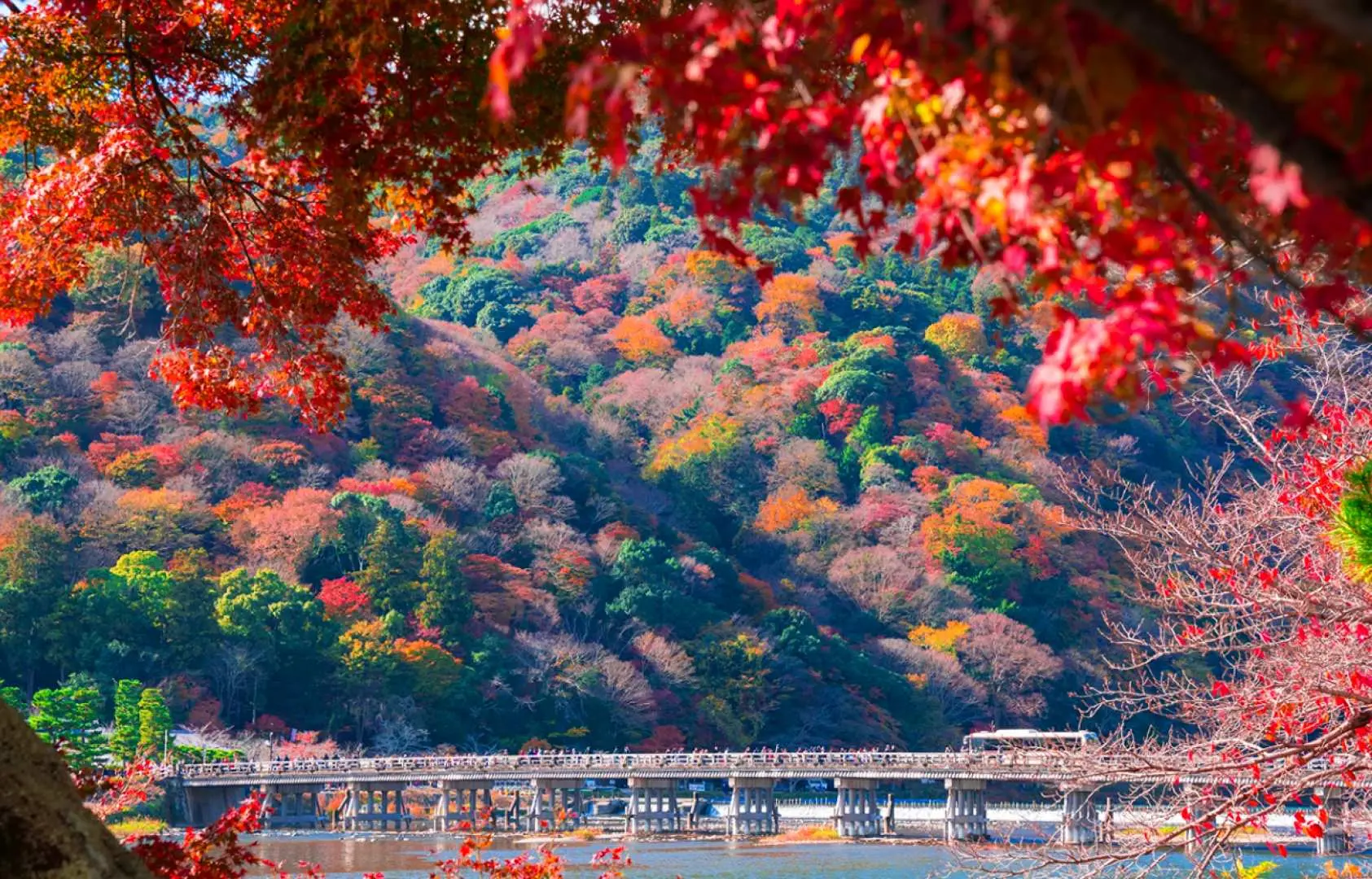
Togetsukyo Bridge: Built in the Heian period of the 9th century, it was repeatedly destroyed by floods and rebuilt. Its name originates from Emperor Kameyama of the Kamakura period, who remarked that the moon seemed to move across the bridge while admiring it. As Arashiyama's most representative scenic spot, Togetsukyo Bridge has appeared in ukiyo-e prints by Utagawa Hiroshige and Katsushika Hokusai, and is mentioned in the song "Togetsukyo no Otoko" sung by Mai Kuraki in *Detective Conan: The Crimson Love Letter*. The current Togetsukyo Bridge was built in 1934, with a concrete structure supporting vehicular traffic and wooden railings, blending seamlessly with the surrounding natural landscape. Through the changing seasons—cherry blossoms in spring, lush greenery in summer, autumn leaves in fall, and snow in winter—it attracts countless tourists who raise their cameras to capture this beautiful scene.


Kyo-Yuzen Korin, also known as the Kimono Forest, is an art space located in a corner of Hannari Hokkori Square near Arashiyama Station. It features 600 brightly colored columns decorated with Kyo-Yuzen patterns, transforming the entire Arashiyama Station into an art gallery. Designed by renowned interior designer Yasumichi Morita, the columns are encased in Yuzen patterns made by the Taisho-era Kameda Tomizo workshop. Each column displays 32 unique patterns, allowing visitors to stroll, take photos, and find their favorite designs. In addition, Korin also houses restaurants, souvenir shops, and a foot bath (only 250 yen), making it a great place to relax.


Arashiyama Bamboo Grove Path: Located in Arashiyama, this approximately 500-meter-long path connects Nonomiya Shrine and Okochi Sanso. Walking along the path, you can hear the beautiful melody of the wind rustling through the bamboo leaves—a sound recognized as one of Japan's 100 most precious and enduring sounds. This is also a filming location for Ang Lee's film *Crouching Tiger, Hidden Dragon*, and the nearby Tenryu-ji Temple boasts a stunning Japanese garden. In spring and summer, the bamboo grove is cool and tranquil; the Arashiyama Lantern Festival in December each year illuminates the bamboo grove and Togetsukyo Bridge, creating a dazzling spectacle.


Purchase Notice
【Travel conditions】
Travel origin and destination: Osaka and Kyoto
Travel days: Round trip
Transportation: Bus
Bus company name: Iloha Tourist Transportation Co., Ltd.
Meals: Breakfast 0 times Lunch 0 times Dinner 0 times
Accommodation facilities: None
Minimum number of people in a group: 4
Team leader: 0
【Travel planning/implementation】
Operating company name: Shuzenji Takitei Co., Ltd.
Address: Shuzenji 722, Shizuoka Prefecture I▖ City
License exemption number: Shizuoka Prefecture Governor Registration Tourism No. 2-723
Travel industry association name: National Travel Industry Association (ANTA)
Reminders
A minimum of 4 traveler(s) are required for the tour to depart. If the number of participants does not reach the minimum requirement, the tour will be canceled. An email regarding tour cancellation will be sent 4 day(s) before the departure date
In the event of inclement weather such as typhoons or snowstorms, a decision on whether to cancel the tour will be made 1 day(s) before departure (local time 18:00). Notifications will then be sent via email
Travelers with the following conditions or other health issues that could be worsened by excessive stimulation should not participate in this activity: High blood pressure, Heart disease, Acrophobia, Asthma, Epilepsy, Pregnant women
Please arrive at the designated location 10 minute(s) before the scheduled departure time, as the tour will depart on time
This is a shared ride with fixed itinerary. Customers participating in this tour are requested to adhere to the time allotted at each attraction and follow the instructions of the driver/guide.
If you leave the group midway through the trip, the transaction will be considered invalid, and no refund will be given. Furthermore, you will be solely responsible for any personal injury or property damage resulting from this.
No refunds will be given for any absences or cancellations due to personal issues, lateness, or other reasons. Please take note.
Arrival times for each itinerary may vary depending on traffic conditions, weather, holidays, and crowds. We apologize for any delays or cancellations caused by the aforementioned factors or other unforeseen circumstances, and no refunds will be provided on such grounds.
When there are fewer passengers, a small vehicle with a driver/guide providing simple explanations will be used. Please be aware that this is a shared ride service, meaning you will be traveling with other guests. Stopping is not allowed outside of tourist attractions.
The transportation and tourist attractions in this itinerary will be kept as faithful as possible to the original plan. However, in the event of special circumstances such as traffic congestion, inclement weather, large tourist crowds, or other force majeure events, the company reserves the right to make changes to the itinerary to ensure the safety of travelers and the smoothness of the trip.
According to Japanese law, the maximum working hours for drivers are 10 hours. To ensure driver safety and the stability of the itinerary, adjustments may be made based on actual circumstances, including reducing sightseeing time at attractions or canceling certain attractions. We apologize for any inconvenience. Refunds cannot be issued without prior notice. We sincerely hope for your understanding and support.
Osaka Station and Kyoto Station depart from different trains, so the boarding and alighting points must be the same and cannot be changed. Thank you for your understanding and support.
We apologize that the bus may arrive earlier or later than scheduled due to weather conditions, road conditions, vehicle breakdowns, traffic accidents or other reasons.
FAQ
Kifune Shrine is highly regarded for its unique atmosphere and spiritual significance. It is dedicated to the god of water and rain, offering a serene escape. Visitors can experience the famous mizu-ura mikuji (water fortune-telling), walk up the iconic stone steps lined with red lanterns, and enjoy the tranquil natural surroundings, especially beautiful during autumn foliage or snowy winters.
At Kifune Shrine, visitors can participate in a distinctive water fortune-telling ritual, where paper fortunes reveal messages when placed on sacred water. The shrine's picturesque stone staircase, illuminated by vermilion lanterns, provides a beautiful photo opportunity. In summer, you can enjoy kawadoko dining, where restaurants serve meals on platforms directly over the river, offering a cool and unique culinary experience.
The ideal time to visit Kifune Shrine for scenic beauty varies by season. Autumn (late October to November) is particularly popular for viewing vibrant red maple leaves. Summer offers the unique kawadoko dining experience on platforms over the river. Winter, especially after a snowfall, transforms the shrine into a magical, quiet landscape, though public transport access might be limited.
Traveling to Kifune Shrine from central Kyoto typically involves taking the Eizan Electric Railway to Kibuneguchi Station, followed by a short bus ride or a 20-minute uphill walk. From Osaka, you would first reach Kyoto Station and then transfer. For a more convenient experience, consider a small group tour that includes hotel pickup from downtown Osaka or Kyoto, providing hassle-free transportation directly to the shrine and other attractions.
Arashiyama offers several iconic sights. The Arashiyama Bamboo Grove is a famous path through towering bamboo stalks. Tenryu-ji Temple, a UNESCO World Heritage site, features beautiful Zen gardens. The Togetsukyo Bridge provides scenic views of the Hozugawa River and surrounding mountains. Visitors can also explore charming shops and local eateries in the area.
Sanzen-in Temple, nestled in the quiet Oohara mountains, is renowned for its beautiful moss gardens and traditional Japanese architecture. As one of the major temples of the Tendai sect, it holds deep historical and cultural significance, offering a tranquil atmosphere for reflection. Key features include the Shuhekien and Yuseien gardens, and various halls housing precious Buddhist statues.
A small group tour simplifies transportation by providing professional drivers and comfortable vehicles. These tours typically offer hotel pickup services in designated areas of Osaka or Kyoto, eliminating the need to navigate complex public transport or plan routes. This allows visitors to enjoy the scenic journey and move efficiently between attractions such as Kifune Shrine, Arashiyama, and Sanzen-in Temple, focusing on the experience rather than logistics.
A walking tour focused on Kyoto's temples and shrines provides an immersive cultural experience, allowing you to explore sites like Kifune Shrine, Arashiyama, and Sanzen-in Temple. With a professional driver and small group setting, you gain insights into local customs and history without the stress of self-navigation. This approach emphasizes leisurely exploration, appreciating the beauty of each location, and unlocking secret spots, especially vibrant during autumn foliage.
Get Help


