


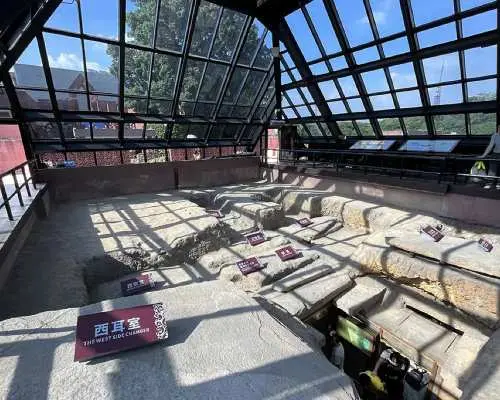


【China】Guangzhou Nanyue King Museum (King's Tomb Exhibition Area) Half Day Tour|Including 2 hours of interesting manual explanation + wireless headset
The Tomb of the King of Nanyue is a rare tomb that has never been robbed, and many cultural relics have been unearthed. The entire museum is mainly divided into two parts. One part is the original site of the tomb, where you can enter the underground palace for a visit. The other part is the exhibition hall, where the silk jade clothes, seals of the Western Han Dynasty, jade wares and ceramic pillows are all worth seeing.
Product Info
The content of this product is provided by machine translation and may not reflect the actual information, please take this into consideration before booking.
- Itinerary Introduction -
09:50 Exit E of Yuexiu Park Station on Metro Line 2 (go to the meeting point by yourself, the meeting sign is the yellow "Wan Ke Travel" guide flag) **The actual meeting time for any session is subject to the tour guide's notice**
10:00 Museum overview: The mural at the entrance is actually an introduction to funerary objects! Is it the Museum of the Mausoleum of the Nanyue King or the Museum of the Nanyue King? Why is this museum red?
10:15 Introduction to the tomb: including: the discovery, excavation, and structure of the tomb of the King of Nanyue.
10:40 Introduction to the exhibition hall: including: Qin-Han-Vietnam relations, 5 generations of Nanyue kings, introduction to imperial seals, silk jade clothing, burial jade culture, Nanyue weapons, daily life and production tools, palace cuisine, palace banquets, etc.!
12:00 The explanation ends and the group disbands on their own, ending the trip happily!
The above itinerary is for a group tour with about 25 people. It may be adjusted accordingly due to weather, road conditions, etc. Please understand.
- Attractions -
The Museum of the Nanyue King of the Western Han Dynasty is the work of Lingnan architectural master Mo Bozhi. It was built on the site of the Nanyue King's Tomb and is made of red bricks. It is simple, solemn and very imposing.
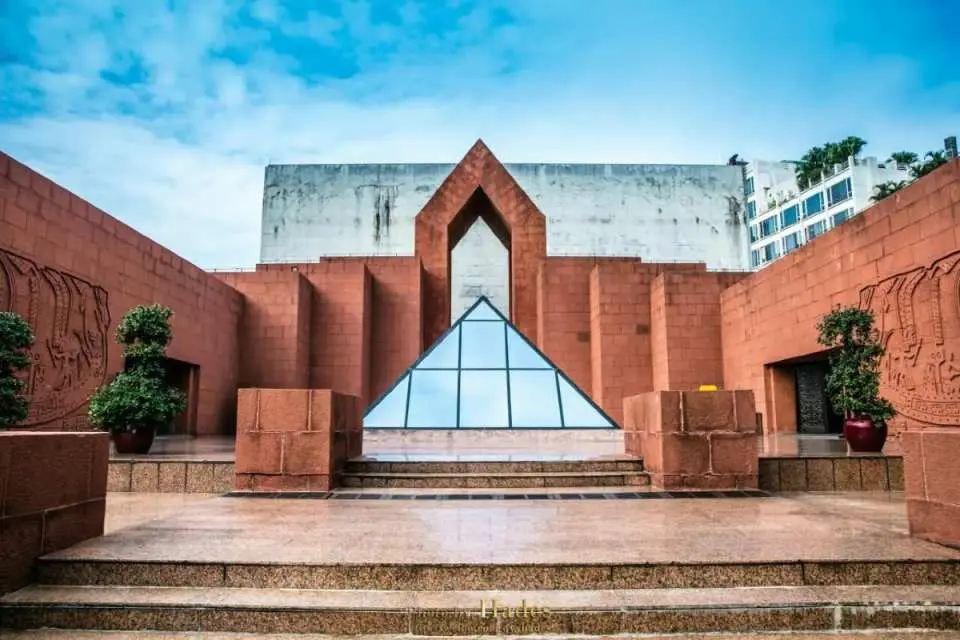

The tomb contains rich and varied burial objects, including more than 1,000 relics of gold, silver, bronze, iron, pottery, jade, glass, lacquerwood, and bamboo wares. Among them, the most valuable are the "Emperor Wen's Seal" gold seal and the "Silk Thread Jade Clothes".


The discovery of the Tomb of the King of Nanyue provides valuable physical materials for studying the development of the Lingnan region and the history of the Nanyue Kingdom during the Qin and Han dynasties.


Important Info
Reminders
You need to use your real name to purchase tickets for the Mausoleum of the Nanyue King. Please fill in the traveler's ID number accurately and carry a valid ID when traveling. If you are unable to visit due to incorrect ID information or failure to bring valid ID, the customer will be responsible for the resulting expenses and no refund will be allowed.
Please arrive at the meeting point 10 minutes before your selected session: Yuexiu Park Station, Metro Line 2, Exit E (go to the meeting point by yourself, the meeting sign is the yellow "Wan Ke Travel" guide flag)
Cancellation Policy
- Once the order has been completed, it cannot be canceled, modified, or refunded
- Due to time zone differences, the confirmed cancellation date is based on the supplier’s local time. Please allow 2–5 business days to process your cancellation request, after which the cancellation fee will be charged according to the product’s cancellation policy. Once the cancellation is confirmed, you will receive your refund within 14 working days.
FAQ
During its peak, the Nanyue Kingdom, as depicted by the Museum of the Mausoleum of the Nanyue King, broadly covered most of present-day Guangdong and Guangxi in China, along with parts of Fujian, Hunan, Guizhou, and Yunnan, even extending to northern Vietnam. Its capital, Panyu, is modern-day Guangzhou. These geographical boundaries indicate the Nanyue Kingdom's extensive influence in the Lingnan region, making it an important political and cultural center at the time.
The Museum of the Mausoleum of the Nanyue King primarily displays the early Western Han Dynasty period, specifically the history of the Nanyue Kingdom from its establishment to its demise by the Han Dynasty. With the tomb and unearthed relics of King Wen of Nanyue, Zhao Mo, as the core, it deeply elaborates on the approximately 93-year history of the Nanyue Kingdom, including its political, economic, and cultural developments, offering visitors a comprehensive understanding of the Lingnan civilization during that era and a glimpse into the style of the ancient Nanyue Kingdom.
The central figure in the tomb exhibition area of the Museum of the Mausoleum of the Nanyue King, King Wen of Nanyue Zhao Mo, was the second ruler of the Nanyue Kingdom. His tomb is one of the largest and most richly furnished painted stone-chamber tombs of the Han Dynasty discovered in the Lingnan region. During Zhao Mo's reign, he was dedicated to maintaining the independence of the Nanyue Kingdom while fostering friendly relations with the Han Dynasty. The discovery of his tomb provides invaluable material evidence for researching the history, culture, and relationship between the Nanyue Kingdom and the Han Dynasty, serving as a crucial basis for understanding Nanyue history.
Many unearthed artifacts in the museum reflect the cultural exchange and geographical characteristics of the Nanyue Kingdom. For example, the 'gold-woven jade suit' demonstrates the influence of Han Dynasty rites on Nanyue; the foreign figures on the 'bronze screen components,' along with the widely excavated 'lacquerware and pottery,' show the multi-cultural exchange between Nanyue and Southeast Asia and the Central Plains. Furthermore, a large number of bronze wares with local characteristics embody the unique style of Lingnan culture and the influence of the geographical environment, possessing significant viewing value.
The Museum of the Mausoleum of the Nanyue King was chosen to be located on Xianggang Mountain in Guangzhou because this is the original site of the tomb of King Wen of Nanyue, Zhao Mo. Building the museum above the tomb maximizes the protection of the cultural relics and allows visitors to enter the original tomb chamber and underground palace to experience the authentic historical atmosphere. This site selection itself is the best representation of the historical and geographical background of the Nanyue Kingdom, directly connecting the core heritage of the Nanyue Kingdom with modern display, holding extraordinary historical significance.
Yes, the Museum of the Mausoleum of the Nanyue King vividly narrates the rise and fall of the Nanyue Kingdom through its rich exhibition content. It explains that after the death of the second ruler, Zhao Mo, internal power struggles intensified, leading to its conquest by Emperor Wu of Han's troops in 111 BCE, and its formal incorporation into the Han Dynasty's territory. The exhibits and textual materials elaborate on this key historical turning point, allowing visitors to understand the end of the Nanyue Kingdom and its impact on Chinese history, providing a comprehensive historical perspective.
Multiple sections within the museum elucidate the relationship between the Nanyue Kingdom and the Han Dynasty. Geographically, the Nanyue Kingdom was situated in the Lingnan region, with a certain geographical separation from the Central Plains Han Dynasty, allowing it to establish an independent state. The political relationship is reflected in the exhibited 'Western Han seals' and numerous Han-style burial objects, indicating the cultural influence of the Han Dynasty on Nanyue, while also highlighting its efforts to maintain a semi-independent status. The exhibition also details the political evolution between the two states, from friendly exchanges and enfeoffment to their eventual unification by the Han Dynasty.
The displays at the Museum of the Mausoleum of the Nanyue King indeed reveal the differences and integration between Nanyue culture and Central Plains culture within their geographical contexts. Nanyue, located in Lingnan with its warm and humid climate, possessed a unique geographical environment that shaped local differences in artifact production compared to Central Plains styles, such as the excavation of numerous bronze wares and lacquer woodware with distinct regional characteristics. Simultaneously, Han-style burial objects like the 'gold-woven jade suit' reflect Nanyue's absorption of advanced Central Plains culture while also developing a unique cultural profile with oceanic and tropical regional flavors.
Get Help


