
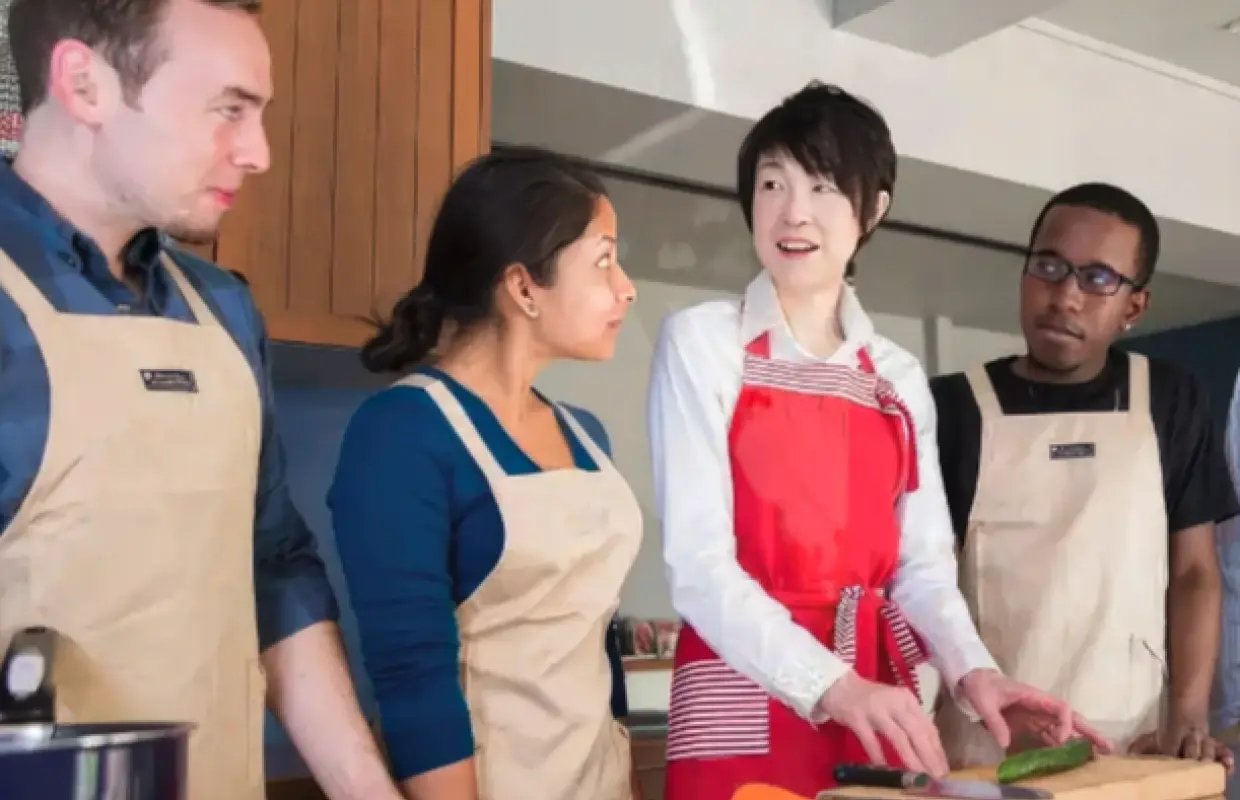


Washoku Cooking Lessons: Japan’s Intangible Cultural Asset
- Make 4 traditional UNESCO-recognized recipes.
- Learn from Japanese chefs while experiencing Japan’s cultural heritage.
- Make a full meal including appetizers, side dishes, soups, and desserts.
Package Options
Cultural Experiences
| Cuisine type | Japanese cuisine |
| Cultural experience type | Traditional culture experience |
Product Info
Purchase Notice
- This activity is able to accommodate the following dietary requirements: Halal, Kosher, Vegan and Vegetarian. Please inform us in advance of your allergy / dietary restrictions.
Includes/Excludes
- A 2.5-hour “UNESCO Recognized Washoku” Cooking Class
- Ingredients for making 4 different washoku dishes
- Cooking tools and utensils provided
- Recipes you can take home with you
- Complimentary Japanese tea
- Personal expenses
- Other expenses not mentioned above
How to Redeem Your Voucher
How to Use Your Voucher
- Please present the e-voucher on-site
Voucher Redemption Period
- The voucher must be redeemed on the selected date and within operating hours; Invalid after expiration
Experience Location
Location Name: Washoku Cooking Lessons: Japan’s Intangible Cultural Asset
Address: 1-19-9 Osaki, Shinagawa-kuCancellation Policy
- Cancellations 4 day(s) (inclusive) before the selected date are allowed. Unused orders can be canceled for free
- Cancellation is not allowed between 0–3 days from the selected date. Orders cannot be canceled or modified, and refunds will not be granted.
- Due to time zone differences, the confirmed cancellation date is based on the supplier’s local time. Please allow 2–5 business days to process your cancellation request, after which the cancellation fee will be charged according to the product’s cancellation policy. Once your refund request is confirmed, KKday will initiate the refund to your original payment method within 15 days. The actual refund timing depends on your card-issuing bank’s policy.
FAQ
1. What is the definition and cultural significance of washoku Japanese cuisine?
Washoku refers to traditional Japanese cuisine, highly regarded for its emphasis on natural flavors, seasonal ingredients, and balanced nutrition. Recognized by UNESCO as an Intangible Cultural Heritage, its cultural significance lies in its deep connection to Japan's natural environment, annual festivities, and communal dining traditions, promoting a sense of appreciation for nature and family.
2. What are the key differences between washoku and kaiseki cuisine?
Washoku broadly encompasses traditional Japanese cuisine, focusing on harmony, seasonality, and balance, suitable for everyday meals or special occasions. Kaiseki, on the other hand, is a highly refined, multi-course haute cuisine. It is characterized by meticulous preparation, artistic presentation, and a fixed sequence of dishes, often served at traditional inns or upscale restaurants. While Kaiseki is a specific, elaborate form, washoku covers a wider spectrum of Japanese culinary traditions.
3. How does washoku cuisine differ from yoshoku Japanese dishes?
Washoku represents traditional Japanese cooking, utilizing indigenous ingredients and preparing methods that highlight natural flavors, often featuring rice, miso soup, fish, and vegetables. Yoshoku refers to Japanese adaptations of Western dishes, which have been incorporated into Japanese cuisine and altered to suit local tastes. These often include ingredients like meat, bread, and dairy, with popular examples being omurice (omelet rice) and Japanese curry rice.
4. What is the 'rule of five' principle in traditional washoku cooking?
The 'rule of five' is a fundamental philosophy in traditional washoku cooking, aiming for balance and harmony. It encourages the incorporation of five colors (red, green, yellow, white, black), five cooking methods (raw, simmered, fried, grilled, steamed), and five flavors (sweet, sour, salty, bitter, umami) into a meal. This holistic approach ensures dishes are visually appealing, nutritionally diverse, and rich in taste.
5. What types of traditional UNESCO-recognized recipes are typically prepared in washoku cooking lessons?
Washoku cooking lessons typically teach participants to prepare a full, traditional Japanese meal comprising UNESCO-recognized recipes. This often includes a main dish like teriyaki chicken or seasonal tempura, along with essential components such as miso soup, several seasonal vegetable side dishes, and a simple dessert. The selection focuses on authentic home-style cooking that embodies the essence of Japanese culinary heritage.
6. What cultural insights can participants gain from Japanese chefs during washoku cooking lessons?
During washoku cooking lessons, participants gain profound cultural insights directly from Japanese chefs. They learn about the deep connection between food and nature, the philosophy of balanced nutrition, traditional dining etiquette, and the role of specific dishes in Japanese festivals and family life. This immersive experience offers a hands-on understanding of Japan's rich cultural heritage through its cuisine.
7. What practical cooking skills will I acquire from attending washoku cooking lessons?
Attending washoku cooking lessons allows you to acquire valuable practical skills, including precise knife techniques for preparing vegetables and fish, the art of making authentic dashi (Japanese soup stock), balancing traditional seasonings, and aesthetically pleasing food presentation. These fundamental techniques are transferable, empowering you to confidently recreate a variety of Japanese dishes at home.
8. What components make up a complete traditional washoku meal?
A complete traditional washoku meal is thoughtfully designed for nutritional balance and diverse flavors. It typically includes a bowl of steamed rice, a serving of miso soup, a main dish (e.g., grilled fish or simmered meat), and several side dishes known as okazu, which feature seasonal vegetables, pickles (tsukemono), and sometimes a small dessert. This combination ensures a harmonious and satisfying dining experience.


