


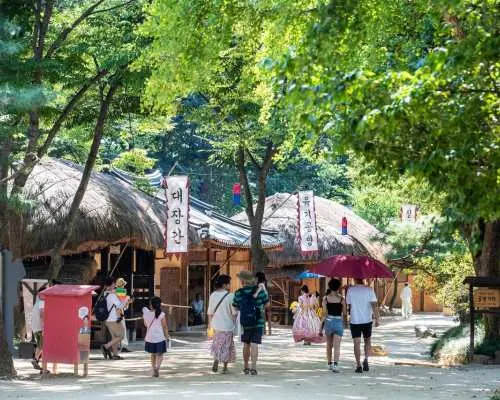

Korean Folk Village & Suwon Hwaseong One-Day Tour Departing from Seoul
- Immerse yourself in the atmosphere of the Joseon Dynasty at the Korean Folk Village and experience traditional Korean life and culture.
- Step into the enchanting Korean Folk Village Night Tour, where lantern-lit paths bring centuries-old traditions to life.
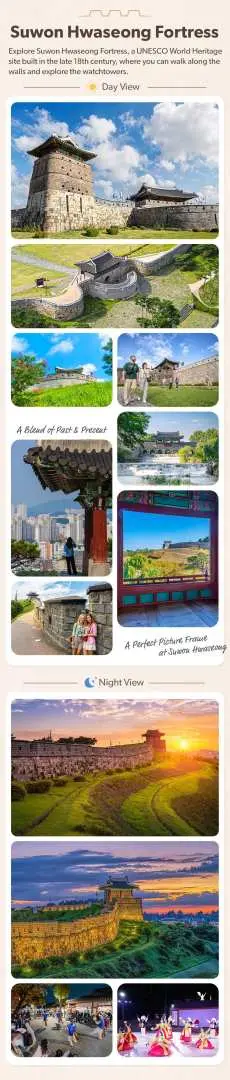
- Explore Suwon Hwaseong, a UNESCO World Heritage site built by King Jeongjo in the late 18th century.
- Discover the history and local charm of Suwon Nammun Market, one of Korea's oldest traditional markets.
Package Options


Sightseeing Tours
| Tour Type | Shared tour |
| Transportation method | Transfer from meeting point |
| Tour types | Guided tour |
| Sightseeing type | Traditional markets, Historic site tour |
| Transport | Bus tour |
Product Info
📍Why choose this tour
- More than sightseeing—an immersive cultural journey
- Well-balanced mix of culture, history, and food
- Perfect for travelers seeking authentic, hands-on experiences
📍What to expect
- Gyeonggi Gugak Center (Gugak Experience packages only / Wed · Apr 15–Nov 11) : Live music · folk song lessons · hands-on traditional activities
- Korean Folk Village: Experience Joseon-era life with traditional houses, crafts, and performances
- Suwon Hwaseong Fortress: Explore this UNESCO site with expert storytelling
- Suwon Nammun Market: Enjoy local street food and traditional market atmosphere
📍Pick Your Package
- Classic Day Tour — Culture & history by day
- 🌙 Summer Night Tour (Jun–Aug) — Cooler evening departure
- 🎵 Gugak Experience (Wed only) — Add a hands-on traditional music session





Important Info
Reminders
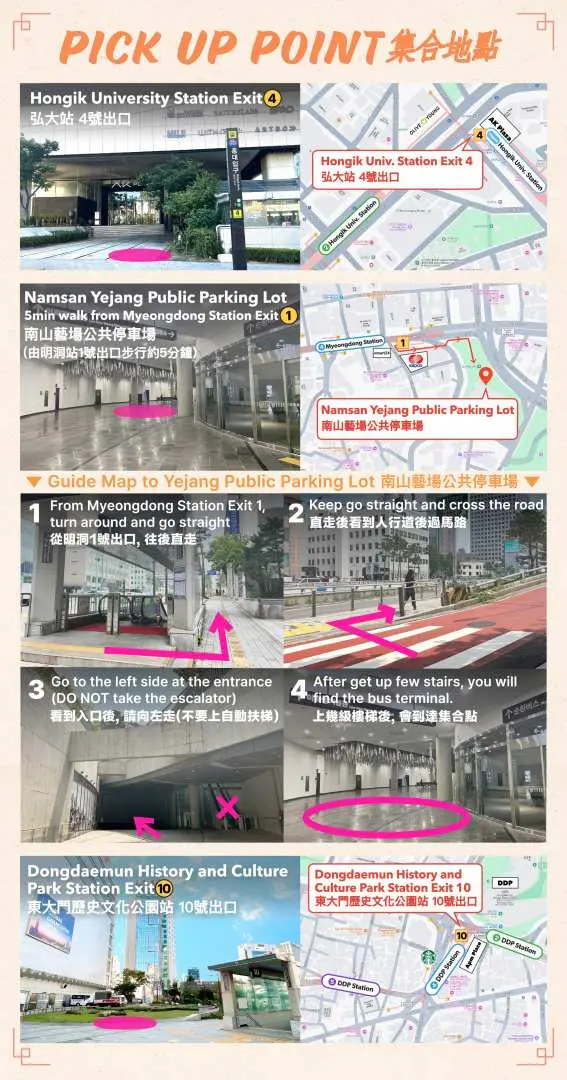
Please arrive at the designated location 10 minute(s) before the scheduled departure time, as the tour will depart on time
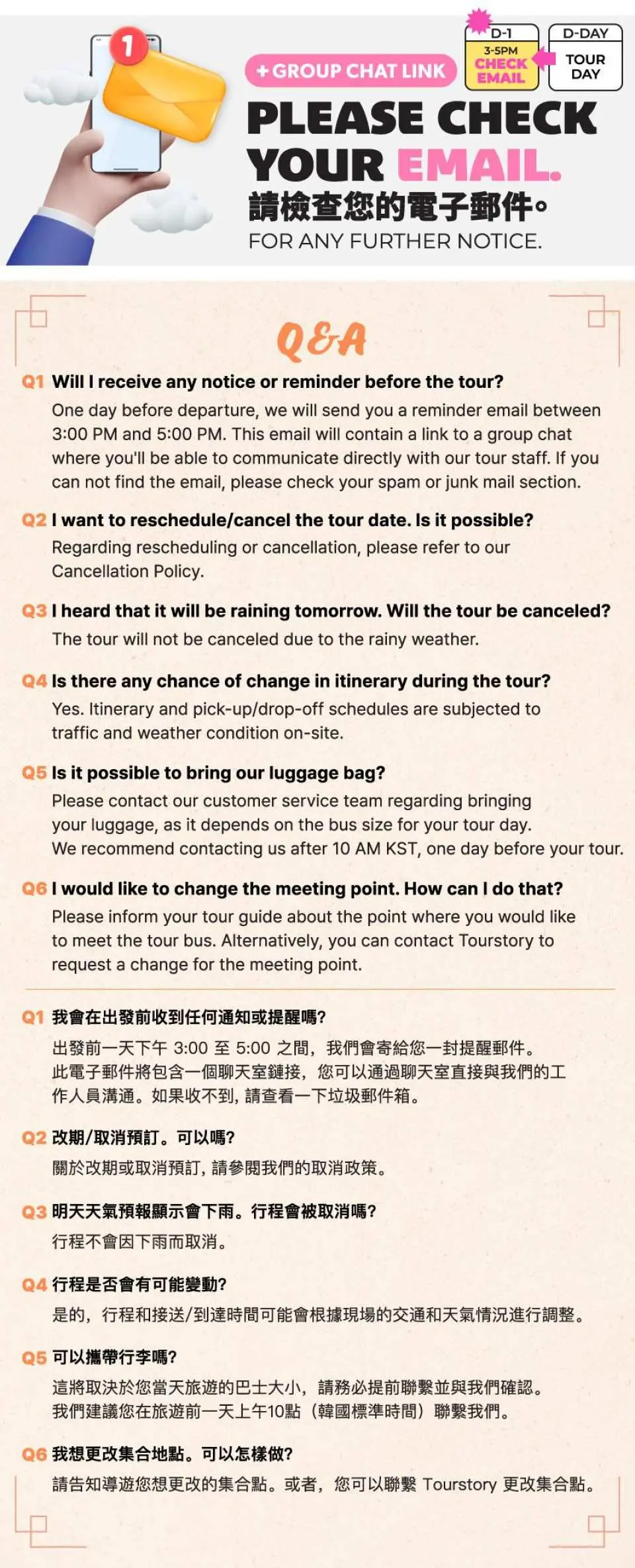
One day before departure, we will send you a reminder email between 3:00 PM and 5:00 PM. This email will contain a link to a group chat where you'll be able to communicate directly with our tour staff. If you can not find the email,please check your spam or junk mail section.
Please provide an accurate contact number and your messaging app ID (e.g., WhatsApp, WeChat, Viber, or KakaoTalk). Please ensure your contact number is correct and reachable.
Children under 3 are admitted free of charge but may not occupy a seat. Please note the number of children in the Requests & Remarks section when booking and bring a valid ID on the day.
Please note that the actual itinerary is dependent on weather/transportation conditions
⚠️All the itineraries of our company do not include personal travel insurance. There are certain risks and dangers in outdoor activities. Guests must evaluate their own health or ability.The company will not be responsible for any physical damage or casualty caused by accidents or unpredictable factors.
FAQ
1. Which popular K-dramas or films have been shot at the Korean Folk Village?
The Korean Folk Village is a popular filming location for many historical K-dramas and films due to its authentic Joseon-era settings. Notable productions filmed here include 'Moon Embracing the Sun,' 'Sungkyunkwan Scandal,' 'Jang Ok-jung, Living by Love,' 'The Red Sleeve,' and the Netflix series 'Kingdom.' Its traditional architecture and landscapes provide a perfect backdrop for historical narratives.
2. What is the recommended visit duration for the Korean Folk Village to experience its main attractions?
To fully experience the main attractions and cultural offerings at the Korean Folk Village, a recommended visit duration is typically 3 to 4 hours. This allows ample time to explore the various traditional houses, observe artisan workshops, enjoy folk performances, and immerse yourself in the Joseon-era ambiance. If you plan to have a meal or watch multiple shows, you might consider allocating a bit more time.
3. What kind of cultural and historical significance does the Korean Folk Village represent?
The Korean Folk Village serves as a living museum, preserving and showcasing traditional Korean life, customs, and architecture from the late Joseon period. It represents the everyday lives of various social classes through accurately recreated traditional houses, farming villages, and artisan workshops. Visitors gain insight into Korea's rich cultural heritage, social structures, and traditional practices.
4. What are the common transportation options to reach the Korean Folk Village from Seoul?
To reach the Korean Folk Village from Seoul, a common method is to take the Seoul subway to Suwon Station, then transfer to a local bus. For instance, you can take bus 10-5 or 37 directly to the village. Alternatively, many organized day tours departing from Seoul offer convenient round-trip transportation, simplifying the journey and allowing for a hassle-free visit.
5. How much time is generally needed to explore the Suwon Hwaseong Fortress and its key features?
To explore the Suwon Hwaseong Fortress and its key features, a general recommendation is to allocate 2 to 3 hours. This allows visitors to walk significant portions of the UNESCO World Heritage-listed walls, visit the four grand gates like Paldalmun and Janganmun, and explore Hwaseong Haenggung Palace. If you plan to visit additional museums or ride the Hwaseong Tourist Trolley, you may need more time.
6. What historical and cultural experiences can visitors expect at Suwon Hwaseong Fortress and Suwon Nammun Market?
At Suwon Hwaseong Fortress, visitors can walk along the impressive UNESCO-listed walls, explore its ornate gates, and discover the historical Hwaseong Haenggung Palace, a temporary residence for the king. Suwon Nammun Market, one of Korea's oldest traditional markets dating back to the Joseon Dynasty, offers a vibrant cultural experience with diverse local foods, traditional goods, and a bustling atmosphere reflecting everyday Korean life.
7. How can one travel to Suwon Hwaseong Fortress from central Seoul?
From central Seoul, you can easily travel to Suwon Hwaseong Fortress by taking Seoul Subway Line 1 directly to Suwon Station. Upon arrival at Suwon Station, the fortress area is accessible by a short local bus ride (e.g., buses 11, 13, 36, or 39) or a quick taxi ride. The fortress walls are a prominent landmark and easy to locate from the station.
8. What aspects of traditional Joseon life can be observed at the Korean Folk Village?
At the Korean Folk Village, visitors can observe various aspects of traditional Joseon life, including diverse housing styles, from commoner homes to noble residences. You can witness artisans practicing traditional crafts such as pottery, weaving, and blacksmithing. The village also hosts daily folk performances like traditional music, dance, and equestrian martial arts, offering insights into the cultural practices and daily routines of the Joseon era.
Get Help


