


Highlights of Barcelona Half-Day Tour | Spain
Explore Barcelona's history and culture on a walking tour through El Born, the Gothic Quarter, and the iconic Cathedral of Barcelona.
- Enjoy a walking tour of the El Born neighbourhood and the Gothic Quarter
- Catch a glimpse of the iconic Cathedral of Barcelona
- Soar above the city on a Montjuïc Cable Car for a panoramic view of Barcelona
Package Options


Sightseeing Tours
| Tour Type | Shared tour |
| Transportation method | Get there on your own |
| Minimum participant requirement | 30 travelers |
| Tour types | Guided tour |
| Meal arrangement | Arrange yourself |
| Sightseeing type | City walking tour, Historic site tour, Bus tour |
| Transport | Walking, Bus tour |
Product Info
— What You Can Expect —
Embark on a captivating walking tour of Barcelona, traversing the historic El Born neighborhood and the charming Gothic Quarter. Wander through the oldest part of the city, uncovering its hidden medieval gems and absorbing their significant historical tales. En route to the Cathedral of Barcelona, explore the secrets of narrow streets and encounter the architectural marvel of Santa Maria del Mar.
Board an air-conditioned coach for a panoramic journey. Witness the coastal transformations spurred by the 1992 Olympic Games, passing by landmarks like the Olympic Port and La Barceloneta, a fisherman's quarter. Ascend Montjuïc Mountain on the cable car, reveling in breathtaking city views. The tour concludes with a stop at the MNAC viewpoint, offering a stunning panoramic perspective of Barcelona.
As you return, the bus meanders through Passeig de Gracia, allowing glimpses of iconic Gaudí buildings such as Casa Batlló and La Pedrera. Immerse yourself in Barcelona's rich history, diverse neighborhoods, and architectural wonders on this comprehensive and picturesque tour.
Savor breathtaking vistas as you hop aboard the Montjuïc Cable Car ride


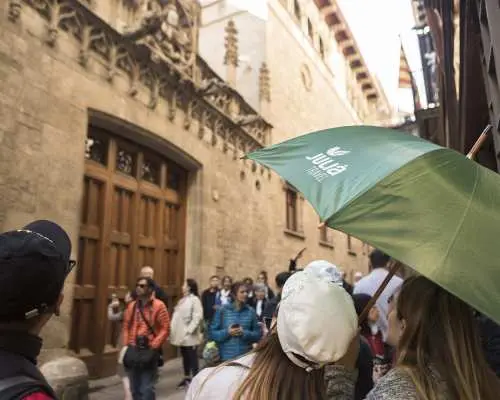
Stroll through the busy streets of Barcelona


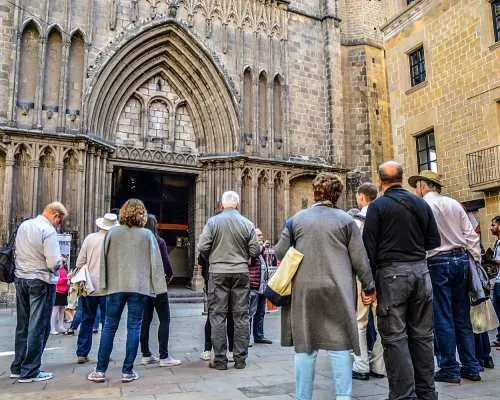
Make a visit to the historical Cathedral of Barcelona


Purchase Notice
- This tour will have a maximum of 30 travelers per guide
- From the end of January to the beginning of March the cable car is under maintenance (days to concrete). The service will be replaced by the Port Cable Car
- Please note this activity includes walking long distances. It is advisable to wear appropriate attire
- The supplier reserves the right to change the itinerary or cancel the tour due to events being celebrated in the city or for force majeure reasons
- Any person failing to appear at the established time will not be refunded
Reminders
Please arrive at the designated location 15 minute(s) before the scheduled departure time, as the tour will depart on time
Cancellation Policy
- Cancellations 2 day(s) (inclusive) before the selected date are allowed. Unused orders can be canceled for free
- Cancellation is not allowed between 0–1 days from the selected date. Orders cannot be canceled or modified, and refunds will not be granted.
- Due to time zone differences, the confirmed cancellation date is based on the supplier’s local time. Please allow 2–5 business days to process your cancellation request, after which the cancellation fee will be charged according to the product’s cancellation policy. Once the cancellation is confirmed, you will receive your refund within 14 working days.
FAQ
The Barcelona Cathedral, formally known as the Cathedral of the Holy Cross and Saint Eulalia, is a magnificent example of Catalan Gothic architecture. Its historical significance lies in its dedication to Saint Eulalia, the co-patron saint of Barcelona, whose tomb is located in the crypt. Construction spanned from the 13th to the 15th centuries, building upon an earlier Romanesque church. It served as a spiritual and cultural heart of the city for centuries.
The Barcelona Cathedral typically has different access periods. During designated hours, often in the early morning and late afternoon, entry to the main nave may be free for worship. However, during prime tourist hours, an entrance fee is usually required to access areas like the choir, rooftop, and museum, which helps with the Cathedral's preservation. Visitors are also asked to dress respectfully, covering shoulders and knees.
The most notable figure interred within the Barcelona Cathedral is Saint Eulalia, one of Barcelona's patron saints. Her sarcophagus rests in the crypt beneath the high altar, a central point of veneration. Additionally, several bishops of Barcelona and other prominent religious and historical figures associated with the city's past are buried within the various chapels and tombs throughout the cathedral.
Inside the Barcelona Cathedral, visitors can admire its impressive Gothic architecture, including soaring naves, intricate stained-glass windows, and 28 side chapels each with unique altarpieces. The highlight is often the exquisitely carved wooden choir stalls depicting scenes from the life of Saint Eulalia and various coats of arms. The tranquil cloister, home to 13 white geese, and the rooftop offering city views, are also significant features.
Barcelona's historic areas, including the Gothic Quarter and El Born, are exceptionally walkable and best explored on foot. These neighborhoods are characterized by narrow, winding, often pedestrianized streets, making them ideal for leisurely strolls. Many major attractions, historical sites, and charming shops are located in close proximity, allowing tourists to easily discover their unique ambiance and hidden gems by walking.
The Gothic Quarter is a treasure trove of historical sights. Key attractions include the impressive Barcelona Cathedral, the Plaça de Sant Jaume, which houses the city's government buildings, and the atmospheric Plaça del Rei with its royal palace and chapel. Visitors can also explore remnants of the ancient Roman walls, wander through the historic Jewish Quarter (El Call), and discover numerous hidden squares and charming alleyways.
The most popular and convenient way to experience the stunning panoramic views from Montjuïc is by taking the Montjuïc Cable Car. It offers an exhilarating aerial journey from the bottom of the hill up to Montjuïc Castle, providing breathtaking vistas of Barcelona's cityscape, the port, and the Mediterranean Sea. From the castle, visitors can enjoy even more expansive views and explore the historical fortress.
A walking tour through El Born and the Gothic Quarter offers an immersive and intimate exploration of Barcelona's rich history and vibrant culture. It allows visitors to delve into the intricate details of ancient architecture, discover hidden squares and artisan workshops, and truly soak in the unique atmosphere of these historic neighborhoods. Guides provide fascinating stories and local insights, bringing the past to life as you navigate the charming, winding streets.
Get Help


