
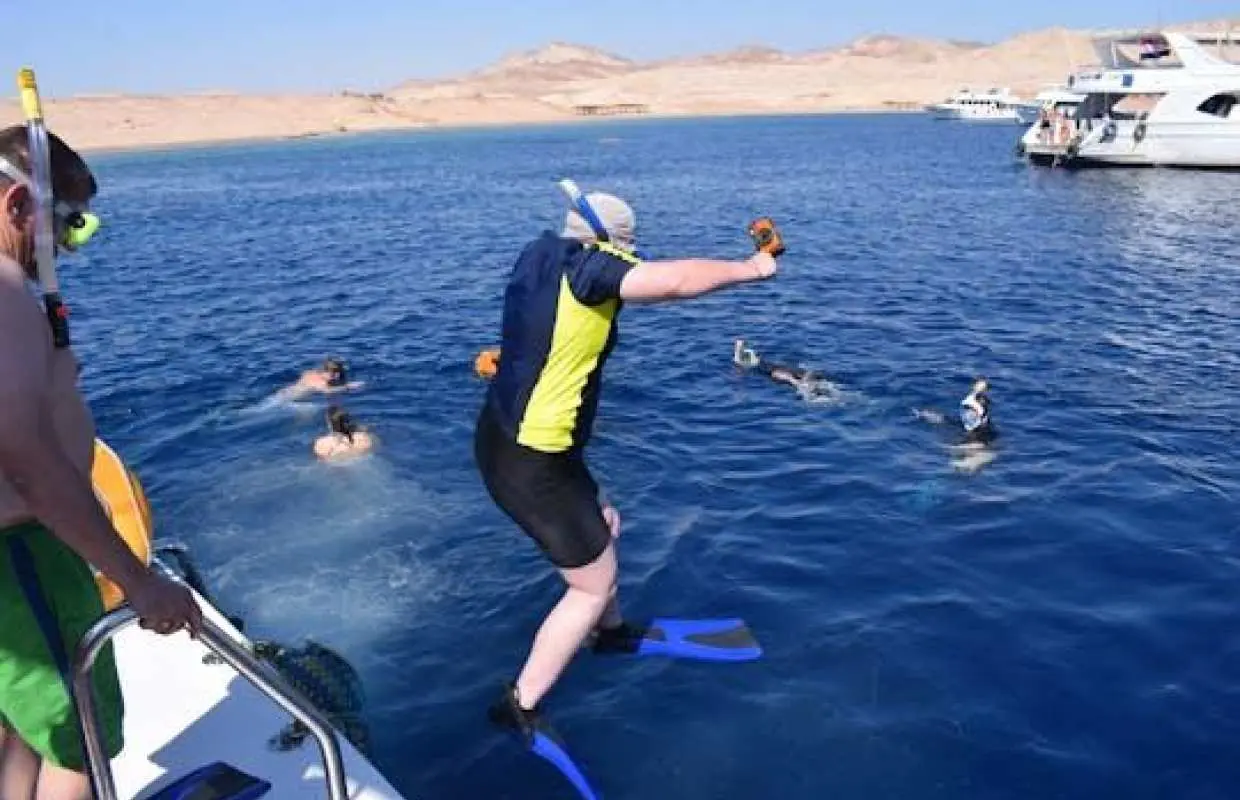


Half-day snorkeling boat trip in Sharm El Sheikh with lunch and drinks
- Join a 4-hour snorkeling cruise at Sharm El Sheikh including lunch
Package Options


Sightseeing Tours
| Tour Type | Shared tour |
| Transportation method | Hotel transfer |
| Meal arrangement | Lunch included |
| Additional service & facility | Transfer included |
| Sightseeing type | Natural sights, Bird watching |
| Transport | Sightseeing cruise |
Product Info
Purchase Notice
Reminders
Please refer to your voucher for final information regarding meeting points, pick-up locations, and pick-up time
Meeting point description: Hotel pick-up service is included. Please provide your hotel information, your email and phone number at the time of booking.
Extra fees to be paid on-site:USD 10 per person (Marine Fee + National Park Fee) must be paid on-site in cash at the marina on the day of the trip. Payment is accepted in USD or the equivalent in EUR, GBP, or CHF
Know in advance:Children below 5 years old can join for free. Please select your free child tickets at checkout
Tour duration and pickup time are subject to change due to operating conditions and hotel location
Remember to bring:Passport
Casual outfit, a hat, sunglasses, sunscreen, cameras, and bottles of water (no jewellery)
Swimsuit and towels
FAQ
Sharm El Sheikh's Red Sea waters are vibrant with diverse marine life. Snorkelers can expect to encounter colorful coral reefs, various species of tropical fish like butterflyfish, angelfish, and parrotfish. Keep an eye out for moray eels, stingrays, and occasionally sea turtles. The clear waters offer excellent visibility for observing these underwater wonders.
Both Sharm El Sheikh and Hurghada offer exceptional Red Sea snorkeling. Sharm El Sheikh is often praised for its pristine coral reefs and dive sites, particularly around Ras Mohammed National Park, offering rich biodiversity close to shore. Hurghada also boasts beautiful reefs and numerous islands for snorkeling. The choice often depends on overall travel plans and preferred resort ambiance, but both provide stunning underwater experiences.
When snorkeling in Sharm El Sheikh, always use well-fitting gear. Stay aware of your surroundings and any boat traffic. Avoid touching coral or marine life to protect both yourself and the ecosystem. Listen to your guide's instructions, especially regarding currents or designated safe areas. Ensure you are a confident swimmer and use a buoyancy aid if needed. Staying hydrated is also important under the sun.
For many snorkeling boat trips in Sharm El Sheikh, including half-day cruises, basic snorkeling gear such as masks, snorkels, and fins are often provided as part of the package. It's advisable to confirm this with your specific tour operator before your trip. Alternatively, gear is readily available for rent at many local shops if you prefer your own or if it's not included.
Consider the frequency of your snorkeling. If you snorkel often, buying gear might be cost-effective long-term and ensures a comfortable fit. For a single trip to Sharm El Sheikh, renting is more convenient, saves luggage space, and avoids maintenance. Ensure rented gear is clean and fits well. Owning gear allows for personal preference in mask fit and snorkel type.
A typical half-day snorkeling boat trip in Sharm El Sheikh focuses on exploring the stunning coral reefs of the Red Sea. You'll usually visit multiple snorkeling spots renowned for their vibrant marine life and clear waters. The trip often includes opportunities to swim, relax on the boat, and enjoy the scenic coastal views. Lunch and drinks are commonly provided, enhancing the overall experience.
A half-day snorkeling boat trip in Sharm El Sheikh typically lasts around 4 hours. The itinerary usually involves boarding a boat, sailing to a few selected snorkeling spots known for their rich coral formations and diverse fish. Guests will have opportunities for guided snorkeling at each location. Lunch and refreshments are generally served on board before returning to the departure point.
The best time for a snorkeling boat trip in Sharm El Sheikh is generally from April to October. During these months, the weather is warm and sunny, and the sea temperatures are very pleasant for swimming and snorkeling. While snorkeling is possible year-round, winter months (November to March) can bring cooler air temperatures and occasionally choppier seas, although underwater visibility remains excellent.
Get Help


