


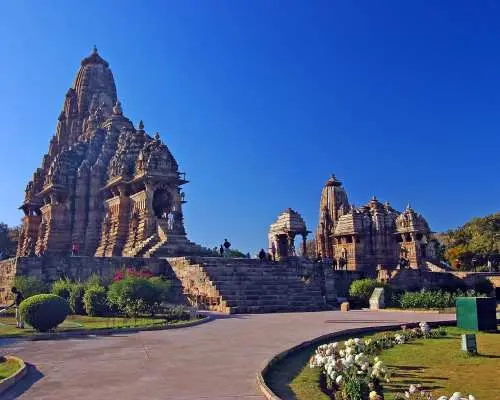
5-Day Khajuraho, Orchha, Gwalior & Jhansi Heritage Tour From Delhi.
- Explore the UNESCO World Heritage-listed Khajuraho Temples famous for intricate carvings and ancient architecture.
- Visit the royal city of Gwalior and discover magnificent palaces, forts, temples and historic monuments.
- Experience the timeless heritage of Orchha featuring grand forts, cenotaphs and riverside temples.
- Visit Jhansi Fort associated with Rani Lakshmi Bai and India’s freedom movement history.
- Enjoy the Light and Sound Show at Khajuraho showcasing the history of the Chandela dynasty.
- Explore both Western and Eastern Groups of Khajuraho Temples with detailed architectural carvings.
- Experience wildlife safari opportunities at Panna National Park known for Bengal tigers and natural landscapes.
- Travel comfortably with private transportation, local guide service and heritage hotel stays throughout the tour.
Package Options


Product Info
FAQ
1. What are the primary highlights of the Khajuraho Temples' intricate carvings and architecture?
The Khajuraho Temples are renowned for their UNESCO World Heritage status, displaying exquisite ancient architecture and intricate carvings. Visitors can explore both the Western and Eastern Groups, marveling at the detailed sculptures. A captivating Light and Sound Show at Khajuraho further illuminates the history of the Chandela dynasty, adding depth to the visit.
2. What are the unique aspects of the erotic sculptures found at the Khajuraho Temples?
The Khajuraho Temples are uniquely characterized by their detailed erotic sculptures, which are an integral part of the broader intricate carvings depicting various aspects of life, mythology, and human emotions. These sculptures are often interpreted as representations of tantric practices, celebration of life, and a deeper philosophical understanding within Hindu traditions. They stand out for their artistic precision and historical context.
3. What is the historical origin and construction rationale behind the Khajuraho Temples?
The Khajuraho Temples were constructed by the powerful Chandela dynasty between the 9th and 11th centuries. Their origin reflects the dynasty's significant patronage of art and religious architecture. The temples' construction was driven by a desire to create grand places of worship, celebrate spiritual ideals, and showcase the artistic and cultural prowess of the Chandela kingdom during its reign.
4. What historical names or nomenclature has Khajuraho been known by?
Historically, Khajuraho has been referred to by various names in ancient texts, with "Kharjuravāhaka" being one of the more prominent. This name is derived from "kharjura," meaning date palm, and "vāhaka," meaning bearer, referring to the abundance of date palm trees in the region during ancient times.
5. What significant historical monuments can be explored at Gwalior Fort?
Gwalior is a royal city where visitors can discover a wealth of magnificent palaces, forts, temples, and historic monuments. Key attractions within Gwalior Fort include the Sas-Bahu Temples, Teli Ka Mandir, and the Gujari Mahal, which now houses an archaeological museum. The fort itself is an impressive structure offering panoramic views and insights into centuries of Indian history.
6. What unique heritage structures can visitors experience in Orchha, such as its forts and cenotaphs?
Orchha offers a timeless heritage experience, featuring grand forts, majestic cenotaphs (chhatris) along the Betwa River, and beautifully adorned riverside temples. Notable structures include the Orchha Fort complex, which houses the Raja Mahal and Jahangir Mahal, showcasing intricate Mughal-influenced architecture and historical significance. The serene chhatris provide a picturesque view.
7. What is the historical significance of Jhansi Fort, particularly its association with Rani Lakshmi Bai?
Jhansi Fort holds immense historical significance, primarily for its strong association with Rani Lakshmi Bai, one of the leading figures of the 1857 Indian Rebellion. It played a pivotal role in India's freedom movement. The fort stands as a symbol of bravery and resistance, allowing visitors to explore its battlements, temples, and witness the spirit of the queen who fiercely defended her kingdom.
8. What wildlife safari opportunities are available at Panna National Park?
Panna National Park offers exciting wildlife safari opportunities, renowned as a prime habitat for Bengal tigers. Beyond tigers, visitors can spot leopards, various species of deer (like sambar and chital), wild boars, and a diverse range of birdlife. Safaris provide a chance to explore the park's rich natural landscapes, including dense forests, waterfalls, and gorges, making for a memorable wilderness experience.


