


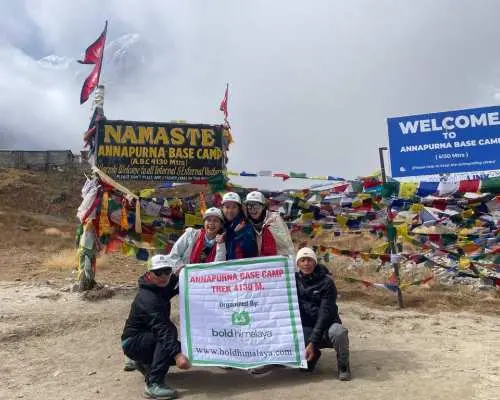

Annapurna Base Camp Journey – Himalayan Trek
- Reach the stunning Annapurna Base Camp (4,130m), surrounded by a spectacular natural amphitheater of Himalayan peaks.
- Enjoy close-up views of iconic mountains like Annapurna I, Machapuchare, and Hiunchuli.
- Walk through diverse landscapes in the Annapurna region, from lush forests and waterfalls to alpine terrain.
- Experience the rich culture and warm hospitality of traditional Gurung villages.
- Relax in natural hot springs at Jhinu Danda.
- Witness breathtaking sunrise and sunset views over the snow-capped Himalayan ranges.
- Trek through rhododendron forests, especially beautiful during the spring season.
- Suitable for moderately fit trekkers seeking a rewarding Himalayan adventure.
Package Options


Product Info
Purchase Notice
- Physical fitness is required (5–7 hours of daily trekking)
- Travel insurance (including high-altitude evacuation) is mandatory
- The itinerary may change due to weather or unforeseen conditions
- Valid passport and documents must be provided in advance
- Inform us of any dietary restrictions or medical conditions at booking
- Personal expenses (drinks, WiFi, hot showers, tips) are not included
- Booking is subject to availability; a reservation is recommended
Reminders
FAQ
1. What is the difficulty level of the Annapurna Base Camp trek, and is it suitable for trekkers with limited experience?
The Annapurna Base Camp trek is considered to have a moderate difficulty level. It involves sustained walking, often uphill and downhill, over diverse terrain including stone steps and mountain trails. While challenging, it is generally suitable for individuals with a good level of physical fitness and some prior trekking experience. Beginners with adequate physical preparation, including regular cardio and strength training, and a strong determination can also successfully complete this rewarding Himalayan adventure.
2. How does the difficulty of the Annapurna Base Camp trek compare to the Everest Base Camp trek?
The Annapurna Base Camp (ABC) trek is generally considered less challenging than the Everest Base Camp (EBC) trek. ABC typically reaches a maximum altitude of 4,130m, which is significantly lower than EBC's 5,364m, reducing the risk of severe altitude sickness. The daily trekking distances can also be shorter, and the route often offers more diverse landscapes and cultural immersion through Gurung villages, making it a slightly less demanding physical experience compared to EBC's higher, more remote environment.
3. When is the best time of year to embark on the Annapurna Base Camp trek?
The best times of year to embark on the Annapurna Base Camp trek are during the spring (March to May) and autumn (September to November) seasons. Spring offers pleasant weather, blooming rhododendron forests, and clear views before the monsoon. Autumn provides stable weather, crisp air, and excellent visibility of the Himalayan peaks. Winters (December to February) can be very cold with heavy snow, while summers (June to August) are dominated by the monsoon, bringing rain, leeches, and obscured views.
4. What factors influence the overall cost of the Annapurna Base Camp trek?
The overall cost of the Annapurna Base Camp trek is influenced by several key factors. These include the duration of the trek, the type of services chosen (e.g., whether a guide and porter are included), transportation to and from the starting point in Pokhara, necessary trekking permits (such as ACAP and TIMS), and personal expenses like food, drinks, and essential gear rental. Opting for a comprehensive package that includes experienced guides and porters often enhances safety and convenience.
5. What iconic mountain peaks can trekkers expect to see from Annapurna Base Camp?
From the Annapurna Base Camp (4,130m), trekkers are treated to spectacular panoramic views, enveloped by an amphitheater of towering Himalayan peaks. You can expect close-up views of iconic mountains such as the formidable Annapurna I (8,091m), the distinctive Machapuchare (Fishtail, 6,993m), Hiunchuli (6,441m), Annapurna South (7,219m), and Gangapurna (7,455m). The sunrise and sunset views over these majestic, snow-capped ranges are particularly breathtaking and memorable.
6. What cultural experiences are available in the Gurung villages along the Annapurna Base Camp trekking route?
Along the Annapurna Base Camp trekking route, trekkers can enjoy a rich cultural immersion in traditional Gurung villages. Staying in local teahouses provides an opportunity to interact with villagers, learn about their daily lives, and experience their warm hospitality firsthand. You may observe traditional farming practices, savor authentic Nepali cuisine, and occasionally witness local cultural performances, offering a genuine insight into the unique Himalayan way of life.
7. Can trekkers enjoy natural hot springs or other unique features during the Annapurna Base Camp Journey?
Yes, trekkers on the Annapurna Base Camp Journey can indeed enjoy unique natural features. A notable highlight is the opportunity to relax and rejuvenate in the natural hot springs located at Jhinu Danda. This popular stop is perfect for soothing tired muscles. Additionally, the trek features diverse landscapes, including lush rhododendron forests (particularly vibrant in spring), stunning waterfalls, and varied alpine terrain, providing a rich natural experience beyond the breathtaking mountain views.
8. What specific preparations are recommended for the Annapurna Base Camp trek, especially regarding physical fitness and gear?
For the Annapurna Base Camp trek, it's recommended to engage in regular cardio exercises (like running or swimming) and strength training for several months beforehand to build endurance. Essential gear includes sturdy, broken-in trekking boots, layered clothing suitable for varying temperatures, a waterproof jacket, a warm sleeping bag, a comprehensive first-aid kit, and effective high-altitude sun protection. A well-paced itinerary is crucial for acclimatization, and considering a guide and porter can significantly enhance safety and comfort.


