


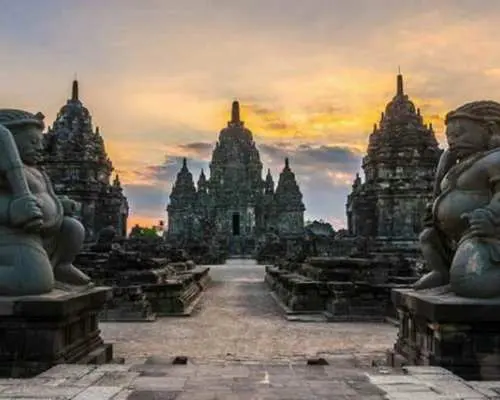
Prambanan Temple Sunset Tour – Magical Evening from Yogyakarta
- Witness a breathtaking sunset at Prambanan Temple, one of Indonesia’s most iconic UNESCO sites
- Explore the serene and less crowded Sewu Temple, the second largest Buddhist temple complex in Indonesia
- Enjoy a hassle-free trip with convenient hotel pickup and drop-off from Yogyakarta
- Capture stunning golden hour photos at two historic temple complexes in one trip
- Learn about the rich history and cultural heritage of ancient Java during your visit
Package Options


Product Info
Purchase Notice
- Please provide your hotel name, address, and active contact number (WhatsApp preferred) at the time of booking to arrange pickup.
- Pickup and drop-off are available within Yogyakarta city area. An additional charge applies for locations outside the city.
- Please be ready at the hotel lobby or main entrance at least 10 minutes before the scheduled pickup time. Late arrivals may reduce your visiting time.
- Entrance fees to Prambanan Temple and Sewu Temple are inclusive.
- A local guide is available for groups with more than one participant.
Reminders
Please arrive at the designated location 10 minute(s) before the scheduled departure time, as the tour will depart on time
This tour operates in the afternoon and is subject to weather conditions
Pickup is available within Yogyakarta city; additional charges apply outside the area
Please provide your hotel details and contact number after booking
The itinerary may be adjusted depending on traffic and site conditions
Comfortable clothing, walking shoes, and sun protection are recommended
A moderate amount of walking is required during the temple visit
Sunset view is weather-dependent and cannot be guaranteed
FAQ
1. What makes Prambanan Temple a unique historical site to visit?
Prambanan Temple stands as Indonesia's largest Hindu temple complex, a UNESCO World Heritage site renowned for its towering and slender architecture. It's dedicated to the Trimurti – Brahma, Vishnu, and Shiva – showcasing intricate carvings and a distinct Hindu architectural style that sets it apart from other temple complexes in the region. Its grandeur and historical significance offer a profound glimpse into ancient Javanese culture and religion.
2. What historical events led to the abandonment of Prambanan Temple?
Prambanan Temple was likely abandoned due to a shift in political power to East Java around the 10th century, possibly influenced by a major eruption of Mount Merapi. Over centuries, the complex fell into disrepair and was largely forgotten until its rediscovery and restoration efforts began in the 19th century. Earthquakes and time contributed to its ruin before modern conservation.
3. What are the key differences between Prambanan Temple and Borobudur Temple?
Prambanan Temple is a Hindu complex, characterized by its tall, pointed architecture and dedication to Hindu deities. In contrast, Borobudur Temple is a massive Buddhist stupa, known for its terraced platforms, circular stupas, and intricate relief carvings depicting the life of Buddha. While both are magnificent ancient structures near Yogyakarta, they represent distinct religious traditions and architectural styles.
4. Who was responsible for building the ancient Prambanan Temple complex?
Prambanan Temple was primarily built during the 9th century by the Sanjaya Dynasty, who ruled the Mataram Kingdom. While specific attributions vary, it is generally believed that King Rakai Pikatan or one of his successors commissioned the construction, serving as a Hindu counterpart to the Buddhist Borobudur Temple and a symbol of the Hindu revival in ancient Java.
5. What are the best transportation options to reach Prambanan Temple from Yogyakarta?
From Yogyakarta, visitors can reach Prambanan Temple via several options. Public transport like TransJogja buses is available, though it requires transfers. Taxis or ride-sharing apps offer a more direct route. For utmost convenience, booking a tour that includes hotel pickup and drop-off from Yogyakarta ensures a hassle-free journey, allowing you to relax and enjoy the scenic views without worrying about logistics.
6. Is there a specific dress code visitors should follow when entering Prambanan Temple?
Yes, visitors to Prambanan Temple are generally advised to dress modestly out of respect for the sacred site. It is recommended to wear clothing that covers your knees and shoulders. While sarongs are often provided or available for rent at the entrance, wearing appropriate attire beforehand ensures a smooth and respectful visit to the temple complex.
7. What can visitors expect to see and experience at Sewu Temple?
Sewu Temple is the second largest Buddhist temple complex in Indonesia, often less crowded than Prambanan, offering a more serene exploration. Visitors can admire its main temple dedicated to Manjushri, surrounded by 249 smaller 'perwara' temples arranged in four concentric rows. It provides a peaceful atmosphere to appreciate ancient Buddhist architecture and intricate stone carvings.
8. What is the best time to visit Prambanan Temple for photography and scenic views?
For breathtaking photography and scenic views at Prambanan Temple, the late afternoon, particularly during sunset, is highly recommended. The golden hour light beautifully illuminates the temple spires, creating stunning photographic opportunities. Early mornings also offer soft light and fewer crowds, providing a tranquil experience for exploration.


