




Jeju Island Highlight Sunrise & Sunset Tour | South Korea
Marvel at the sunrise and sunset in Jeju Island, South Korea, as the sun paints the sky with vibrant hues, igniting dreams of tomorrow's adventures.
- Experience the sunrise and sunset with a licensed professional guide.
- Enjoy hotel pick-up and drop-off in a comfortable vehicle equipped with air conditioning.
- Capture the uniqueness that not everyone can experience by photographing the sunrise or sunset.
- Maximize your trip until the last day if your return flight is in the afternoon.
Package Options


Sightseeing Tours
| Transportation method | Hotel transfer |
| Luggage limit | None |
| Tour types | Guided tour |
| Sightseeing type | Natural sights |
| Transport | Charter car |
Product Info
Start your day with an unforgettable sunrise at Seopjikoji, one of Jeju’s most iconic coastal landmarks. As the morning sun rises above the horizon, painting the sky in magnificent hues, you’ll enjoy a moment of pure tranquility and make wishes for the day ahead. Guided by an expert storyteller, you will explore the dramatic rock formations and famous K-drama filming locations while listening to the soothing sound of the waves in a peaceful, untouched setting.
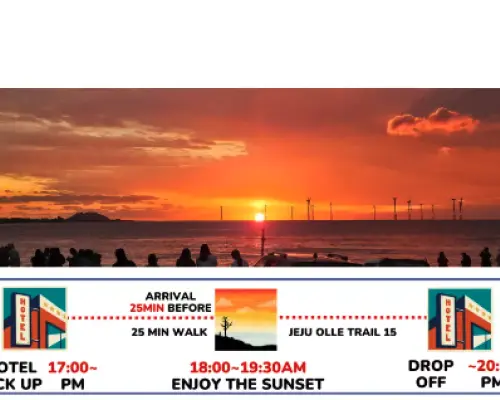
As the day winds down, immerse yourself in the fiery beauty of a Jeju sunset on a stroll from Gwakji Beach to the vibrant Aewol Cafe Street. This scenic path along the Olle Trail, famously walked by Korean stars Lee Hyori and IU, offers breathtaking views of the sun sinking below the emerald sea. Whether you begin your morning with our Sunrise Tour or end your evening with this Sunset journey—or pair them together for a complete experience—you will carry home the most poetic memories of Jeju’s natural splendor.

Embark on a sunrise and sunset journey guided by a licensed professional

Ignite your day with the sunrise tour!

Enjoy an exhilarating sunset tour
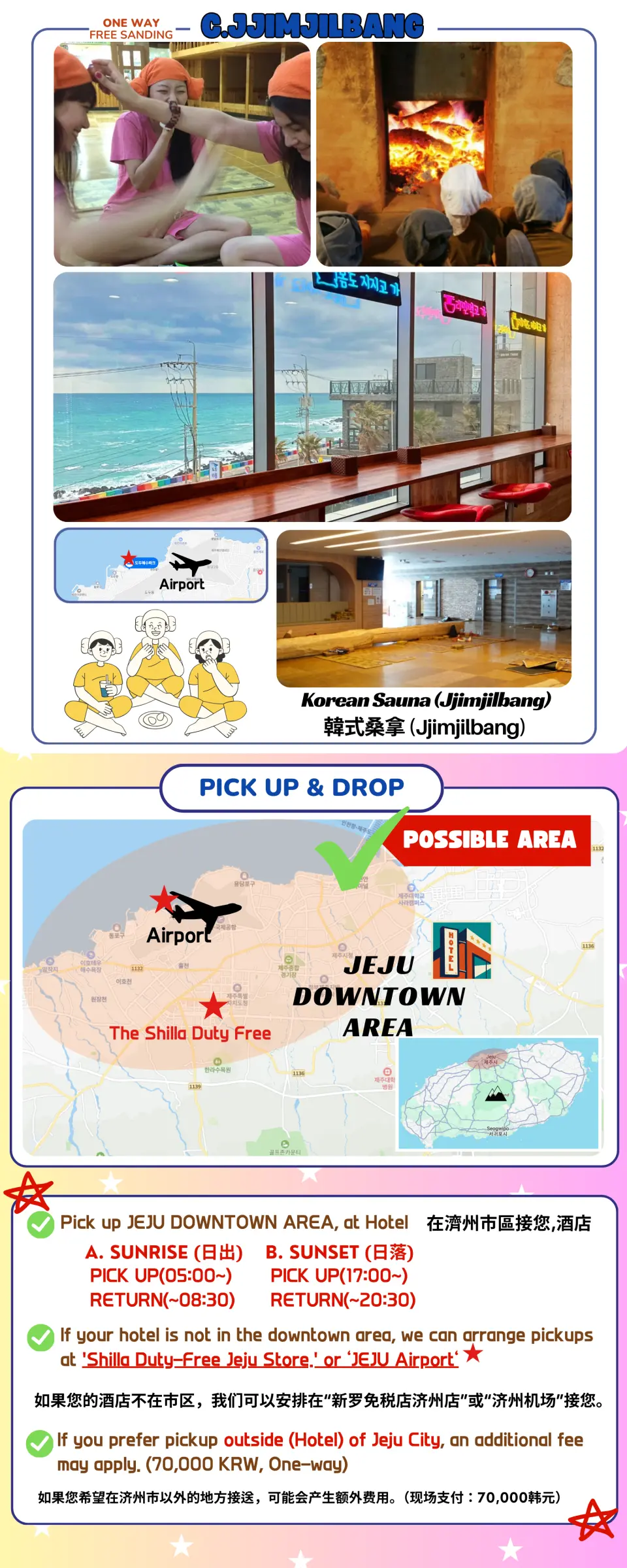
Experience the convenience of being chauffeured in a comfortable vehicle with air conditioning for hotel pick-up and drop-off
Purchase Notice
- There are no additional costs or hidden fees. Travel comfortably.
- Travel easily with your luggage.
- The sauna (Jjimjilbang) admission fee is not included. It only includes one-way transportation.
- The sunrise and sunset times vary daily, so the start and end times of the tour may change accordingly.
- If the weather is unfavorable, the tour may be rescheduled or canceled. Please note that same-day cancellations are not possible.
- Information about the weather, travel times, and pick-ups will be provided one day before the trip starts.
Reminders
A minimum of 3 traveler(s) are required for the tour to depart. If the number of participants does not reach the minimum requirement, the tour will be canceled. An email regarding tour cancellation will be sent 2 day(s) before the departure date
Please arrive at the designated location 10 minute(s) before the scheduled departure time, as the tour will depart on time
FAQ
1. What unique natural features make Jeju Island a famous destination for travelers seeking scenic views?
Jeju Island is renowned for its volcanic landscape, featuring Hallasan, South Korea's highest mountain, and stunning coastal rock formations. It's a UNESCO World Heritage site, famous for its lava tubes like Manjanggul Cave and the Seongsan Ilchulbong Tuff Cone, an iconic sunrise spot. These natural wonders create diverse scenic backdrops, from lush forests to dramatic sea cliffs, ideal for memorable photography and exploring unique geological formations.
2. Which seasons offer the most spectacular sunrise and sunset experiences on Jeju Island?
For the clearest and most vibrant sunrise and sunset views on Jeju Island, spring (April to June) and autumn (September to November) are often ideal. During these periods, the weather is generally mild with less humidity and clearer skies, enhancing visibility and color intensity. Winter can also offer crisp, clear days with stunning light, though temperatures are colder. Summers might have more haze or sudden rain showers, potentially obscuring views.
3. How many days are recommended to adequately explore Jeju Island's diverse landscapes and popular attractions?
To adequately explore Jeju Island's diverse landscapes and popular attractions, a visit of 3 to 5 days is often recommended. This duration allows travelers to experience both the eastern and western coasts, visit UNESCO sites like Seongsan Ilchulbong, and enjoy scenic drives. A well-planned multi-day itinerary also provides opportunities to include special experiences like sunrise and sunset tours, ensuring you maximize your exploration time.
4. Are professional tour guides on Jeju Island generally able to communicate in English with international visitors?
Yes, professional tour guides on Jeju Island who cater to international visitors are generally proficient in English. This ensures that travelers receive comprehensive explanations about the island's attractions, history, and culture. Engaging with an English-speaking guide enhances the touring experience, providing valuable insights and making navigation much smoother, especially when visiting various scenic spots.
5. What are the most convenient ways to travel between attractions when taking a guided tour on Jeju Island?
When participating in a guided tour on Jeju Island, the most convenient way to travel between attractions is typically the private vehicle provided by the tour operator. This service often includes comfortable, air-conditioned transport and hotel pick-up and drop-off, eliminating the need to plan routes or navigate public transport. It ensures a smooth, relaxing journey, allowing you to fully enjoy the scenic routes and arrive promptly at each site, especially for time-sensitive experiences like sunrise and sunset.
6. Can visitors comfortably navigate Jeju Island's popular spots if they prefer not to drive themselves?
Yes, visitors can comfortably navigate Jeju Island's popular spots without driving themselves. Utilizing guided tours that include transportation is an excellent option, offering convenient pick-up and drop-off services. Alternatively, public buses connect many major attractions, though they may require more planning. Taxis and ride-hailing apps can also be used for shorter distances or specific routes, providing flexibility for those who prefer not to self-drive.
7. Are ride-sharing applications commonly used and reliable for transportation across Jeju Island?
While traditional taxis are widely available on Jeju Island, major international ride-sharing applications like Uber are not the primary mode of transportation. Instead, local Korean ride-hailing services are more commonly used. For visitors without a local phone number, arranging transportation through hotel services, local tour operators, or utilizing the island's bus network and readily available taxis, often found near popular attractions and city centers, can be reliable alternatives.
8. Are there particular times of the year when weather conditions might be less favorable for outdoor activities on Jeju Island?
Yes, certain times of the year on Jeju Island can be less favorable for outdoor activities. The summer months (July and August) can be very hot and humid, with a higher chance of typhoons or heavy rainfall. Winter (December to February) can bring strong winds and colder temperatures, especially at higher altitudes like Hallasan, with occasional snow. These periods might impact comfort and visibility for outdoor experiences like enjoying sunrise and sunset views.


