

South Korean SIM Card | 4G Internet Access, Daily High-Speed Data, eSIM | Supports TikTok and ChatGPT
- A new choice for Internet access, no need to change SIM cards, enjoy 4G Internet access quickly and smoothly without any hassle
- Once you receive the voucher, you can scan it and install it, without having to go back and forth to get the physical card or wait for it to be delivered.
- Environmentally friendly, no consumables, free shipping, zero risk of loss
Package Options
Product Info
The content of this product is provided by machine translation and may not reflect the actual information, please take this into consideration before booking.
Please confirm your device is compatible with eSIM before purchasing


Applicable models


eSIM installation instructions (ios)

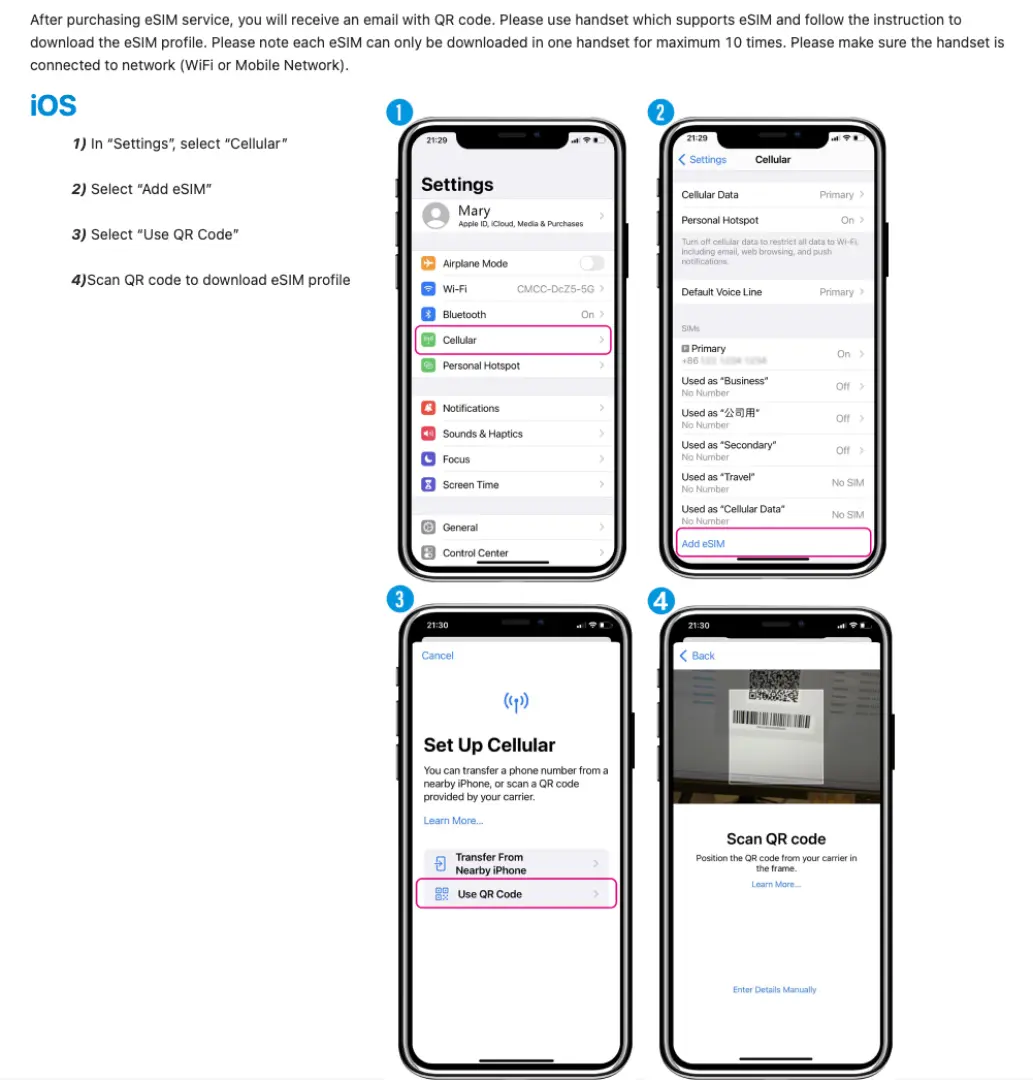
Method 2

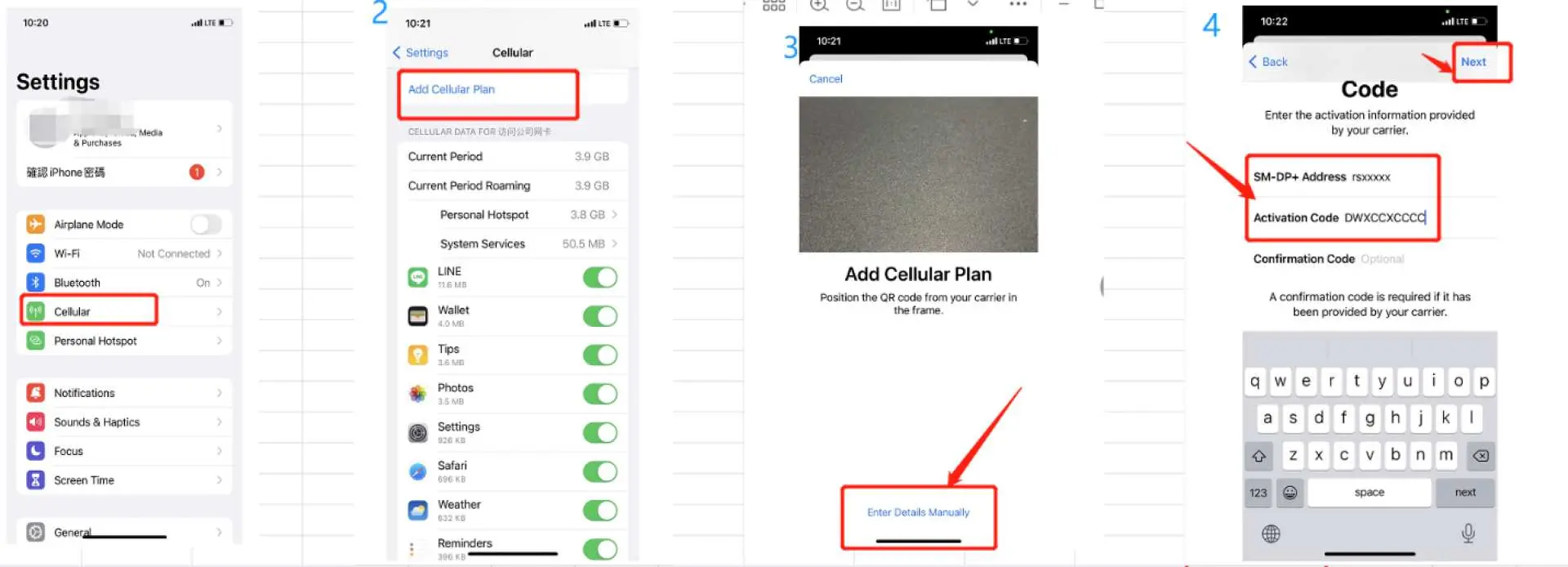
eSIM installation instructions (Android)


Purchase Notice
- Please make sure your phone and its operating system support the eSIM function before purchasing. If you cancel the order due to device incompatibility, no refund will be given.
- iOS version 12.1 or higher is required; Please note that iPhones sold in mainland China do not support eSIM. In Hong Kong and Macau, only iPhone 13 mini, iPhone 12 mini, iPhone SE 2020 and iPhone XS have eSIM function. (Please visit Apple official website for inquiries)
- Samsung phones vary in different countries. Samsung phones purchased in Taiwan do not support eSIM. Please confirm with Samsung's official website for other regions first.
- Each QR code can only be scanned and installed once. Once bound, you cannot change the device or delete it. Once deleted, you cannot scan and install again and need to purchase it again.
- The customer service hours for this product are 9:30~18:00 (GMT+8), please be advised.
Reminders
Before purchasing, please make sure that your phone and its operating system support the eSIM function. No refund will be given if the order is cancelled due to device incompatibility.
iOS 12.1 or later is required; Please note that iPhones sold in mainland China do not support eSIM. In Hong Kong and Macau, only iPhone 13 mini, iPhone 12 mini, iPhone SE 2020, and iPhone XS have eSIM capabilities.
Each QR code can only be scanned once. Once bound, you cannot change the device or delete it. Once deleted, you cannot scan and install it again.
An internet connection is required to install the eSIM. Please make sure there is WiFi or mobile data available before installation.
The eSIM must be installed and activated at the destination within 90 days of ordering, otherwise it will become invalid and unusable.
Please remember to turn off data roaming on the original SIM card to avoid using the mobile network of the original SIM card and incurring high roaming charges.
When you finish using the eSIM plan in your phone, click [Remove Action Plan] at the bottom to remove it.
Please be aware that the quality of Internet access may be affected by factors such as location, terrain, building shielding, number of users and weather.
The customer service hours for this product are 9:30~18:00 (GMT+8), please be advised.
How to Use
- ios
1) Select the "Settings" page, then select "Mobile Network" 2) Click "Add Mobile Network" 3) Scan the QR code in the scan box that appears 4) After the download is complete, make some basic settings and you can start using it - Android
1) On the "Settings" page, select "Network & Internet" 2) Select "Mobile Network" 3) Select "Download SIM card instead?" 4) Scan the QR code when the scanning screen appears - If the APN is not loaded automatically, please set the APN manually.
APN: mobile - The customer service hours for this product are 9:30~18:00 (GMT+8), please be advised.
- Frequently asked questions
- How to check ICCID?
If the mobile network is turned on, you can check the ICCID in “Settings – About this device – ESIM”. - I have successfully activated the eSIM service, but the applicable device cannot connect to the network. What should I do?
Please shut down and restart your device and update the iOS version before trying again. - If the eSIM can be used normally but cannot share the hotspot, please refer to the following instructions to try to restore it:
1) Is the phone a contract phone or a card-locked phone?
2) Is VPN turned off?
3) Is data roaming enabled?
4) Whether to set the eSIM as the primary phone number
5) Is the phone updated to the latest iOS version (iOS13.6)
6) Please use a physical card to access the Internet, turn on the mobile phone hotspot sharing function (make sure the hotspot is available), then do not turn off the hotspot, and then switch the phone to the eSIM to access the Internet. Please try several times and turn the phone on and off.
7) If the above problems have been eliminated, please contact customer service
Cancellation Policy
- Once the order has been completed, it cannot be canceled, modified, or refunded
- Due to time zone differences, the confirmed cancellation date is based on the supplier’s local time. Please allow 2–5 business days to process your cancellation request, after which the cancellation fee will be charged according to the product’s cancellation policy. Once the cancellation is confirmed, you will receive your refund within 14 working days.
FAQ
Yes, Korean eSIMs are widely available for visitors, offering a convenient way to get immediate internet access upon arrival. This digital option removes the need to physically pick up a SIM card or wait for delivery, streamlining connectivity for travelers.
A Korean eSIM provides 4G high-speed internet access without requiring a physical SIM card change, ensuring a smooth online experience. Activation is simple via QR code from a digital voucher, eliminating physical card pickup. This environmentally friendly option also removes the risk of losing a traditional SIM card.
Most standard Korean eSIM packages, particularly those designed for data use by travelers, primarily provide internet connectivity. They generally do not include a local Korean phone number for traditional calls or SMS. For voice communication, travelers commonly use VoIP apps like WhatsApp or Line over the internet connection.
Korean eSIM pricing is generally structured based on the amount of daily high-speed data and the duration of service. Options often include a set daily high-speed data limit (e.g., 1GB or 3GB per day), after which speeds may be reduced, but unlimited access continues. The overall cost depends on the specific data package and number of days selected.
A Korean eSIM is designed to provide reliable 4G internet access across major cities and popular tourist destinations in South Korea, where network coverage is generally robust. While connectivity is strong in most areas, similar to any mobile service, it might be limited in very remote or mountainous regions. It supports consistent high-speed data for navigation, communication, and streaming.
One key consideration for Korean eSIMs is device compatibility; not all older phone models support eSIM functionality, so travelers should verify their device beforehand. Additionally, most data-focused eSIMs do not include a local phone number for traditional calls. Some users unfamiliar with eSIM technology might find the initial setup slightly different from a physical SIM.
Activating a Korean eSIM is a straightforward process. After your purchase, you will receive a digital voucher containing a QR code. To activate, simply scan this QR code using your compatible smartphone's settings to add the cellular plan. Once installed, ensure cellular data is enabled for the eSIM profile to establish your internet connection.
If your Korean eSIM isn't connecting, first confirm your device is eSIM compatible and that cellular data is enabled for the eSIM profile in your phone settings. Try restarting your phone. Verify the APN settings, though these are often automatically configured. If problems persist, ensure roaming is enabled if necessary, or contact customer support for further assistance.
Get Help


