

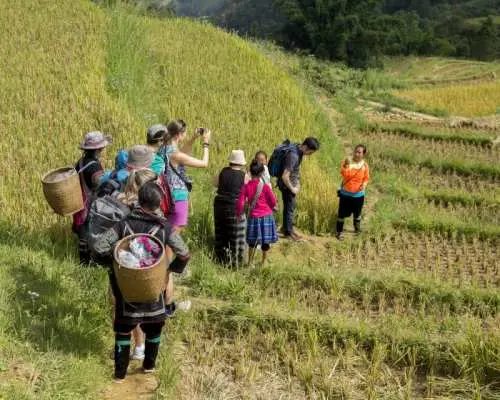


2D1N Sapa Trekking Tour | A Live – Like – A - Local Experience | Hanoi, Vietnam
Reconnect with a simpler way of life on an amazing 2-day tour of Sa Pa from Hanoi. Spend the night at a homestay of the ethnic minority people and learn more about their way of life in the mountains.
- Admire the traditional costumes of the ethnic peoples
- Trek through the lush green rice paddies and terraces
- Experience life in the mountains and spend the night at a homestay
Package Options


Sightseeing Tours
| Tour Type | Shared tour |
| Transportation method | Transfer from meeting point |
| Tour types | Guided tour |
| Meal arrangement | Breakfast included, Lunch included, With dinner |
| Accommodation type | B&B |
| Room type | Arrange on-site |
| Additional service & facility | Transfer included |
| Sightseeing type | Natural sights, Eco-tourism, Nordic walking |
| Transport | Walking, Bus tour |
Product Info
Important Info
Reminders
The accommodation at homestay is very basic. You are advised to take toothbrush, toothpaste and towel with you.
Please choose the Guide Language in accordance to the description of the package you booked. False bookings will be subjected to cancellation
Holiday surcharge will be collected directly by the operator on the service using day
FAQ
The primary local transportation methods in Sapa include motorbike taxis (Xe Om), taxis, and motorbike rentals. Motorbike taxis and regular taxis are convenient for short distances, and prices should be negotiated beforehand. For travelers who prefer to explore independently, renting a motorbike is a popular choice, but it's essential to be mindful of the mountainous terrain and your own riding experience. Many trekking routes are also within walking distance from the town center.
The most common and recommended ways to travel from Hanoi to Sapa are by overnight sleeper bus or overnight train. The sleeper bus journey takes approximately 5-6 hours and arrives directly in Sapa town. The train travels to Lao Cai station, from where you'll need to take a shuttle bus or taxi for about an hour to reach Sapa. Both options allow you to start your journey refreshed upon arrival.
The best seasons for trekking in Sapa are from March to May and from September to November. During these periods, the weather is pleasantly cool with less rainfall and high visibility, making it ideal for hiking and enjoying clear mountain views and rice terraces. Spring offers lush green rice fields and blooming flowers, while autumn showcases golden, harvested rice terraces.
The difficulty of Sapa trekking tours varies widely, ranging from easy half-day excursions to challenging multi-day treks. Most standard tours are of moderate difficulty, requiring basic physical fitness and the ability to navigate some uneven or slippery mountain paths. These tours are particularly suitable for nature lovers, culture enthusiasts, and those keen on experiencing local life; even trekking beginners can find suitable routes.
Sapa is home to several ethnic minority groups, including the Hmong and Yao people. Their cultural distinctiveness is reflected in their unique traditional clothing, handicrafts, festival customs, and simple mountain lifestyles. By visiting villages on foot, participating in local activities, or staying in ethnic minority homestays, you can gain a deep understanding of their daily lives, savor traditional cuisine, and experience a philosophy of living in harmony with nature.
For trekking in Sapa, it is recommended to pack comfortable, slip-resistant hiking shoes, lightweight, quick-drying clothing (consider layering), rain gear (especially during the rainy season), sunscreen, a hat, sufficient drinking water, and some energy snacks. Additionally, a small backpack, personal medications, insect repellent, and a reusable water bottle are important. Respect local culture and always maintain environmental cleanliness.
Homestay experiences in Sapa offer a more immersive connection to local life. Unlike standard hotels, homestays are typically located in villages and run by local families, providing a simple yet warm accommodation environment. Guests have the opportunity to interact with hosts, try home-cooked meals, and even participate in agricultural or handicraft activities. This provides a unique pathway to deeply experience the culture of ethnic minorities and their mountainous way of life.
The terraced rice fields in Sapa are most spectacular during two seasons: late spring to early summer (around April to June), when they are flooded and reflect the sky like mirrors, creating a shimmering landscape; and autumn (around September to October), when the rice ripens, turning the terraces golden. The cascading waves of golden rice intermingled with the mountains create a magnificent harvest panorama.
Get Help


