




3-Day Uluru Kata Tjuta Safari Tour from Ayers Rock/Yulara | Northern Territory
This 3-day Uluru tour small group safari adventure from Alice Springs captures the absolute best of Australia’s iconic red centre tour destinations, covering Uluru, Kings Canyon and Kata Tjuta all in one tour.
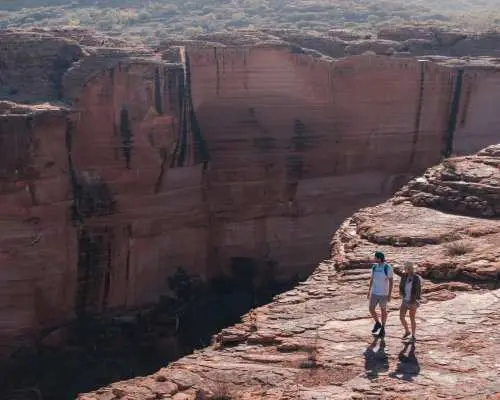
- Experience the grandiosity of Kings Canyon in Watarrka National Park
- Enjoy the sunset lookout at Uluru (Ayers Rock)
- Immerse yourself in the Uluru-Kata Tjuta cultural centre
- Experience sunrise at the majestic Olgas -Kata Tjuta
- Hike through the Valley of the Winds or Walpa Gorge
Package Options


Sightseeing Tours
| Tour Type | Shared tour |
| Luggage limit | 1 piece |
| Tour types | Guided tour |
| Meal arrangement | Arrange yourself |
| Accommodation type | Campsite |
| Sightseeing type | Natural sights, Eco-tourism, Nordic walking |
| Transport | Walking, Bus tour |
Product Info
Purchase Notice
- Children aged between 8 to 17 years old, must be accompanied by an adult or legal guardian at all times and must stay in private twin rooms. Not suitable for infants or children 7 years and under
- This tour is not suitable for mobility-impaired travellers, wheelchairs, walkers or strollers
- A minimum moderate to advanced level of fitness is required to complete the walks. The length of walks will be between 2km to 6km each day, often over steep rocky sections and in direct sunlight and high humidity. An approximate 12-15km walk is included in this tour. Embarking on walks will be at the guide’s discretion to ensure the safety of guests. Therefore a medium/high level of fitness is required and doctors certificate is required for people over 70 years (30 days prior to travel)
- Limited storage space on our vehicle, baggage kept to 1 x 15kg travel bag, 1 x 5kg day bag
- What to bring:
-2-3L Refillable water bottle
- wide-brimmed hat
- sunglasses, sunscreen & beach towel
- toiletries
- bathers or swimwear
- comfortable sturdy hiking shoes (closed shoes)
- all-weather clothing (extreme conditions day/night)
- camera, flashlight, headlamp or torch
- tropical strength insect repellent, mosquito or fly net (summer months),
- 15kg overnight bag & small day pack,
- bring your own sleeping bag & pillow
- recharge power bank (limited access to power to charge phones or cameras)
- money for snacks and meals
- The weather in the Red Centre can fluctuate and be extreme. It is not unheard of for temperatures to reach over 50+ degrees Celsius in the dry season and in the evening the temperature drops dramatically. Please ensure you have checked the average temperatures for the time of year you are travelling and have packed adequate clothing. In the event of rain or inclement weather, your experience will still go ahead, unless contacted by the provider
- Autopia Tours reserves the right to alter the route or itinerary schedule during seasonal weather fluctuations and/or during park closures due to traditional landowner ceremonies
- Guests are asked to participate in the preparation of meals, clean up and vehicle unpacking/loading, so everyone can relax together after a long day touring. It’s also a great way to get to know and connect with your fellow travellers
Reminders
Please arrive at the designated location 10 minute(s) before the scheduled departure time, as the tour will depart on time
Cancellation Policy
- Cancellations 33 day(s) (inclusive) before the selected date are allowed. Unused orders can be canceled for free
- Cancellation is not allowed between 0–32 days from the selected date. Orders cannot be canceled or modified, and refunds will not be granted.
- Due to time zone differences, the confirmed cancellation date is based on the supplier’s local time. Please allow 2–5 business days to process your cancellation request, after which the cancellation fee will be charged according to the product’s cancellation policy. Once the cancellation is confirmed, you will receive your refund within 14 working days.
FAQ
Visitors are requested to observe specific photography restrictions at certain sacred sites around Uluru, marked by "no photography" signs. These areas hold deep spiritual significance for the Anangu people (traditional owners). Respecting these requests is crucial for upholding cultural integrity and showing reverence for their traditions during your visit to Uluru.
Uluru is a single, immense sandstone monolith renowned for its smooth, domed shape and dramatic color changes at dawn and dusk. Kata Tjuta, also known as The Olgas, is a distinct group of 36 large, domed rock formations, characterized by deep valleys and gorges. Both sites are deeply sacred to the Anangu people, with Uluru often associated with men's ceremonies and Kata Tjuta with women's.
The most favorable time to visit Uluru and Kata Tjuta is during the cooler months, from May to September (winter and spring). Daytime temperatures are milder, making outdoor activities like hiking significantly more comfortable. In contrast, the summer months (October to April) can experience extremely high temperatures, often necessitating early morning excursions and ample hydration.
Kata Tjuta offers two primary walking experiences. The Valley of the Winds walk is a challenging 7.4-kilometer loop that typically takes 3 to 4 hours, providing spectacular panoramic views into the domes. Alternatively, the Walpa Gorge walk is an easier 2.6-kilometer return trail, taking approximately one hour, leading visitors into a tranquil narrow gorge.
Kata Tjuta is situated approximately 50 kilometers west of Uluru within the Uluru-Kata Tjuta National Park. The journey by vehicle between these two iconic natural landmarks typically takes about 45 minutes to an hour. This manageable distance allows visitors to easily experience both magnificent sites during their trip to the Red Centre.
Visitors without personal vehicles can explore Uluru-Kata Tjuta National Park through various organized tour options, including comprehensive multi-day safaris that provide transport to Uluru, Kata Tjuta, and other destinations like Kings Canyon. Additionally, shuttle bus services operate regularly between Ayers Rock Resort and key viewing areas within the park, offering convenient access to designated sites.
At the Uluru-Kata Tjuta Cultural Centre, visitors can delve into the rich traditional culture, history, and profound connection to the land of the Anangu people. The centre features informative exhibits, showcases traditional artworks, and often hosts cultural demonstrations. It serves as an essential resource for understanding Tjukurpa (traditional law) before venturing out to explore the sacred sites.
Kings Canyon in Watarrka National Park presents two primary hiking opportunities. The challenging Kings Canyon Rim Walk is a 6-kilometer loop, taking 3-4 hours, and offers stunning vistas from the canyon's edge, including the Garden of Eden. For a more accessible option, the Kings Creek Walk is a 2.6-kilometer return trail along the canyon floor, leading to a serene waterhole.
Get Help


