



The Ultimate Day Trip: Black Virgin Mountain, Cao Dai Temple & Cu Chi Tunnels from Ho Chi Minh
- Conquer the "Roof of Southern Vietnam" at Black Virgin Mountain via a scenic cable car ride.
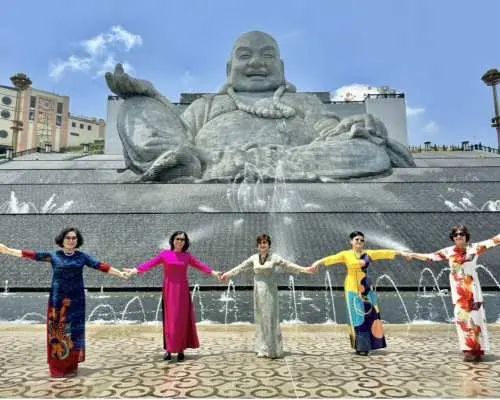
- Admire Asia’s tallest bronze Lady Buddha and the magnificent sandstone Happy Buddha statue.
- Witness a sacred ceremony at Cao Dai Holy See, a stunning fusion of global religions.
- Explore the authentic Ben Duoc Tunnels, a quieter and more historical part of Cu Chi.
- Enjoy a hassle-free journey with professional guides and round-trip transfers from Ho Chi Minh City.
Package Options


Product Info
FAQ
1. What is the historical significance or origin of the name 'Black Virgin Mountain'?
Black Virgin Mountain, or núi Bà Đen, in Tay Ninh Province, Vietnam, is steeped in local legend. It is believed to be named after a local female deity, Linh Son Thanh Mau (or Black Lady), who is venerated at the mountain's pagodas. The mountain itself holds significant spiritual and historical importance, offering a unique blend of natural beauty and cultural heritage with its temples and caves.
2. What makes Black Virgin Mountain a worthwhile destination for travelers?
Black Virgin Mountain is a compelling destination due to its towering presence as the highest mountain in Vietnam's southeastern region, reaching 986 meters. Visitors can admire the highest bronze Buddha statue in Vietnam and explore numerous beautiful temples and mysterious caves once inhabited by Buddhist monks and nuns. The panoramic views from the summit, accessible via a scenic cable car, offer breathtaking vistas of waterfalls, dense forests, and the surrounding landscape, making for a memorable experience.
3. Where is Black Virgin Mountain located and how can visitors reach it from Ho Chi Minh City?
Black Virgin Mountain is located in Tay Ninh Province, approximately 100 kilometers northwest of Ho Chi Minh City. The most convenient way for visitors to reach it from Ho Chi Minh City is by joining an organized day tour that often includes round-trip transportation by private car or van. This option ensures a hassle-free journey and typically covers other attractions in the region, such as Cao Dai Temple and Cu Chi Tunnels.
4. What kind of experience can I expect from the cable car ride at Black Virgin Mountain?
The cable car ride at Black Virgin Mountain offers a truly scenic journey, allowing visitors to soar above the lush landscape and take in panoramic views of the entire mountain and its surroundings. From the cabin, you can observe glistening waterfalls, dense forests, and the vast expanse below. It provides a convenient and comfortable way to ascend the mountain, leading directly to the temples, pagodas, and the massive Buddha statue, enhancing the overall exploration experience.
5. What is the unique value of visiting Cao Dai Temple for tourists?
Visiting Cao Dai Temple offers a unique cultural and spiritual experience, as it is the center of Caodaism, a distinctive syncretic religion practiced in Southern Vietnam. Tourists can witness the temple's striking and colorful architecture, which blends elements from various world religions. Observing the elaborate and fascinating daily ceremonies provides deep insight into the unique rituals, beliefs, and practices of Caodaism, making it a culturally enriching stop on any tour.
6. Are there specific dress code requirements for visiting Cao Dai Temple?
Yes, visitors to Cao Dai Temple are expected to adhere to a modest dress code out of respect for the sacred site. It is generally recommended to wear clothing that covers your shoulders and knees. This includes wearing long pants or skirts and shirts with sleeves. Additionally, it is customary to remove your shoes before entering the temple, following local customs and etiquette.
7. What are the core beliefs of Cao Dai religion, and how does it relate to other major faiths like Christianity?
Caodaism is a unique religion that harmonizes elements from major world religions, including Buddhism, Taoism, Confucianism, Christianity, and Islam, with a focus on universal peace and the unity of all faiths under one God. Adherents believe in a single supreme being and venerate a pantheon of religious figures, including Buddha, Confucius, Laozi, Jesus Christ, and Muhammad. Its central tenet is to promote love, justice, and tolerance among all people, drawing wisdom from diverse spiritual traditions.
8. What unique historical experiences can visitors have at the Cu Chi Tunnels?
At the Cu Chi Tunnels, visitors can immerse themselves in Vietnam's wartime history by crawling through sections of the incredibly complex underground network, experiencing firsthand the conditions endured by soldiers. You can learn about ingenious booby traps, the daily life of guerrillas, and the strategies of resistance. The site also offers unique opportunities like practicing how to conceal smoke while cooking and, for those interested, trying AK-47 shooting at a supervised range, providing a tangible connection to the past.


