



Professional Korean Chef|Visit Busan Traditional Market & Make Local Food with Local Chefs
🎁 Have you purchased Visit Busan Pass? You can enjoy a 5% discount coupon for this item! 🔥 (The offer may be terminated without warning due to internal reasons.)
👉 [Purchase Visit Busan Pass ]
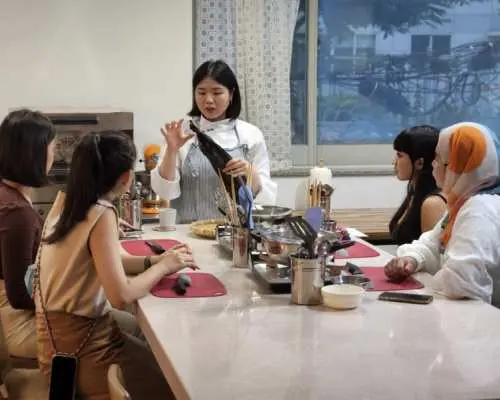
- In this course, you will learn to cook 4 representative local dishes of Busan (seafood pancake/clam seaweed soup/spicy fried octopus/chef's selected seasonal dishes).
- The course includes lectures on Korean food culture, cooking, meals, traditional tea ceremony experience and Busan food tour consultation.
- After the class, you will visit the century-old Bupyeong Food Market with the chef to learn about Busan’s ingredients and food culture. The chef will also assist with purchases if necessary.
- A recipe book will be provided after the course.
- All courses are conducted in English.
Package Options
Cultural Experiences
| Location | Indoor |
| Cuisine type | Korean cuisine |
| Cultural experience type | Japanese tea ceremony |
Product Info
What You Can Expect
1 Day
- 10:00Participant meet-up + welcome drink
- 10:05Korean food culture lecture, tasting of 3 traditional Korean sauces (chili paste, soybean paste (된장), soy sauce)
- 10:20Cook 4 kinds of Busan local delicacies: seafood pancake, seaweed soup, spicy fried octopus, seasonal dishes
- Seafood Pancake
- Spicy fried octopus
- 12:10Lunch (local traditional wine with homemade food)
- 12:40Traditional tea ceremony
- ㅤㅤ
- 13:00Busan Food Tourism Consultation
- 13:10Visit Bupyeong Food Market
- 13:30End of Course


Purchase Notice
- If you are allergic to any specific food ingredients, please inform us by leaving a note.
Includes/Excludes
- Apron, cutlery, all ingredients
- Cooking class taught in English by a professional Korean chef + market visit
- Korean Food Culture Lecture
- Korean Traditional Tea Ceremony Experience
- Busan Food Tourism Consultation
- Busan Food Map
- recipe
- Personal expenses
- Insurance
- Other expenses not mentioned above
Reminders
A minimum of 4 traveler(s) are required for the tour to depart. If the number of participants does not reach the minimum requirement, the tour will be canceled. An email regarding tour cancellation will be sent 2 day(s) before the departure date
Please arrive 10 minutes before the course starts. Late arrival will be deemed as automatic abandonment of the course and no refund will be given.
Course content may be changed or cancelled depending on local conditions.
How to Redeem Your Voucher
How to Use Your Voucher
- Please present the e-voucher on-site
Validity Period
- The voucher must be used on the selected date and within operating hours; Invalid after expiration
Experience Location
Location Name: Busan Cooking Class Studio
Address: 15, 2F, 186-gil Gudeok-ro, Seo-gu, BusanCancellation Policy
- Cancellations 3 day(s) (inclusive) before the selected date are allowed. Unused orders can be canceled for free
- Cancellation is not allowed between 0–2 days from the selected date. Orders cannot be canceled or modified, and refunds will not be granted.
- Due to time zone differences, the confirmed cancellation date is based on the supplier’s local time. Please allow 2–5 business days to process your cancellation request, after which the cancellation fee will be charged according to the product’s cancellation policy. Once your refund request is confirmed, KKday will initiate the refund to your original payment method within 15 days. The actual refund timing depends on your card-issuing bank’s policy.
FAQ
1. What makes Jagalchi Market a unique visiting experience in Busan?
Jagalchi Market is South Korea's largest seafood market, offering an immersive experience with fresh catches displayed live. Visitors can select seafood directly from vendors and have it prepared immediately upstairs. Its vibrant, bustling atmosphere, coupled with direct interaction with local fishmongers, provides a true glimpse into Busan's maritime culture. It’s a sensory delight, making it a must-visit for food lovers and those seeking an authentic local encounter.
2. What are the best transportation options to Jagalchi Market from Busan Station?
From Busan Station, the most convenient way to reach Jagalchi Market is by subway. Take Busan Metro Line 1 (orange line) towards Dadaepo Beach and alight at Jagalchi Station (Station 110). From Exit 10, the market is just a short walk away. Alternatively, numerous local buses serve the area, or a taxi provides a direct route, typically a 10-15 minute ride depending on traffic.
3. Is Millac Market worth visiting for its local atmosphere and offerings?
Millac Market is highly recommended for those seeking a vibrant, modern take on a traditional market experience. It blends classic market stalls with trendy cafes, art spaces, and eateries, creating a unique, youthful atmosphere. Visitors can enjoy diverse street food, local delicacies, and often live performances. Its coastal location near Gwangalli Beach also offers pleasant sea views, making it a popular spot for both food and leisure.
4. What local foods and culinary recommendations are available at Haeundae Traditional Market?
Haeundae Traditional Market is a culinary hotspot in Busan. Must-try local foods include Gukbap (hot soup with rice), Eomuk (fish cakes), and Pajeon (Korean pancake, often with seafood). You'll also find a variety of fresh seafood, side dishes (Banchan), and street food snacks like Tteokbokki (spicy rice cakes) and Sundae (blood sausage). Exploring the market provides a delicious insight into Busan's everyday gastronomy.
5. What Busan local dishes will be taught in the professional Korean chef cooking class?
In the professional Korean chef cooking class, participants will learn to prepare four representative Busan local dishes. These typically include delicious Haemul Pajeon (seafood pancake), comforting Jogae Miyeokguk (clam seaweed soup), savory Nakji Bokkeum (spicy fried octopus), and a unique seasonal dish personally selected by the chef. The class provides hands-on experience and insights into each recipe.
6. What can participants expect to learn about ingredients during the Bupyeong Food Market tour with the chef?
During the Bupyeong Food Market tour, guided by the chef, participants will learn extensively about authentic Korean ingredients used in local cuisine. The chef will introduce various fresh produce, traditional spices, and unique Busan food items. This immersive experience highlights the origins and cultural significance of ingredients, helping participants understand their role in preparing local dishes. The chef can also assist with purchases.
7. Beyond cooking, what cultural experiences are included in the Korean food class?
The Korean food class offers more than just cooking; it provides a comprehensive cultural immersion. Participants will enjoy lectures on Korean food culture, delving into its history and traditions. The experience also includes a traditional tea ceremony, offering a moment of tranquility and insight into Korean customs. Additionally, the chef provides consultation on Busan's wider food scene, enriching the overall culinary understanding.
8. How does the atmosphere of Busan's traditional markets compare to modern shopping areas?
Busan's traditional markets, such as Jagalchi and Haeundae, offer a vibrant, bustling, and authentic atmosphere distinct from modern shopping areas. They are sensory rich, with lively vendors, diverse aromas, and a strong sense of local culture and history. Unlike modern malls with fixed prices and branded stores, markets offer a more interactive shopping experience, often with opportunities for bargaining and direct engagement with the community.


