


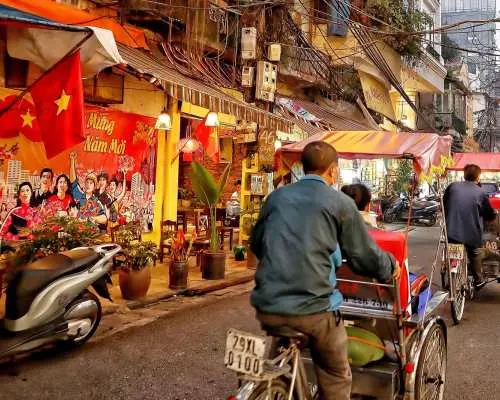

Hanoi | Half Day Foodie Evening Tour
- Discover the culture of Vietnam through Hanoi street food and the sophisticated flavors of Hanoi’s 1000 years old
- Venture around Hanoi Old Quarter to take the best photo shoots at places of interest at night
- Enjoy the 3-5 authentic food specialties
Package Options


Sightseeing Tours
| Tour Type | Private tour, Shared tour |
| Tour types | Guided tour |
| Sightseeing type | City walking tour, Japanese castles, Food tour・Izakaya Hopping |
| Transport | Walking |
Product Info
FAQ
The Hanoi Foodie Half-Day Tour is designed to immerse you in authentic local flavors. You'll have the opportunity to taste a variety of classic street foods, such as rich Pho noodle soup, crispy Banh Mi sandwiches, refreshing Goi Cuon (spring rolls), and specialty desserts like Ca Phe Trung (egg coffee). The itinerary carefully selects highly-rated vendors and eateries to ensure you experience the most authentic Hanoi cuisine, gaining deep insight into its unique flavors and culture.
The price for a bowl of authentic Pho in Hanoi varies depending on the location and type of establishment. Generally, street food stalls or local markets are more affordable than eateries in tourist areas or those with fancier decor. Overall, enjoying a delicious bowl of Pho is quite economical, allowing travelers to savor this national dish within a reasonable budget. It's advisable to have an adequate amount of Vietnamese Dong on hand for various payment situations.
In addition to the widely popular Pho, Hanoi offers many unique breakfast options. For example, the 'Bun' (noodle soup) series, such as Bun Cha (grilled pork with noodles) or spring rolls, features light yet flavorful broth. Banh Mi sandwiches are also a common breakfast choice with diverse fillings. Furthermore, Xoi (sticky rice) with various toppings like chicken or shredded pork is a filling breakfast favored by locals. These options showcase the diversity and local character of Hanoi's breakfast scene.
When exploring the Old Quarter for food, please pay close attention to the following safety measures. Firstly, traffic can be heavy, so be extremely careful when crossing the street, following the habits of locals. Secondly, in crowded markets or street stalls, secure your personal belongings to prevent pickpocketing. Additionally, drink bottled water to ensure hygiene and be mindful of street vendor solicitations. Staying alert and dining at establishments recommended by locals can make your culinary journey more secure and smooth.
Beyond Pho, Hanoi offers a diverse range of specialty noodle dishes worth exploring. For instance, 'Bun Cha' involves charcoal-grilled pork and spring rolls served in a sweet and sour dipping sauce with noodles, offering a unique flavor. Another option is 'Bun Thang', a dry noodle dish typically topped with shredded chicken, egg strands, and other ingredients, creating rich layers of flavor. Furthermore, 'Bun Oc' (snail noodle soup) is known for its delicious snail broth. Each of these noodle dishes has its own distinct taste, showcasing the depth of Hanoi's culinary culture.
The development of Hanoi's street food is deeply influenced by its history and geographical location. During the French colonial period, French cuisine integrated with Vietnamese culture, forming unique Franco-Vietnamese flavors, such as Banh Mi. Traditionally, street food has been an integral part of daily life for local residents, with stalls serving not only meals but also acting as social spaces for community interaction. Fresh ingredients, quick preparation, and balanced flavors are its hallmarks, reflecting the Vietnamese people's appreciation for food and their wisdom in living.
For lunch or dinner in Hanoi, besides common street snacks, there are many authentic choices. You can try 'Nem Ran/Cha Gio' (fried spring rolls), which are either crispy fried or fresh and light. Additionally, various 'Com' (rice dishes), such as Com Tam (broken rice with grilled pork) or Com Ga (chicken rice), served with a variety of side dishes, are also filling options. For a richer local dining experience, look for restaurants specializing in 'Lau' (hot pot) or 'Nuong' (grilling), which are suitable for group sharing.
When choosing street food vendors in Hanoi's Old Quarter, consider the following points to ensure hygiene: Observe if the vendor has a steady stream of customers; stalls popular with locals usually indicate they are well-liked and trustworthy. Pay attention to how ingredients are stored – whether they are fresh, clean, and properly refrigerated. The cooking area should be kept tidy, and utensils and bowls should be washed clean. Furthermore, choosing vendors with fixed stalls or shops is generally more reliable than mobile vendors.
Get Help


