


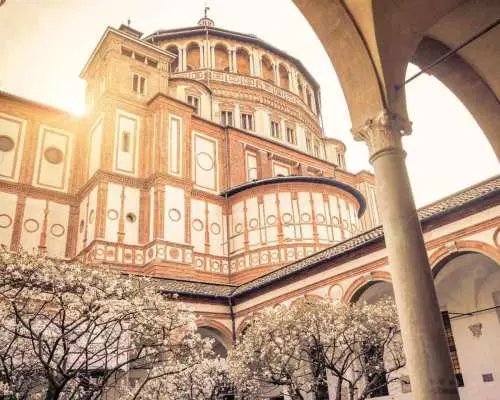
Milan: Last Supper Guided Tour with Skip-the-Line Ticket|Italy
- Marvel at Leonardo da Vinci’s Last Supper with a guided tour
- Enjoy a 30-minute introduction to the masterpiece and its history
- Skip the line and spend 15 minutes in front of the Last Supper
- Learn about Leonardo’s time in Milan and his artistic journey
Package Options


Product Info
Important Info
Reminders
What To Bring: Passport or ID card
Know Before You Go: The tour is brief, lasting only 1 hour in total
Know Before You Go: Feel free to ask the guide for advice on how to make the most of your time in the city
FAQ
1. What is the historical context of the Last Supper depicted in Leonardo da Vinci's masterpiece?
Leonardo da Vinci's Last Supper depicts the final meal Jesus shared with his apostles before his crucifixion. Historically, this event is understood to have occurred on the evening of Holy Thursday, during the Jewish festival of Passover. The painting captures the dramatic moment Jesus announces that one of his disciples will betray him, portraying the various reactions among the apostles.
2. Does the Last Supper artwork specifically portray the Passover meal?
Yes, the Last Supper depicted in Leonardo da Vinci's artwork is widely understood to be the Passover Seder. This significant Jewish festival commemorates the liberation of the Israelites from slavery in Egypt. The New Testament accounts place Jesus's final meal during this festival, which imbues the artwork with profound religious symbolism and historical depth for viewers.
3. Who created the iconic Last Supper mural, and what is its significance in art history?
The iconic Last Supper mural was created by the renowned Italian Renaissance artist Leonardo da Vinci. It is considered one of art history's most famous and influential masterpieces, celebrated for its dramatic composition, psychological depth in portraying the apostles, and innovative use of perspective. Its creation marked a pivotal moment in Renaissance art, influencing countless artists.
4. Can you identify the key figures depicted alongside Jesus in Leonardo da Vinci's Last Supper?
In Leonardo da Vinci's Last Supper, Jesus is positioned at the center, flanked by his twelve apostles, who are grouped in fours. Key identifiable figures include Peter, Judas Iscariot (holding a bag of silver, recoiling from Jesus), John, and Thomas (pointing upwards). The painting masterfully captures the individual reactions of each apostle to Jesus's announcement of betrayal.
5. What is the cultural and religious significance of the Last Supper artwork for visitors?
The Last Supper holds immense cultural and religious significance. Culturally, it stands as a testament to human artistic genius and remains a cornerstone of Western art. Religiously, it represents a foundational event in Christianity—the institution of the Eucharist. For visitors, it offers a profound connection to history, faith, and artistic innovation, inviting reflection on its enduring narrative and spiritual depth.
6. How long can visitors view Leonardo da Vinci's Last Supper during a guided tour?
During a guided tour of Leonardo da Vinci's Last Supper, visitors typically have a dedicated viewing period of 15 minutes directly in front of the masterpiece. This focused time allows for appreciation of the artwork's intricate details and grand scale, following a comprehensive 30-minute introductory session that provides essential historical and artistic context.
7. What historical insights about Leonardo da Vinci and his work are typically shared during a Last Supper guided tour?
A Last Supper guided tour typically shares insights into Leonardo da Vinci's artistic journey, his significant time spent in Milan, and the innovative, yet experimental, painting techniques he employed for this mural. You'll learn about his challenges with the medium, which unfortunately led to its rapid deterioration, and the extensive, ongoing restoration efforts undertaken to preserve this fragile masterpiece.
8. What unique artistic techniques or restoration challenges are associated with the Last Supper mural?
Leonardo da Vinci famously experimented with a dry fresco technique, applying tempera and oil paints directly onto a dry plaster wall, rather than the traditional wet fresco method. While this allowed for greater detail and slower work, it made the mural highly susceptible to deterioration from moisture and temperature changes. Consequently, the Last Supper has undergone numerous complex restoration projects to stabilize and preserve its fragile state for future generations.


