


Mount Vesuvius Entry Ticket | Naples
- Explore Mount Vesuvius, the legendary volcano overlooking the Gulf of Naples
- Enjoy a thrilling outdoor adventure with breathtaking panoramic scenery
- Learn about Vesuvius’ rich history and volcanic significance through an immersive visit
- Benefit from easy entry with an included admission ticket for a smooth experience
Package Options
Attraction Tickets
| Ticket type | E-ticket (direct entry) |
| Exhibit type | Natural science, Historical exhibits |
| Attraction type | History & culture |
| Natural scenery | Mountains |
| Tour types | None |
| Additional service & facility | Fast Track |
Product Info
— What to Expect —
Experience the power and beauty of Mount Vesuvius, one of the most famous volcanoes in the world. This unforgettable journey takes you to the heart of Vesuvius National Park, where dramatic landscapes and stunning views of the surrounding region await.
Perfect for adventure seekers and history lovers alike, this visit combines breathtaking natural scenery with the fascinating story of a volcano that has shaped the area for centuries. As you explore, you’ll gain insight into the geological and historical importance of Vesuvius, making your trip both exciting and enriching.
With an included entrance ticket, you can enjoy a smooth and convenient experience, allowing you to focus on discovering one of Italy’s most remarkable natural wonders.

Purchase Notice
Bring water, comfortable shoes, sunglasses, and body protection during summer and warm clothes during winter
Meeting Point
Location Name: Meeting Location: [Entry + Roundtrip]
Address: Via Vittorio Veneto, 8, 80056, ErcolanoExperience Location
Location Name: Mount Vesuvius
Address: Mount VesuviusCancellation Policy
- Once the order has been completed, it cannot be canceled, modified, or refunded
- Due to time zone differences, the confirmed cancellation date is based on the supplier’s local time. Please allow 2–5 business days to process your cancellation request, after which the cancellation fee will be charged according to the product’s cancellation policy. Once your refund request is confirmed, KKday will initiate the refund to your original payment method within 15 days. The actual refund timing depends on your card-issuing bank’s policy.
FAQ
1. What is Mount Vesuvius' historical significance, especially regarding Pompeii?
Mount Vesuvius is historically significant for its catastrophic eruption in 79 AD, which buried the Roman cities of Pompeii and Herculaneum. This event, while devastating, remarkably preserved the cities and their inhabitants under volcanic ash, offering unparalleled insights into Roman daily life, architecture, and art. It remains one of the most studied ancient natural disasters, providing invaluable archaeological discoveries.
2. Is Mount Vesuvius considered an active volcano, and what are its current safety protocols?
Yes, Mount Vesuvius is considered an active stratovolcano, though it is currently in a quiescent state. Its activity is closely monitored by the Vesuvius Observatory. Safety protocols for visitors primarily involve staying on designated trails and adhering to park regulations. Access is controlled to ensure visitor safety, with continuous scientific surveillance helping to manage potential risks for the surrounding populous areas.
3. How long does it typically take to complete the walk up to the crater of Mount Vesuvius?
From the official bus drop-off point near the summit, the walk up to the crater rim of Mount Vesuvius typically takes about 20 to 30 minutes, depending on your fitness level and pace. Once at the rim, visitors often spend another 30 to 60 minutes exploring the views and taking in the panoramic scenery around the crater, making the total experience at the top approximately 1 to 1.5 hours.
4. What are the public transportation options available to reach Mount Vesuvius?
To reach Mount Vesuvius via public transport, you can take the Circumvesuviana train from Naples to either Ercolano Scavi or Pompeii Scavi station. From Ercolano Scavi, local buses (like the Vesuvio Express) or taxis are available to take you up to the park entrance at quota 1000m. From Pompeii Scavi, specific local bus services also connect to the volcano's access road.
5. Do shuttle buses operate all the way up to the summit of Mount Vesuvius, or can private cars access the top?
Private cars cannot drive directly to the summit of Mount Vesuvius. They are typically allowed up to a designated parking area at around 800-1000 meters above sea level. From there, authorized shuttle buses or private transfer services transport visitors further up to the official trail start point, from which the final ascent to the crater rim is completed on foot.
6. Is it necessary to purchase Mount Vesuvius entry tickets in advance, and how can one acquire them?
Yes, it is highly recommended to purchase your Mount Vesuvius entry tickets in advance, especially during peak seasons, as access is often limited to a fixed number of daily visitors. You can acquire tickets through various online platforms. Booking through KKday offers the convenience of securing your admission ticket ahead of time, ensuring a smooth entry and avoiding potential queues or sold-out situations upon arrival.
7. What is the likelihood of Mount Vesuvius erupting again, and how is its activity monitored?
While Mount Vesuvius is currently dormant, it remains an active volcano, and future eruptions are considered possible. The volcano's activity is extensively monitored by the Vesuvius Observatory using advanced scientific instruments, including seismographs, GPS networks to detect ground deformation, and sensors to measure gas emissions. This constant surveillance helps scientists track any changes and assess the likelihood of future activity.
8. What can visitors expect to see and experience when exploring the summit of Mount Vesuvius?
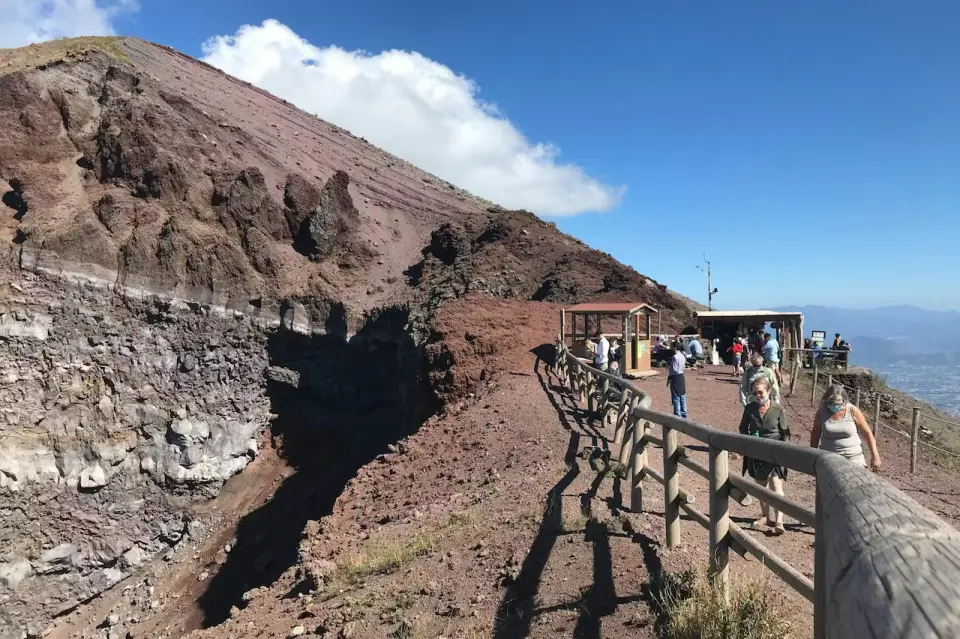
At the summit of Mount Vesuvius, visitors can walk around a section of the main crater, observing the steam vents (fumaroles) and the geological features up close. The experience offers a thrilling outdoor adventure with breathtaking panoramic scenery, including stunning views over the entire Bay of Naples, the city of Naples, Pompeii, and the surrounding islands like Capri and Ischia on clear days.


