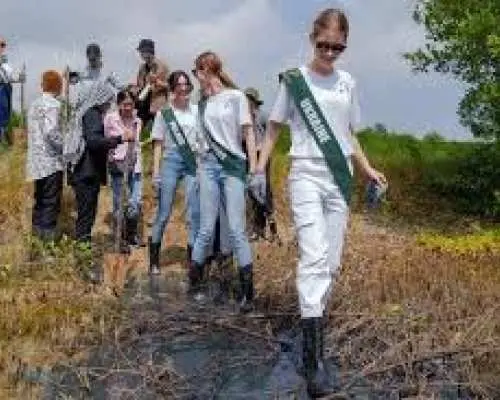
Exploring the "Green Lungs" of Saigon: A Journey to Can Gio
Located just 40 kilometers from the bustling heart of Ho Chi Minh City, the Can Gio Mangrove Forest, a UNESCO-recognized World Biosphere Reserve, offers a breathtaking escape into the wild. Often referred to as the "green lungs" of the region, this sprawling sanctuary of biodiversity provides a stark, refreshing contrast to the urban heat and noise. A journey here is not just a sightseeing trip; it is an immersion into a delicate ecosystem where the land meets the sea.
The Enchanting Mangrove Maze
The adventure typically begins with a scenic boat ride through a labyrinth of waterways. As the engine hums, you are surrounded by dense thickets of Rhizophora (mangrove trees), their arched, tangled roots reaching into the brackish water like skeletal fingers. The air is cool and heavy with the scent of salt and damp earth. Deep within the forest lies the Vam Sat Ecological Site, where you can climb the Tang Bong Tower to witness a panoramic view of the endless emerald canopy stretching toward the horizon. The silence of the forest is broken only by the distant call of tropical birds and the gentle ripple of the tide.
A Playful Encounter at Monkey Island
The highlight for many travelers is Monkey Island, home to over a thousand long-tailed macaques. Upon entering, you are immediately greeted by these clever, mischievous primates. They are remarkably bold, often swinging from branches or lounging along the pathways, waiting for a chance to interact with visitors. While their antics—grooming one another or diving into the water to cool off—are endlessly entertaining, they are also notorious "pickpockets." Keeping a firm grip on your hats, glasses, and snacks is part of the thrill and the challenge of visiting their kingdom.
A Reflection on Nature
Beyond the excitement, Can Gio serves as a poignant reminder of resilience. Having been largely destroyed during the war, the forest was meticulously replanted by locals, blossoming into the lush paradise it is today. As the sun sets, casting a golden hue over the mudflats and shimmering water, one feels a profound sense of gratitude for this sanctuary. It is a place that teaches us the importance of conservation and the quiet beauty of a world left untouched by concrete.