



【Chongqing】Huguang Guild Hall Ticket (Ancient Guild Hall Complex / Gaiwan Tea / Folk Performance)
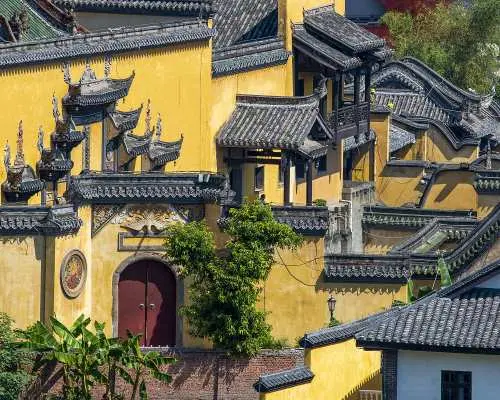
- Explore the largest ancient guild hall complex in China, featuring roofs that blend Huguang and Chongqing styles, along with intricate wood and stone carvings depicting scenes from 'Journey to the West' and 'Investiture of the Gods'
- Step back 300 years at the ancient stage, watch the 'Zui Bayu' folk performance at the century-old theater, and experience a dialogue across time with legendary Peking Opera masters
- Enjoy traditional Chongqing gaiwan tea amidst the Ming and Qing architectural complex
Package Options
Attraction Tickets
| Ticket type | E-ticket (direct entry) |
| Exhibit type | Traditional culture exhibits |
| Attraction type | History & culture, Traditional house experience |
| Tour types | Guided tour |
| Additional service & facility | Barrier free |
| Transport convenience | Near city center |
Product Info
Hidden in the Yuzhong Peninsula, this ancient architectural complex in the heart of the city is the Chongqing Huguang Guild Hall.
The Chongqing Huguang Guild Hall is the largest surviving ancient guild hall complex in China. First built during the Kangxi reign of the Qing Dynasty, it integrates Ming and Qing architectural styles with both Huguang and Chongqing characteristics. It features hundreds of stone, wood, and brick carvings, including exquisite reliefs depicting themes from 'Journey to the West' and 'Investiture of the Gods.' The ancient stage within the hall has witnessed performances by masters like Mei Lanfang. Today, visitors can watch the intangible cultural heritage performance 'Zui Bayu,' experience traditional arts like Sichuan Opera face-changing and Bayu dance, and feel the boldness and vibrant local life of Bayu culture. Visitors can also enjoy gaiwan tea with snacks within the guild hall for an immersive experience of Chongqing's slow-paced lifestyle.

The Huguang Guild Hall is a century-old Hui-style ancient building in Chongqing, and it is also the largest Qing Dynasty guild hall complex in China. Hundreds of stone carvings, wood carvings, and brick carvings are arguably the most exquisite and splendid part of the entire guild hall.

Taking the elevator from the Dongshuimen Bridgehead offers a panoramic view of the entire complex, the Chongqing Yangtze River Cableway, and the Twin Towers.

Recommended itinerary: Immigration Museum – Yuwang Palace – Yuzhou Academy – Guangdong Guild Hall – Qi'an Guild Hall – Sculpture Museum

The "Drunken Chongqing" performance is staged at the century-old Qi'an Mansion, featuring traditional arts such as Sichuan opera face-changing, Chongqing dance, and Huangyang carrying pole dance. The performers will interact closely with the audience, showcasing Chongqing's unique dock culture and everyday life.

You can also enjoy this 40-minute immersive performance while sipping tea from a covered bowl.

Purchase Notice
Huguang Guild Hall Opening Hours: Monday to Sunday 09:00-21:00 (July 18 - August 29), Monday to Sunday 09:00-18:00 (August 30 - December 31)
Includes/Excludes
- Huguang Guild Hall Tickets
- Tickets for the performance "Drunken Chongqing" (requires purchase of a corresponding package)
- One cup of gaiwan tea (requires purchase of a corresponding set meal)
- Other expenses not mentioned above
- Tips
How to Use
Simply show your order voucher QR code at the ticket counter for entry.
How to Use Your Voucher
- Please present your QR code on-site
Voucher Redemption Period
- The voucher must be redeemed on the selected date and within operating hours; Invalid after expiration
Validity Period
- The voucher must be used on the selected date and within operating hours; Invalid after expiration
Experience Location
Location Name: Huguang Guild Hall
Address: Chongqing Huguang Guild Hall, Yuzhong District, Chongqing, ChinaCancellation Policy
- Cancellations 2 day(s) (inclusive) before the selected date are allowed. Unused orders can be canceled for free
- Cancellation is not allowed between 0–1 days from the selected date. Orders cannot be canceled or modified, and refunds will not be granted.
- Due to time zone differences, the confirmed cancellation date is based on the supplier’s local time. Please allow 2–5 business days to process your cancellation request, after which the cancellation fee will be charged according to the product’s cancellation policy. Once your refund request is confirmed, KKday will initiate the refund to your original payment method within 15 days. The actual refund timing depends on your card-issuing bank’s policy.
FAQ
1. What is the historical background of the Huguang Guild Hall in Chongqing?
The Huguang Guild Hall is recognized as the largest existing Qing Dynasty guild hall complex in China. Its construction commenced in 1759, serving as a vital gathering point for immigrants primarily from Hubei and Hunan, along with Guangdong and Guangxi, who relocated to Chongqing. It played a significant role in facilitating trade, cultural exchange, and community life for these migrant groups.
2. What types of traditional folk art performances can visitors experience at Huguang Guild Hall?
At Huguang Guild Hall, visitors can experience the captivating "Drunken Chongqing" folk art performance. These traditional shows, which often feature elements inspired by Peking Opera, are staged on a remarkable 300-year-old ancient stage within a century-old opera house, offering a deep immersion into local cultural heritage and theatrical arts.
3. What is the significance behind the name 'Huguang Guild Hall'?
The name 'Huguang' historically refers to the combined regions of Hubei and Hunan provinces in China. The Huguang Guild Hall was established by merchants and migrants predominantly from these areas, along with those from Guangdong and Guangxi, as they settled in Chongqing. It functioned as a central community hub, ancestral temple, and business association for these groups.
4. What unique architectural features define the Huguang Guild Hall complex?
The Huguang Guild Hall complex showcases a distinctive blend of typical ancient Chinese architectural styles and traditional Chongqing characteristics. Key features include its ornate gable and hip roofs, reflecting regional influences, and intricate relief wood carvings. These carvings vividly depict stories from classical Chinese novels such as "Journey to the West" and "Investiture of the Gods".
5. Is traditional covered bowl tea available to experience at Huguang Guild Hall?
Yes, visitors have the opportunity to enjoy traditional Chongqing covered bowl tea at Huguang Guild Hall. This authentic tea experience allows guests to savor local flavors within the historical setting of Ming and Qing dynasty architecture, providing a serene and culturally enriching moment amidst the guild hall's ancient charm.
6. What makes the Huguang Guild Hall a historically significant architectural complex?
Huguang Guild Hall holds significant historical value as China's largest and most well-preserved ancient guild hall complex from the Qing Dynasty. Its importance stems from its grand scale, the intricate preservation of its architectural details, and its role as a living testament to the migration patterns, economic dynamics, and social structures of its era, serving as a crucial community and spiritual center.
7. What famous stories are depicted in the relief wood carvings at Huguang Guild Hall?
The elaborate relief wood carvings throughout the Huguang Guild Hall vividly portray narratives from celebrated Chinese classical literature. These intricate artworks specifically feature themes and characters from "Journey to the West," a famous adventure tale, and "Investiture of the Gods," an epic narrative of mythological battles and celestial appointments, offering cultural insights into ancient folklore.
8. How old is the ancient stage within Huguang Guild Hall where performances are held?
The Huguang Guild Hall is home to a remarkable 300-year-old ancient stage. This venerable stage is integral to a century-old opera house, providing an exceptionally authentic and historically rich backdrop for traditional folk art performances. It connects visitors directly to centuries of Chinese theatrical and cultural heritage within the complex.


