




Taipei|In-depth guided tour of the National Palace Museum|Commentary service in Chinese, English and Japanese|KKday exclusive tour
- One of the four major museums in the world, the Palace Museum, is a must-see attraction in Taiwan.
- Professional tour guides will take you to gain an in-depth understanding of the richest Chinese cultural relics and history in the world's historical civilizations.
- Commentary in Chinese, English and Japanese, no worries about communication; departure every day, only four people can travel
- KKday's special car has prepared the travel routes and transportation, and provides professional Chinese, English and Japanese tour guides on board. You can choose from the most diverse itineraries, and the whole trip is comfortable and considerate!
- "KKday Exclusive Tour" specially selected routes: Jiufen Shifen , Jiufen Shuttle , Taichung One-day Tour , Gaomei Wetland , Yangmingshan , Pingtung Kenting , Cingjing Sun Moon Lake , Yilan Zhangmei Grandma , Wuling Farm , Alishan, Chiayi , if you are looking for a thousand yuan, start now
- "KKday Exclusive Tour" City Tour Route: History of Longshan Temple
Sightseeing Tours
| Tour Type | Shared tour |
| Transportation method | Get there on your own |
| Minimum participant requirement | 4 travelers |
| Tour types | Guided tour |
| Sightseeing type | Museum tour |
Product Info
- Itinerary features -
- A 2.5-hour guided tour of the Forbidden City’s highlights, allowing you to understand the stories of the Forbidden City’s cultural relics at once
- Professional Chinese, English and Japanese guides provide wonderful explanations, making travel no longer just a quick tour, but a deep dive into history.
- Use one-to-many wireless tour guides to provide commentary to ensure the quality of each passenger’s tour
-Itinerary information-
- Meeting time: 09:30 for morning session, 14:30 for afternoon session
- Meeting point: In front of the reception desk B1 of the National Palace Museum
- Trip length: 2.5 hours
- Disbandment location: National Palace Museum
- Please purchase tickets for the Palace Museum by yourself. You can click on the link below to purchase tickets. You can easily pass by showing your electronic voucher.
For foreign nationals, please click here . For Taiwanese, please click here.
- Introduction to attractions -
- The National Palace Museum was established on October 10, 1925. It inherits the cultural relics collected by the Chinese palaces of the Song Dynasty, Yuan Dynasty, Ming Dynasty, and Qing Dynasty. It is famous for its collection of Chinese cultural relics and is one of the best world-class museums. The collection combines the essence of the millennium royal family, including nearly 700,000 artifacts, calligraphy and paintings, books and documents, and Asian cultural relics. It is a unique cultural asset in the world. It attracts millions of domestic and foreign audiences to visit the museum every year, playing a role in cultural creation, The cornerstone of tourism and economic and industrial development.
(Image source: Taipei Tourism Network)

National Palace Museum

A katydid and locust on jade cabbage

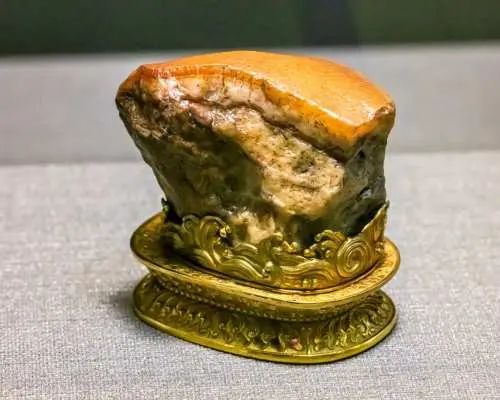
The meat-shaped stone is like soft and elastic Dongpo meat

There are words engraved inside Mao Gong's tripod

The child's expression and clothing pattern on the white porcelain baby pillow are very detailed.

Three cultural relics from the early Western Zhou Dynasty - Zhaoyou, Gui with Double Dragon Pattern and Zuyi Zun
Important Info
Reminders
A minimum of 4 traveler(s) are required for the tour to depart. If the number of participants does not reach the minimum requirement, the tour will be canceled. An email regarding tour cancellation will be sent 1 day(s) before the departure date
Please be sure to arrive at the designated location 10 minutes before. To avoid delaying your subsequent journey, no latecomers will be accommodated.
In order to maintain good visitor quality, crowd control measures are in place at the exhibition venue. The Institute may arrange, guide visitors to enter and adjust visiting routes as necessary.
It is strictly prohibited to bring flammable liquids, corrosive liquids, pyrotechnics, compressed gases, sharp instruments and other items into the exhibition venue; the institute may conduct necessary safety inspections on the belongings of visitors entering the venue.
It is prohibited to use flash, fill-light equipment, tripods, self-timers and other auxiliary equipment when taking photos or photography at the exhibition site; cultural relics that are not open for photography will be marked with prohibition signs.
The volume of conversations in the exhibition venue needs to be reduced, and communication equipment or electronic devices should be muted. It is prohibited to smoke, throw away paper scraps, debris, or other behaviors that affect the rights and safety of tourists. Eating and drinking is prohibited in the exhibition hall; drinking water must be provided in the drinking area or seating area outside the exhibition hall.
It is prohibited to bring animals (except guide dogs), plants, food and drinks other than bottled water, balloons or other objects deemed by the institute to affect the order of the exhibition to enter the venue. Backpacks, travel bags, suitcases and other items (over A3 size) should be stored; coin locker storage services are provided outside the exhibition venue (coins will be returned after use), and stored items can only be retrieved on the same day.
Assemblies, speeches, parades, touting, distribution of advertisements, promotional materials or other commercial activities without the permission of the institute are prohibited at the exhibition venue.
Visitors to the exhibition venue should abide by these instructions. If any behavior hinders the safety of the exhibition venue or the order of the visit, the hospital may persuade, stop, refuse entry or order to leave the venue.
The air conditioning in the exhibition hall is based on the needs of cultural relics maintenance and preservation, and the temperature is maintained at 20 degrees Celsius to 24 degrees Celsius, reminding visiting guests to pay attention to indoor and outdoor temperature changes.
Since the cultural relics in the museum may be moved to other exhibition halls for exhibition, there is no guarantee that popular ornamental cultural relics such as jade cabbage, meat-shaped stone, Mao Gongding, etc. will be available. Please be aware of the situation on that day.
Free admission dates: January 1, New Year’s Day, Lantern Festival, May 18, International Museum Day, September 27, World Tourism Day, October 10, National Day
In this activity, you can tip today's service staff according to your feelings and wishes. The recommended amount is: NTD 200-300 (thank you for your hard work), NTD 400-500 (very good), NTD 500 or more (great, thank you for having you)
FAQ
1. What are the most renowned exhibits to see at the National Palace Museum?
The National Palace Museum houses an extraordinary collection of Chinese artifacts. Must-see exhibits include the exquisite Jadeite Cabbage, the lifelike Meat-shaped Stone, and the historically significant Mao Gong Ding. Other highlights often feature intricate porcelain, calligraphy, and landscape paintings spanning thousands of years, showcasing the depth of Chinese dynastic art and culture.
2. What are the best public transportation options to get to the National Palace Museum from Taipei city center?
To reach the National Palace Museum from central Taipei, you can take the MRT. Take the Tamsui-Xinyi Line (Red Line) to Shilin Station, then exit through Exit 1. From there, transfer to bus R30 (Red 30) or any other bus that clearly states "National Palace Museum" on its route, such as buses 255, 304, 815, or Small 18, Small 19. The bus ride typically takes about 10-15 minutes directly to the museum entrance.
3. How much time should be allocated for an in-depth visit to the National Palace Museum?
For an in-depth and comprehensive visit to the National Palace Museum, it is generally recommended to allocate at least 3 to 4 hours. This duration allows ample time to explore the main exhibition halls, appreciate the key artifacts like the Jadeite Cabbage and Meat-shaped Stone, and absorb the extensive historical and cultural information. If you wish to visit special exhibitions or explore the surrounding gardens, more time may be needed.
4. Is visiting the National Palace Museum in Taipei recommended for those interested in Chinese cultural history?
Absolutely. The National Palace Museum is a global cultural landmark and highly recommended for anyone interested in Chinese cultural history. It offers an unparalleled opportunity to witness over five thousand years of Chinese art and civilization through its vast collection of imperial artifacts. An in-depth guided tour can further enrich the experience by providing expert commentary and fascinating historical narratives, bringing the exhibits to life.
5. What languages are available for the guided tours at the National Palace Museum?
Guided tours at the National Palace Museum are designed to cater to a diverse international audience. Professional tour guides are available to provide commentary in multiple languages, typically including Chinese, English, and Japanese. This ensures that visitors from various backgrounds can gain a deep understanding of the cultural relics and their historical significance, enhancing their overall museum experience.
6. What facilities or services does the National Palace Museum offer to enhance the visitor experience?
The National Palace Museum offers various facilities and services to enrich visitor experience. These include professional guided tours providing in-depth historical context, multilingual audio guides, accessibility services for those with mobility needs, and a gift shop. There are also dining options like cafes and a restaurant, as well as resting areas throughout the museum to ensure a comfortable and engaging visit for all guests.
7. What is generally included with a standard admission ticket to the National Palace Museum?
A standard admission ticket to the National Palace Museum typically grants access to all permanent exhibitions and most special exhibitions within the main museum building. It allows visitors to explore the extensive collection of Chinese imperial artifacts, including renowned treasures. Additional services like audio guides or guided tours are usually separate, but the ticket ensures full access to the museum's core cultural offerings.
8. When is the best time of day or week to visit the National Palace Museum to avoid crowds?
To experience the National Palace Museum with fewer crowds, it's generally best to visit on weekday mornings, shortly after opening (around 9:00 AM) or in the late afternoon, about two hours before closing. Tuesdays through Thursdays are often less busy than weekends or Mondays. Avoiding public holidays and school breaks can also significantly improve the tranquility of your visit, allowing for a more focused appreciation of the exhibits.


