
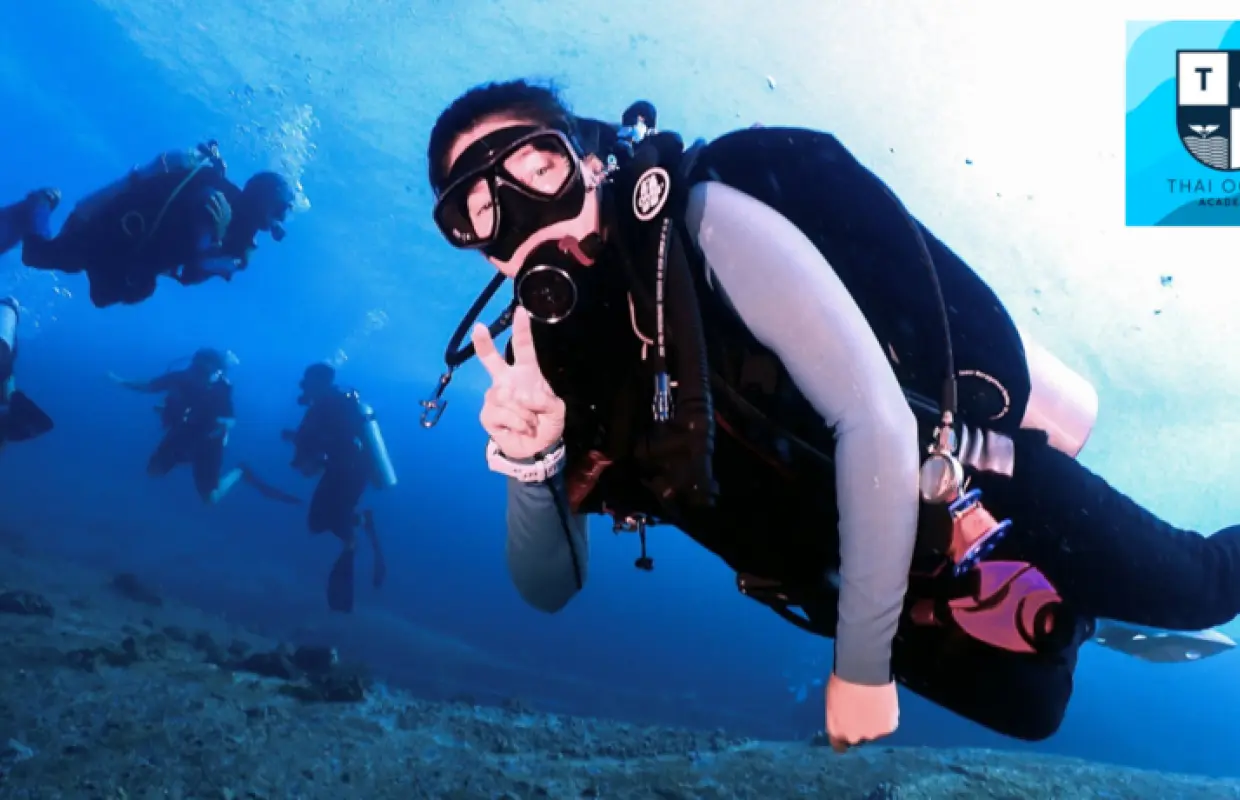


Thai Ocean Academy Diving Experience | Thailand
Start your diving adventure with hands-on training from certified instructors for safe, confident dives.
- Explore deeper underwater worlds and enhance your skills for various diving environments
- Master advanced technical diving skills, specialized equipment, and procedures
- Deepen your knowledge of marine ecosystems and contribute to ocean conservation and restoration
- Learn from passionate, expert instructors who guide you to dive safely and responsibly
Package Options
Water Activities
| Water activity type | Diving |
| Activity level | Beginner, Intermediate, Advanced |
| Transportation method | Get there on your own |
Product Info
— What You Can Expect —
At Thai Ocean Academy, immerse yourself in a comprehensive diving experience tailored to divers of all levels. Our Recreational Diving Certification is perfect for beginners, with certified instructors teaching essential skills for safe diving
For those looking to advance, our Scuba Diving Certification prepares you to explore deeper underwater environments. Experienced divers can enhance their skills through our RAID Technical Scuba Training, which covers advanced techniques and specialized equipment. Additionally, our DEEP Program offers in-depth environmental studies on marine conservation, ecosystems, and restoration, allowing certified divers to expand their expertise.
Throughout your journey, our passionate instructors will ensure that you dive safely, confidently, and responsibly. With competitive pricing and conveniently located courses in Bangkok, Thai Ocean Academy makes it easy to start your diving adventure and grow your skills.
— Important Info —
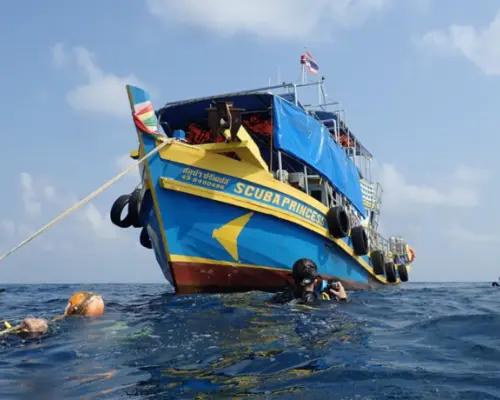
- Meeting point: Bali Hai Pier, Pattaya (map)
- Walk-ins are not accepted. Please reach out to the contact number in the voucher, KKday message, or call 02-821-5950 to make an appointment in advance.
Let our expert instructors guide you through every step of your underwater adventure


Dive into a whole new adventure and explore the world beneath the waves.


Purchase Notice
- The shop does not accept walk-ins. Please book an appointment at least 1 day in advance of your intended visit date.
- After you book a service, please reach out to the contact number in the voucher, KKday message, or call 02-821-5950 to make an appointment in advance.
- The confirmed bookings cannot be amended, canceled, or refunded.
- You may request to move your booking time up to 48 hours before the confirmed reservation time. Rebooking or rescheduling is not possible in case of a late or no-show without messaging us beforehand.
- If you have high blood pressure, heart conditions, allergies, or other medical conditions, please consult with your doctor before signing up for any services.
- In the event of an adverse situation where you need to reschedule or cancel your booking, please send a message via KKday with proof at least 1 to 2 days in advance before your visit date.
Reminders
Please arrive at least 15 minutes before the service time
If you arrive later than the scheduled appointment time, it may not be possible to extend the service duration. Reservations may be subject to cancellation without a refund if the delay exceeds 15 minutes
Please reach out to the contact number in the voucher, KKday message, or call 02-821-5950 to make an appointment in advance.
How to Redeem Your Voucher
How to Use Your Voucher
- Please present the e-voucher on-site
Meeting Point
Location Name: Bali Hai Pier
Address: Bali Hai PierCancellation Policy
- Once the order has been completed, it cannot be canceled, modified, or refunded
- Due to time zone differences, the confirmed cancellation date is based on the supplier’s local time. Please allow 2–5 business days to process your cancellation request, after which the cancellation fee will be charged according to the product’s cancellation policy. Once your refund request is confirmed, KKday will initiate the refund to your original payment method within 15 days. The actual refund timing depends on your card-issuing bank’s policy.
FAQ
1. Are specific certifications required to participate in diving experiences in Thailand with Thai Ocean Academy?
To participate in introductory diving experiences with Thai Ocean Academy, generally no prior certification is needed as courses like 'Discover Scuba Diving' are designed for beginners. However, to pursue full recreational diving certifications like Open Water Diver, you must meet basic health and swimming requirements. Advanced courses will require completion of prerequisites such as the Open Water Diver certification.
2. What are the key differences between PADI and SSI diving certifications for those interested in courses through Thai Ocean Academy?
Both PADI and SSI are globally recognized diving organizations offering comprehensive certification. PADI traditionally has a more structured, standardized curriculum, while SSI often provides more flexibility in course delivery, allowing instructors to adapt to student pace. Both emphasize safety and skill mastery, ensuring high-quality training. Choosing between them largely depends on personal preference for learning style, and both are widely accepted worldwide.
3. What is the typical duration to complete PADI certification courses at Thai Ocean Academy in Thailand?
The typical duration for a PADI Open Water Diver certification course at Thai Ocean Academy ranges from 3 to 4 days. This includes a combination of online or classroom theory sessions, confined water skill practice, and open water dives. The actual time can vary based on individual learning pace, weather conditions, and the specific course schedule chosen.
4. What is the '120 rule' and how does it apply to diving safety during courses or experiences in Thailand?
The '120 rule' often refers to a guideline for dive planning, suggesting that the sum of the maximum depth (in feet) and bottom time (in minutes) for a no-decompression dive should not exceed 120. This rule helps divers, especially during recreational dives in Thailand, to stay well within no-decompression limits and minimize the risk of decompression sickness, ensuring safer underwater experiences.
5. How is the '1/3 rule' applied to air management for safe diving practices in Thailand?
The '1/3 rule' is a crucial air management principle for safe diving, particularly relevant for dives in Thailand involving overhead environments or remote locations. It states that one-third of your air supply should be used for the outbound journey, one-third for the return journey, and one-third should be kept as a reserve for emergencies. This ensures you always have sufficient air for a safe ascent and contingency situations.
6. What types of diving certifications are available through Thai Ocean Academy in Thailand?
Thai Ocean Academy offers a comprehensive range of diving certifications, catering to all levels from beginners to advanced divers. These include recreational diving certifications such as Open Water Diver, Advanced Open Water Diver, and Rescue Diver. Additionally, for those seeking specialized training, technical diving certifications are also available to explore deeper underwater worlds and master advanced skills.
7. What are the post-diving flying restrictions to consider after completing a diving experience in Thailand?
After single no-decompression dives, it's generally recommended to wait at least 12 hours before flying. For multiple dives or multi-day diving, a longer surface interval of at least 18 hours is advised. This allows dissolved nitrogen in your body to dissipate safely, significantly reducing the risk of decompression sickness during changes in cabin pressure, ensuring a safe return travel after your Thailand diving experience.
Get Help


