
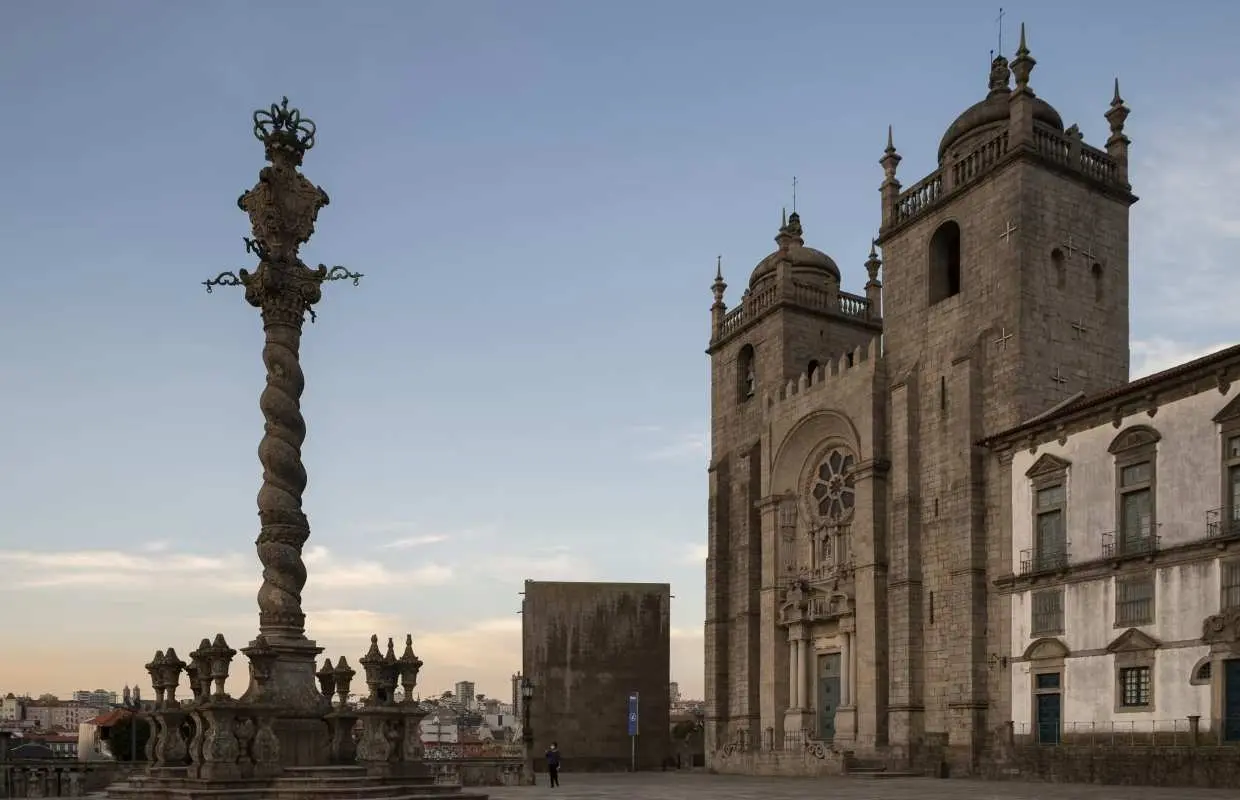


Porto Cathedral Entry Ticket|Portugal
- Visit one of Porto's oldest and most beautiful landmarks, the Cathedral of Porto
- Admire the citadel-like exterior and mystical interior, featuring a central nave and azulejo-clad biblical scenes
- Enjoy breathtaking views of the undefeated city from its prime location
- Climb the tower for stunning panoramas of the Douro River and Porto
Package Options
Product Info
- What You Can Expect -
Don't miss the opportunity to explore one of Porto's most historic and stunning landmarks.
Perched in a prime spot, the cathedral boasts breathtaking views both inside and out. Its fortress-like exterior stands as a guardian over the "cidade invicta" (the undefeated city), while the interior features a majestic central nave and cloisters adorned with intricate biblical scenes depicted in traditional Portuguese azulejos.
With online tickets, you can complete your visit by ascending the tower, where you'll be rewarded with spectacular vistas of the Douro River and the city of Porto.

The building's exterior

a unique collection of biblical scenes
Important Info
Includes/Excludes
- Admission to the Cathedral of Porto
- Access to the cloisters and the museum
- Access to the tower with unique views over the city
- Tips
- Insurance
- Dining expenses
- Other expenses not mentioned above
How to Redeem Your Voucher
How to Use Your Voucher
- Please present the e-voucher on-site
Experience Location
Location Name: Catedral do Porto
Address: Catedral do PortoMonday 09:00–17:30
Tuesday 09:00–17:30
Wednesday Closed
Thursday 09:00–17:30
Friday 09:00–17:30
Saturday 09:00–17:30
Sunday 09:00–17:30
Cancellation Policy
- Once the order has been completed, it cannot be canceled, modified, or refunded
- Due to time zone differences, the confirmed cancellation date is based on the supplier’s local time. Please allow 2–5 business days to process your cancellation request, after which the cancellation fee will be charged according to the product’s cancellation policy. Once your refund request is confirmed, KKday will initiate the refund to your original payment method within 15 days. The actual refund timing depends on your card-issuing bank’s policy.
FAQ
1. Do visitors need a ticket to enter the Porto Cathedral?
While entry to the main nave of the Porto Cathedral is often free, accessing certain areas like the cloisters and the cathedral tower typically requires a ticket. Visitors looking to explore these specific parts of this historic landmark should plan to purchase an entry ticket. Booking through KKday offers a convenient way to secure your tickets in advance, streamlining your visit to this significant monument.
2. What are the main architectural highlights inside the Porto Cathedral?
Inside the Porto Cathedral, visitors can admire its mystical interior, which showcases a blend of Romanesque, Gothic, and Baroque architectural elements. Key highlights include the central nave, the exquisite cloisters adorned with traditional Portuguese azulejo tiles depicting biblical scenes, and various chapels with intricate altarpieces. The transition between different styles reflects its long history and evolution.
3. What panoramic views can be seen from the tower of Porto Cathedral?
Climbing the tower of Porto Cathedral offers breathtaking panoramic views of the city. From this vantage point, visitors can enjoy stunning vistas of the Douro River winding through the landscape, the vibrant Ribeira district with its colorful houses, and other prominent city landmarks. It provides an excellent perspective of Porto's unique topography and historic urban fabric.
4. Is there a specific dress code required for visiting Porto Cathedral?
Yes, as a religious site, visitors to Porto Cathedral are generally expected to adhere to a respectful dress code. This typically means covering shoulders and knees. It is advisable to avoid overly revealing clothing to ensure entry and show respect for the sacred environment. Comfortable walking shoes are also recommended due to the cathedral's cobblestone surroundings and internal stairs.
5. What is the historical background of the Cathedral of Porto?
The Cathedral of Porto, or Sé do Porto, is one of the city's oldest and most significant monuments, with construction beginning in the 12th century. It has undergone numerous renovations and additions throughout the centuries, incorporating various architectural styles from Romanesque to Gothic and Baroque. It played a crucial role in the city's religious and civic life, witnessing key historical events and transformations.
6. What public transportation options are available to reach Porto Cathedral?
Porto Cathedral is conveniently located and accessible via public transportation. The nearest metro station is São Bento, which is famous for its stunning azulejo-tiled interior and just a short uphill walk from the cathedral. Several bus lines also have stops within walking distance, making it easy to reach from various parts of the city. Taxis and ride-sharing services are also available for direct access.
7. Is it worthwhile to visit the Porto Cathedral for its historical and cultural value?
Visiting Porto Cathedral is highly worthwhile for anyone interested in history, architecture, and culture. As one of Porto's oldest monuments, it offers a deep dive into the city's past, showcasing centuries of architectural evolution and artistic expression. Its historical significance, combined with its impressive interior and exterior, provides a rich cultural experience that highlights the heritage of Porto.
8. How much time should one plan for a visit to Porto Cathedral, including the tower?
For a comprehensive visit to Porto Cathedral, including exploring the main nave, the cloisters, and climbing the tower for panoramic views, it is advisable to allocate approximately 1 to 1.5 hours. This allows ample time to appreciate the architectural details, the azulejo panels, and to enjoy the stunning cityscapes from the top without feeling rushed.


