


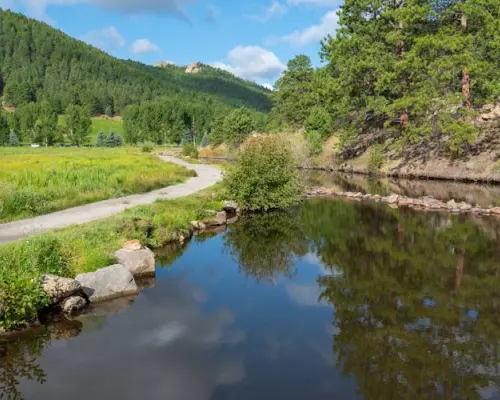
Denver Foothills Explorer Tour
- Visit the must-see Denver Foothills on this half-day guided tour.
Sightseeing Tours
| Tour Type | Shared tour |
| Tour types | Guided tour |
| Sightseeing type | Natural sights |
Product Info
Purchase Notice
Reminders
Please refer to your voucher for final information regarding meeting points, pick-up locations, and pick-up time
Meeting point description: Meet at the USA flagpole outside of Union Station.(1701 Wynkoop St, Denver, CO 80202, USA)
Know in advance:This tour is for ages 8+
Wear layers so that you can shed them if you are hot and bundle up if you are cold, as well as comfortable shoes
Remember to bring: A reusable water bottle
Sunscreen
A camera
FAQ
1. What are the Denver Foothills, and what makes this region unique for visitors?
The Denver Foothills represent the transitional zone between the flat plains of Denver and the majestic Rocky Mountains. They are unique for their dramatic elevation changes, diverse ecosystems that blend prairie and mountain environments, and distinctive red rock formations. This region offers immediate access to stunning mountain-like scenery and a variety of outdoor activities just outside the city.
2. What areas are generally considered within the geographic boundaries of the Denver Foothills?
Geographically, the Denver Foothills extend westward from Denver, encompassing the initial rise in elevation towards the Continental Divide. Key areas typically include portions of Jefferson County, Boulder County, and Douglas County, characterized by their hilly terrain, significant geological formations, and immediate proximity to the main mountain ranges.
3. Are specific localities like Arvada or Golden considered part of the Denver Foothills?
Golden is definitively considered part of the Denver Foothills, known for its iconic Table Mountains and Clear Creek Canyon, which cuts through the foothills. Arvada, while located west of Denver, primarily lies within the plains, though its westernmost edges might border the very fringes of the foothills terrain.
4. What kind of landscape and topography can one expect to see in the Denver Foothills?
Visitors to the Denver Foothills will encounter a diverse landscape featuring rolling hills, steep canyons, and striking rock outcroppings, including famous flatirons and hogbacks. The topography varies significantly, transitioning from lower-elevation grasslands and shrublands to higher-elevation Ponderosa pine forests, often providing impressive scenic overlooks.
5. What natural environment and wildlife are typically found within the Denver Foothills?
The Denver Foothills boast a rich natural environment, supporting diverse flora such as various grasses, shrubs, and coniferous trees like Ponderosa pines and Douglas firs. This ecosystem is home to a range of wildlife, including deer, elk, black bears, mountain lions, coyotes, and a variety of bird species, making it a prime spot for nature observation.
6. What notable towns or localities are popular to visit within the Denver Foothills for scenic views or activities?
Popular towns and localities in the Denver Foothills include Golden, Evergreen, Morrison (home to Red Rocks Park and Amphitheatre), and Idaho Springs. These areas offer access to numerous parks, extensive hiking and biking trails, historic sites, and scenic drives, serving as excellent starting points for exploring the region's natural beauty and attractions.
7. How does the elevation in the Denver Foothills compare to Denver city, and what should visitors know about the altitude?
The Denver Foothills begin immediately west of Denver, with elevations starting around 6,000 feet and rapidly ascending to over 8,000 feet, sometimes even higher. Denver city itself sits at approximately 5,280 feet. Visitors should be aware of the higher altitude and prepare for thinner air, which can cause mild effects, and be ready for potential rapid changes in weather conditions.
8. What geological features characterize the formation of the Denver Foothills?
The Denver Foothills are primarily characterized by prominent geological features such as hogbacks, cuestas, and anticlines. These striking formations were created by the dramatic uplift of the Rocky Mountains millions of years ago, tilting and exposing distinct layers of ancient sedimentary rock that were once deposited in vast inland seas.
Get Help


