


Cultural Experiences
| Location | Outdoor |
| Cultural experience type | Traditional culture experience |
Product Info
Purchase Notice
Includes/Excludes
Reminders
Please refer to your voucher for final information regarding meeting points, pick-up locations, and pick-up time
Meeting point description: Meet your guides 20 minutes before tour start time at the bus terminal at Tromsø Havn Prostneset. There are two entrances. One is by the buses and one is between the Terminal and the Clarion Edge. The guides will wait for you by the buses ready to depart to camp. If you go to the wrong entrance, walk through the terminal to the other entrance and you will find the guides there. The guides will be wearing blue jackets with the logo 'Tromso Arctic Reindeer' on them.(Samuel Arnesens gate 5, 9008 Tromsø, Norway)
How to Redeem Your Voucher
How to Use Your Voucher
- Please present the e-voucher on-site
Validity Period
- The voucher must be used on the selected date and within operating hours; Invalid after expiration
Cancellation Policy
- Once the order has been completed, it cannot be canceled, modified, or refunded
- Due to time zone differences, the confirmed cancellation date is based on the supplier’s local time. Please allow 2–5 business days to process your cancellation request, after which the cancellation fee will be charged according to the product’s cancellation policy. Once the cancellation is confirmed, you will receive your refund within 14 working days.
FAQ
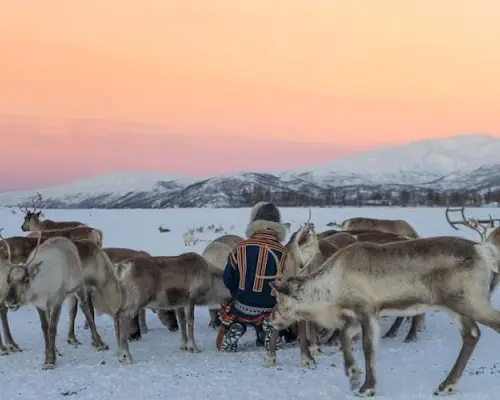
The Sami are an Indigenous people with a distinct national and ethnic identity, separate from the countries (Norway, Sweden, Finland, Russia) their traditional territory, Sápmi, spans. At a reindeer camp, visitors learn about their unique language, traditional attire (gákti), spiritual beliefs, and deep connection to nature, particularly their reverence for reindeer herding. These elements are core to their cultural identity and ancestral heritage, highlighting their sovereignty and rich cultural legacy.
The Sami people are Indigenous to Sápmi, their traditional territory in Northern Europe, and are not descendants of Vikings. Archaeological evidence suggests their presence in the region for thousands of years, predating the formation of modern nation-states. Discussions at reindeer camps often cover their ancient origins, unique genetic markers, and their distinct cultural evolution, highlighting a rich history tied to the Arctic environment and reindeer herding, independent of Scandinavian or Viking heritage.
At a Sami reindeer camp, visitors can immerse themselves in traditional cultural practices. This includes listening to joik, a unique form of Sami vocal music and storytelling that conveys emotions and narratives about nature, animals, and people. Guests also learn about handicrafts (duodji), the significance of traditional clothing, and the respectful relationship with reindeer. These experiences offer profound insight into their ancient way of life and spiritual connection to the land.
Sami nomadic reindeer herding is intricately tied to seasonal cycles and reindeer migration patterns. In winter, reindeer are often moved inland to seek shelter and lichen pastures, away from harsher coastal conditions. In spring, they return to the coast for calving and abundant vegetation. At a reindeer camp, visitors learn about these movements, the traditional knowledge guiding them, and how Sami herders adapt their lifestyle and settlements (like lavvus or modern cabins) to ensure the well-being of their herds throughout the year.
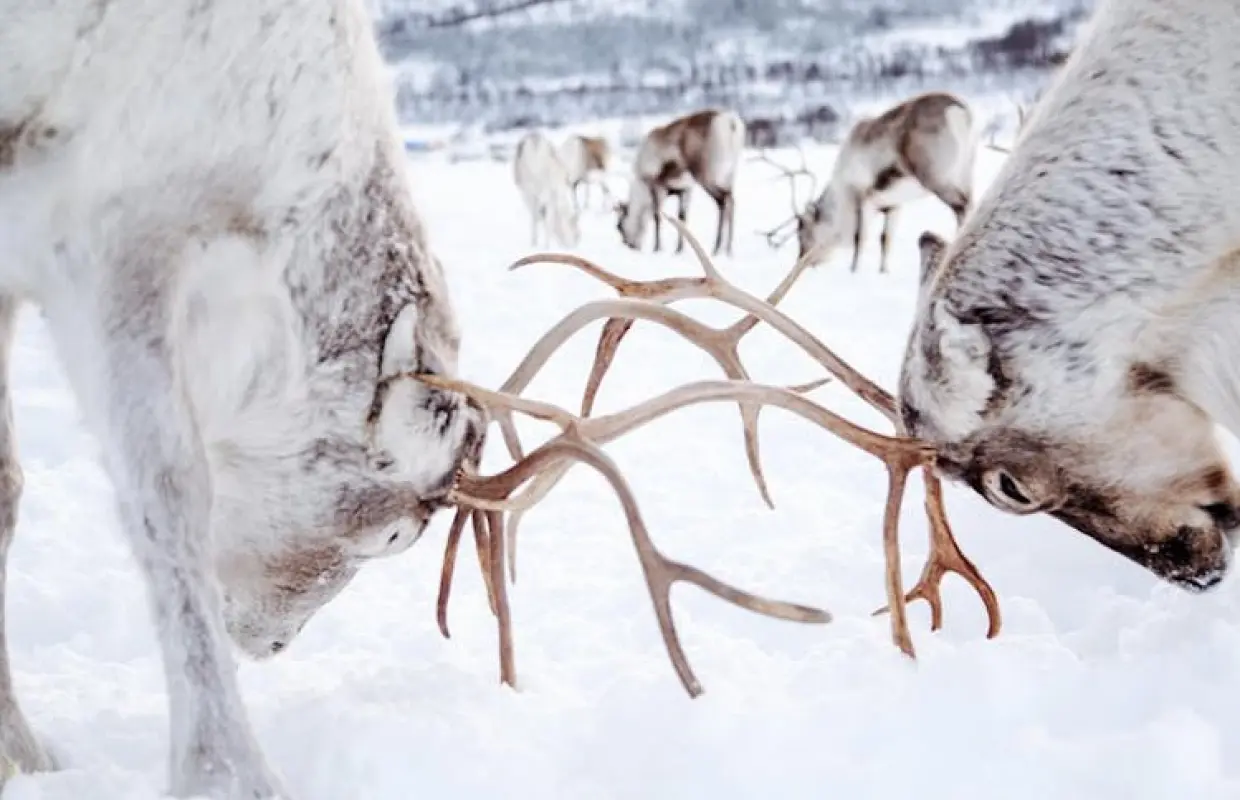
Reindeer are indispensable to traditional Sami transportation and daily life. Historically, they served as draft animals, pulling sleds (pulks) across vast snow-covered landscapes for herders, families, and goods. Their strong legs and adaptation to Arctic conditions made them ideal for traversing difficult terrain. At a reindeer camp, you can observe their gentle nature and learn how they are still revered, not just for transport but also as a source of food, clothing, and tools, embodying the Sami's sustainable way of life.
Reindeer are fundamental to Sami survival and culture in numerous ways beyond transportation. They provide essential resources: meat for sustenance, hides for warm clothing and shelter, bones and antlers for tools and handicrafts (duodji), and even milk. Their existence shapes Sami language, art, and spiritual beliefs. At the camp, you'll learn about this holistic relationship, understanding how every part of the reindeer is utilized, reflecting a deep respect for nature and a sustainable circular economy vital to Sami heritage.
A Sami reindeer camp offers a unique, hands-on learning environment for children, sparking their imaginations through direct interaction with reindeer and Sami traditions. Kids can meet and feed reindeers, listen to traditional Sami stories and folk songs, and even step inside a traditional Sami hut. This immersive experience allows them to visualize and understand nomadic life, the importance of nature, and a distinct cultural heritage far beyond what textbooks can offer, fostering curiosity and cultural awareness.
Inside a traditional Sami hut, known as a lavvu or goahti, guests can expect an authentic and cozy cultural immersion. Often centered around a warm fire, this setting is perfect for enjoying traditional Sami meals, typically consisting of reindeer meat stew or other local dishes, accompanied by warm drinks. It's a prime opportunity for intimate storytelling, listening to joik, and learning about Sami customs directly from the herders, offering a genuine glimpse into their daily life and hospitality.
Get Help


