

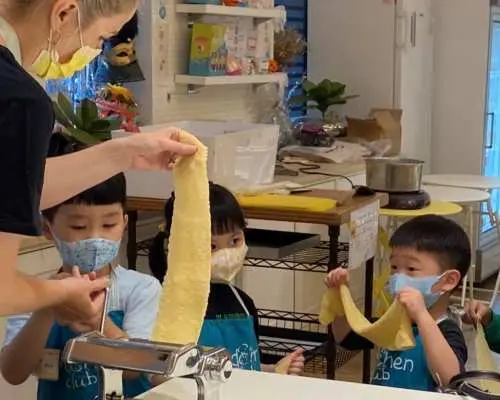


Taipei | [English parent-child DIY] [2-6 years old] Little Einstein Chef Little Einstein Scientific Kitchen | Kidchen Club Neihu Xinyi Store Parent-child English Baking Classroom
- Full English teaching, supplemented by Chinese when necessary
- Learn language, culture, arithmetic, scientific principles and other knowledge
- Learn all-round life skills and develop social skills from an early age
- In the process of cooking food, learn about scientific phenomena such as hot and cold, soft and hard, floating and sinking, and the three states...
- A culinary adventure to explore the world
- A joyful experience combining the five senses and handicrafts
- What you put in your stomach is as important as what you put in your head!
- Small class teaching, classes can start with just 2 people
Package Options
Cultural Experiences
| Location | Indoor |
| Experience type | Language learning |
| Minimum participant requirement | 2 travelers |
Product Info
What You Can Expect
1 Day
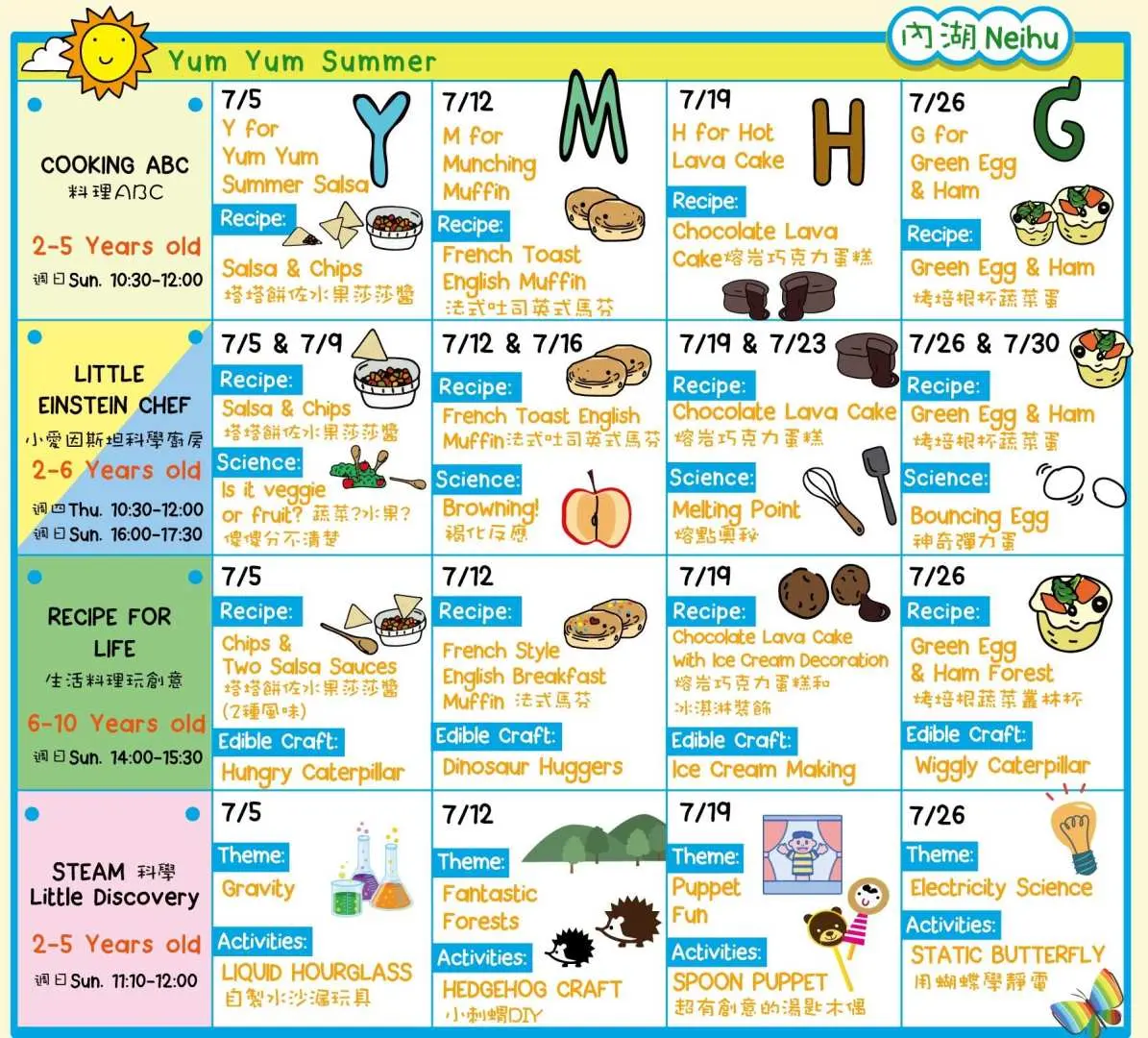
- Neihu July Class Schedule
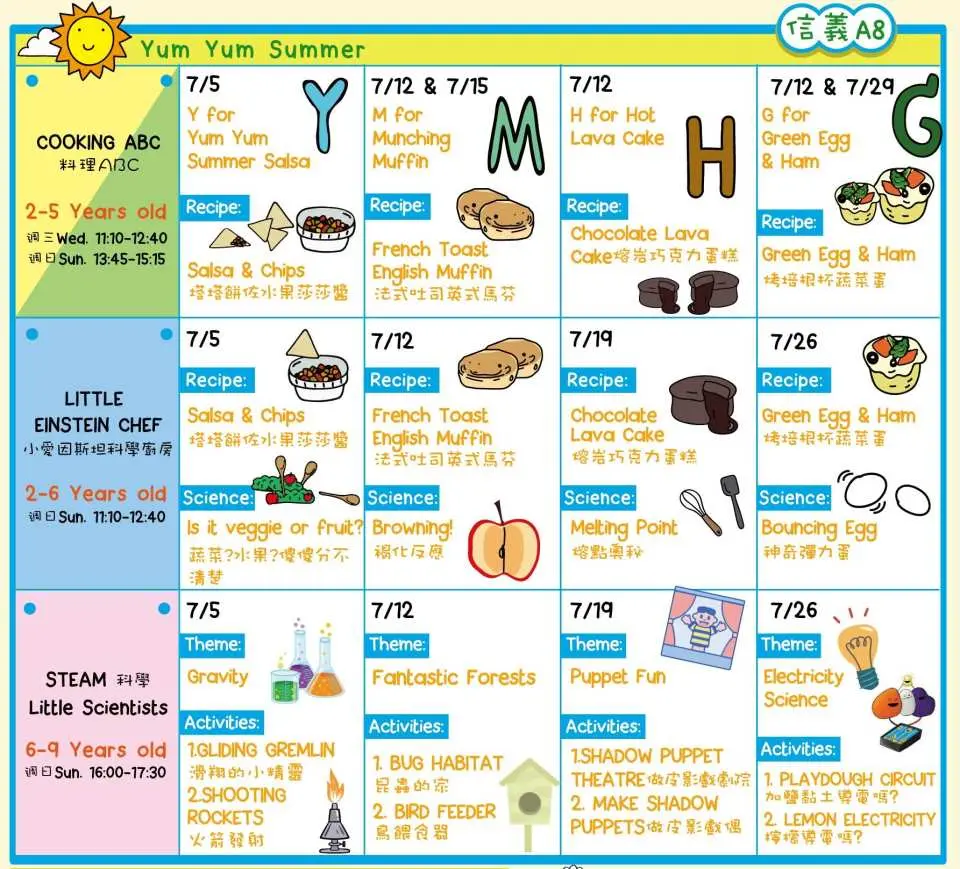
- Xinyi July Course Schedule
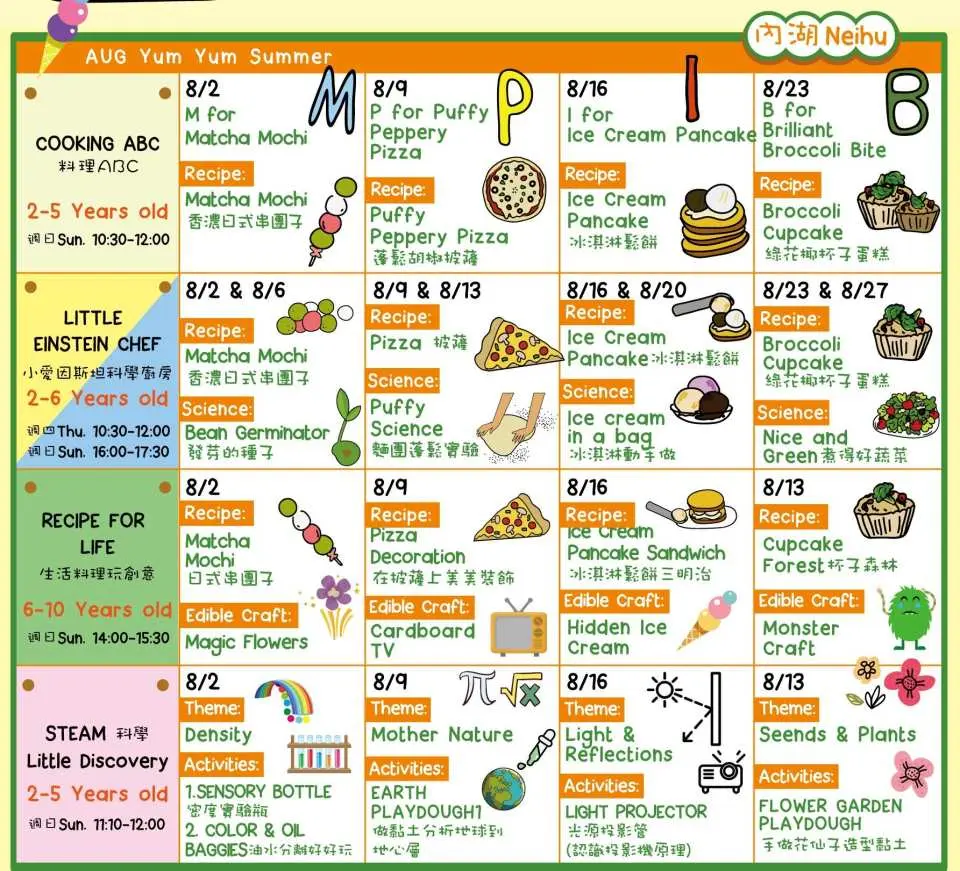
- Neihu August Class Schedule
- Xinyi August Course Schedule


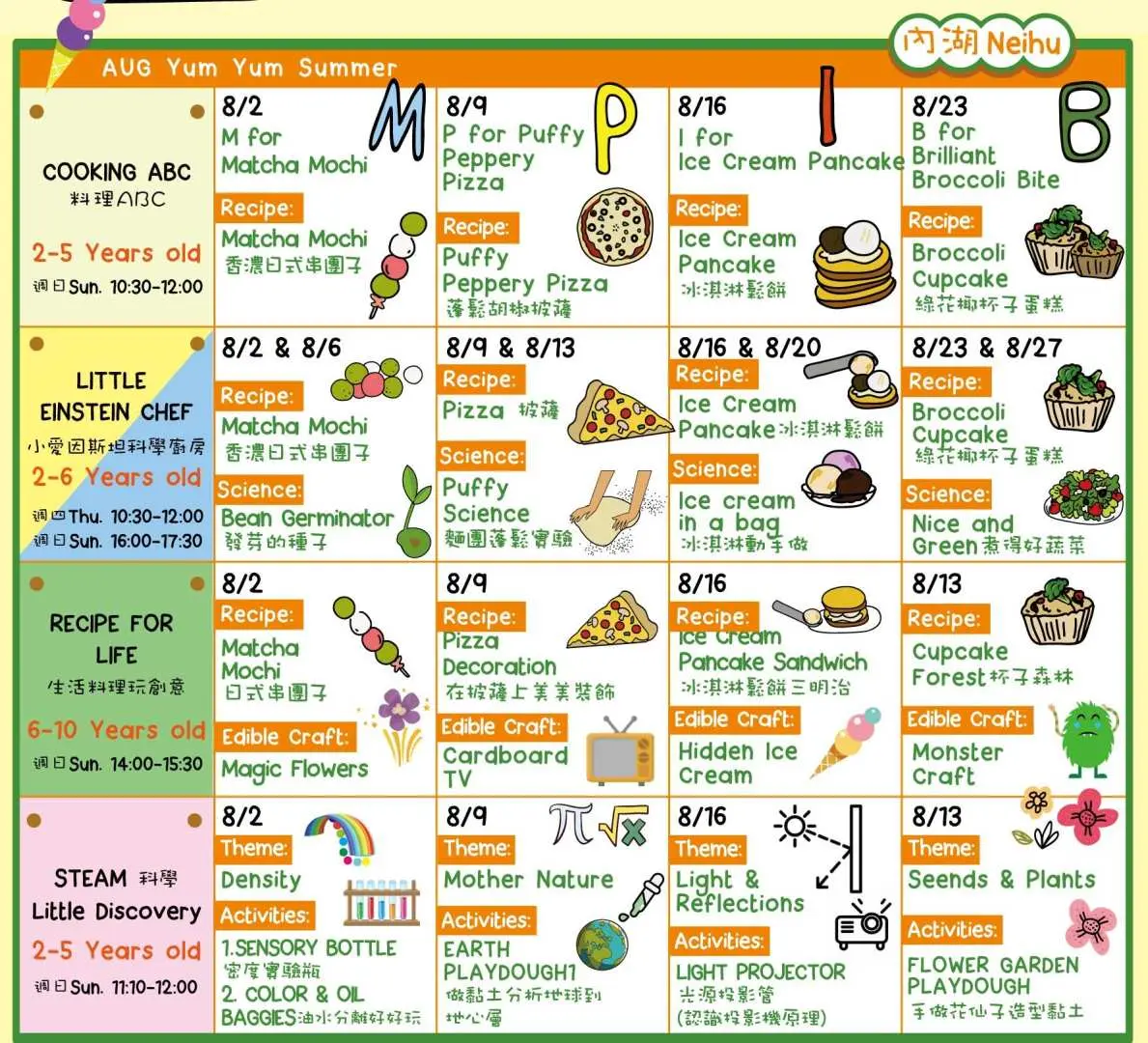
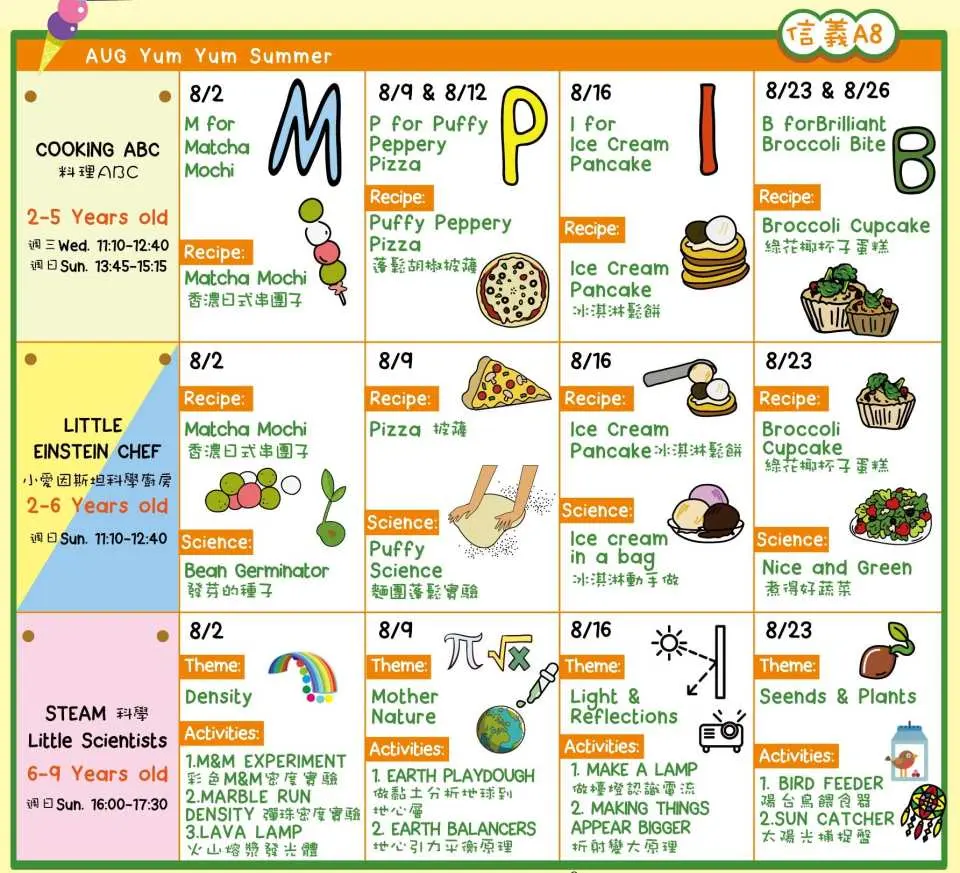

Purchase Notice
Neihu Classroom:
Business colleagues, daily health status tracking, daily hardware disinfection classes before and after business, children aged 2-4 are only allowed to be accompanied by one parent; other parents please wait and observe classes in the parent lounge area Lutheran classroom:
Business colleagues, daily health status tracking, daily hardware disinfection classes before and after business, children aged 2-4 are limited to one parent; other parents please wait outside the classroom.
Includes/Excludes
- Ingredients or working materials / Baking classroom space and facilities / Instructor or baker
- Accident Insurance
- meals
Reminders
The minimum number of people in the tour is 2 people. If there are not enough people to start the class, we will notify you 2 days in advance to reschedule or give you a full refund
Please be sure to arrive at the designated location 5 minutes before. To avoid delaying your subsequent journey, no latecomers will be allowed.
"Newbies Only! First Experience Class" Each person can experience the cooking and STEAM science class once, regardless of branch. In order to avoid repeated purchases or multiple experiences by a single person, the participant’s ID card will be used to verify whether the participant is a member of the Kidchen Club. If any discrepancy is found, the course will not be available and refunds will be issued.
If you are not a first-time visitor to the store, please select the "Single Class" plan for the course type when ordering.
If you are allergic to any food, please state it in the remarks field after placing your order (excluding ingredients that you do not eat)
In order to make the course run smoothly, children aged 2 - 4 years old are required to be accompanied by an adult to participate in the course. Children aged 5 - 12 years old are not accompanied by an adult.
How to Redeem Your Voucher
How to Use Your Voucher
- Please present the e-voucher on-site
Meeting Point
Location Name: Kidchen Club
Address: No. 96, Jinzhuang Road, Neihu District, Taipei CityLocation Name: Shin Kong Mitsukoshi A8, 6F Refreshment Corner (next to French Blue Porcelain)
Address: 6F, No. 12, Songgao Road, Xinyi District, Taipei CityCancellation Policy
- Cancellations 7 day(s) (inclusive) before the selected date are allowed. Unused orders can be canceled for free
- For cancellations made 4 to 6 days prior to selected date, a cancellation fee of 50% will apply
- Cancellation is not allowed between 0–3 days from the selected date. Orders cannot be canceled or modified, and refunds will not be granted.
- Due to time zone differences, the confirmed cancellation date is based on the supplier’s local time. Please allow 2–5 business days to process your cancellation request, after which the cancellation fee will be charged according to the product’s cancellation policy. Once the cancellation is confirmed, you will receive your refund within 14 working days.
FAQ
The Little Einstein Scientific Kitchen class explores fundamental scientific concepts by turning recipes into hands-on experiments. Children learn about physical phenomena such as how heat changes ingredients (hot and cold), material properties (soft and hard), buoyancy (floating and sinking), and the three states of matter (solid, liquid, gas). Each culinary step serves as a scientific procedure, guiding them to understand the science behind food transformation.
The Little Einstein Scientific Kitchen program is specifically designed for children aged 2 to 6 years old. Activities are carefully crafted to be age-appropriate, ensuring young learners can safely and enjoyably engage with scientific cooking concepts through simple, interactive DIY processes suitable for their developmental stage and cognitive abilities.
The Little Einstein Scientific Kitchen class primarily utilizes full English teaching to immerse children in the language. While the instruction is predominantly in English, Chinese is used when necessary to ensure clear understanding and support. This approach helps children naturally acquire English vocabulary and phrases related to cooking, science, and everyday concepts in a fun, interactive learning environment.
In the Little Einstein Scientific Kitchen, parents and children engage in collaborative DIY cooking activities. They work together to transform ingredients using scientific procedures, creating dishes while exploring sensory experiences. This hands-on approach involves mixing, measuring, and observing, fostering teamwork and shared discovery as they create their culinary projects side-by-side, making learning a joyful experience combining the five senses and handicrafts.
Participants in the Little Einstein Scientific Kitchen program can expect diverse educational outcomes. Children learn core scientific principles, develop early language and arithmetic skills, and gain insights into different cultures through food. The program also focuses on cultivating all-round life skills and fostering social development, enhancing both cognitive understanding and practical abilities from an early age.
The Little Einstein Scientific Kitchen class is held at the Kidchen Club Neihu Xinyi Store in Taipei. It offers a focused and engaging learning environment with small class teaching, ensuring personalized attention for each child. Classes can start with just two participants, creating an intimate setting where children can comfortably explore scientific cooking, interact with instructors, and collaborate with peers.
The Little Einstein Scientific Kitchen activities are designed to develop crucial social and life skills. Through collaborative cooking, children learn to follow instructions, share tasks, and communicate effectively with peers and adults. They also develop practical competencies like measuring, mixing, and preparing food, fostering independence, problem-solving, and teamwork from an early age, contributing to their all-round development.
While cooking in the Little Einstein Scientific Kitchen, children directly observe and learn about several specific scientific phenomena. These include the effects of temperature changes (hot and cold), alterations in texture and consistency (soft and hard), principles of buoyancy (floating and sinking), and the transformation of ingredients through the three states of matter (solid, liquid, gas), all within a fun, engaging culinary adventure.
Get Help


