


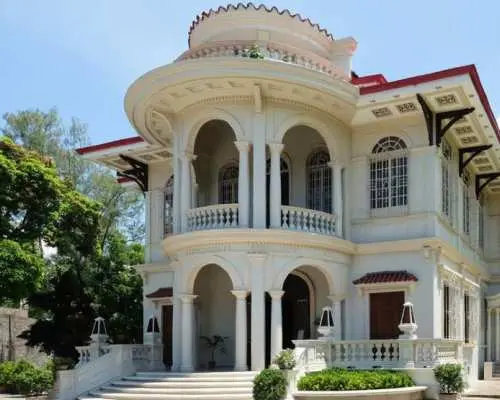
Iloilo Heritage City Private Tour: Casa Mariquit, Jaro Cathedral Church, Molo Mansion & Molo Church | Philippines
- Discover Iloilo City's historic sites and charming towns on a full-day tour perfect for culture enthusiasts.
Package Options


Sightseeing Tours
| Tour Type | Private tour |
| Transportation method | Hotel transfer |
| Sightseeing type | Historic site tour |
| Transport | Charter car |
Product Info
Purchase Notice
- Pick-up within Iloilo City
- Duration of tour: 4-5 hours
- Tour schedule: 8:00 am-1:00 pm and 2:00 pm-7:00 pm
- Please indicate your hotel name and address for pick-up upon checking out
- Children under the age of 3 and below will not be charged but must be accompanied by one (1) legal adult
- Children between the age of 4-11 years old will be charged at a child rate
Reminders
A minimum of 1 traveler(s) are required for the tour to depart. If the number of participants does not reach the minimum requirement, the tour will be canceled. An email regarding tour cancellation will be sent 1 day(s) before the departure date
FAQ
The Iloilo City heritage district is primarily defined by Calle Real (J.M. Basa Street), renowned for its well-preserved Spanish and American colonial architecture, including numerous Art Deco buildings. This historic commercial hub showcases the city's affluent past. Key areas also include the plazas of Jaro, Molo, and the vicinity of Plaza Libertad, where significant ancestral houses, churches like Jaro Cathedral and Molo Church, and public buildings are clustered, reflecting Iloilo's rich cultural legacy.
Iloilo City is famous for its rich history, once hailed as the 'Queen City of the South' during the Spanish colonial era. It's renowned for its well-preserved architectural heritage, including grand ancestral homes and colonial churches like Jaro Cathedral and Molo Church. Culturally, it's known for the vibrant Dinagyang Festival, its distinctive Ilonggo cuisine featuring dishes like La Paz Batchoy and Pancit Molo, and a strong tradition in textile weaving, particularly hablon and sinamay.
The most ideal time to visit Iloilo for a heritage tour experience is during the dry season, generally from November or December to May. The months of December to February offer cooler and more comfortable weather for exploring the city's historical sites on foot. If you wish to experience the vibrant Dinagyang Festival, planning your visit in January is recommended, though it's a peak travel period. Avoiding the rainy season from June to October ensures a more pleasant tour.
Jaro Cathedral Church, also known as the National Shrine of Our Lady of the Candles, is distinct for its all-male saints lining the pillars and its bell tower uniquely separated from the main church structure across the street. Molo Church, on the other hand, is a neo-Gothic masterpiece often called the "feminist church" due to its interior adorned with 16 images of female saints. Both churches are significant landmarks, showcasing remarkable stone architecture and deep historical roots in Iloilo's religious heritage.
The Casa Mariquit is often cited as one of the oldest heritage houses in Iloilo City, dating back to 1803. This ancestral home of the Javellana family, particularly the former Vice President Fernando Lopez Sr., offers a glimpse into Iloilo's affluent past. Visitors can observe its preserved Spanish colonial architecture and explore rooms filled with original furniture, antique artifacts, and historical photographs, providing insight into the lifestyle of prominent Ilonggo families from centuries past.
Tourists can explore Iloilo City's heritage sites like Molo Mansion through various modes of transportation. Iconic jeepneys offer an authentic local experience, following specific routes throughout the city. Taxis and ride-hailing apps like Grab provide a more convenient and direct option. For shorter distances, tricycles are readily available. Many visitors also opt for private car services or guided tours, which offer comfortable and efficient travel between multiple attractions, allowing for a comprehensive exploration of the city's historical landmarks.
Casa Mariquit holds significant historical importance as one of Iloilo City's oldest surviving heritage houses, dating back to 1803. It served as the ancestral home of the prominent Javellana family and later, a residence of former Philippine Vice President Fernando Lopez Sr. The house stands as a testament to the city's rich Spanish colonial past and the lifestyle of its affluent families. Its architectural preservation and connection to influential figures offer invaluable insights into Iloilo's political and economic history.
Exploring Iloilo City's heritage sites offers a unique immersion into its vibrant culture. Visitors can marvel at well-preserved Spanish colonial and Art Deco architecture found in ancestral homes like Molo Mansion and grand churches such as Jaro Cathedral. It's an opportunity to delve into the stories of influential Ilonggo families and experience the city's deep-rooted religious traditions. Additionally, one can savor authentic Ilonggo cuisine, embodying the warmth and hospitality for which Iloilo, often called the "City of Love," is known.
Get Help


