
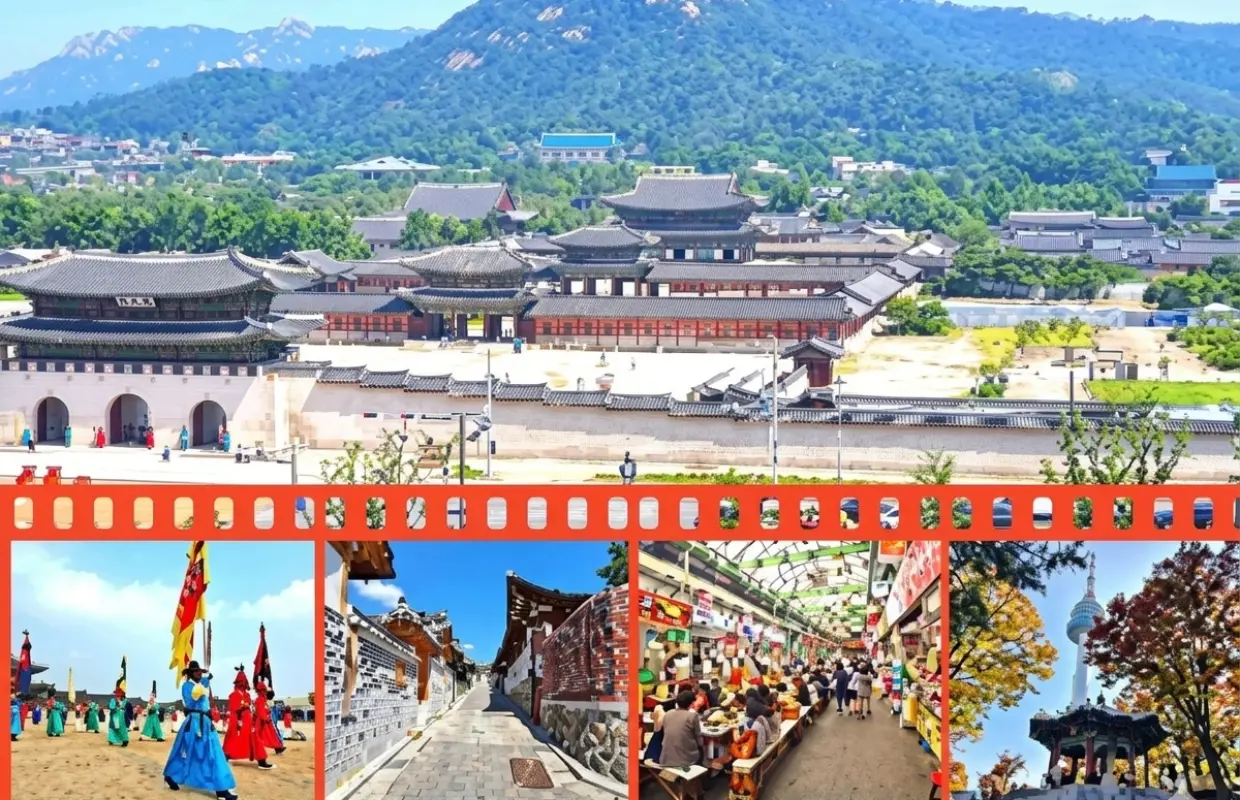


【Japanese-speaking Guide】Enjoy a Full Day at Seoul's Top 8 Hotspots
- Efficiently visit must-see spots in Seoul in just one day.
- Travel comfortably between locations using the tour bus.
- An experienced Japanese-speaking tour guide will provide detailed explanations for each attraction.
Product Info
Purchase Notice
- This tour will be conducted as a shared tour with other customers.
- Please be sure to arrive on time. The tour will depart 10 minutes after the scheduled departure time, and if you are unable to board, you will not be able to join the tour midway or receive a refund.
- Tour schedules may be changed or canceled due to weather, traffic conditions, etc.
- If there are three or fewer participants, we may provide transportation using public transport.
- Due to traffic conditions, there may be slight variations in the travel time.
- We assume no responsibility whatsoever for accidents caused by natural disasters or other causes not provided on this tour.
- Please note that the tour lounge on the 2nd floor of the Lotte Hotel in Myeongdong, which is the meeting point, is not affiliated with the tour operator. Therefore, please refrain from contacting or calling the tour lounge.
- If you wish, we can also drop you off at a sightseeing spot along the tour route.
- Wheelchair access is not available.
- At N Seoul Tower, you will only be able to visit the octagonal pavilion; you will not be admitted to the tower itself.
Reminders
A minimum of 2 traveler(s) are required for the tour to depart. If the number of participants does not reach the minimum requirement, the tour will be canceled. An email regarding tour cancellation will be sent 1 day(s) before the departure date
Please arrive at the designated location 10 minute(s) before the scheduled departure time, as the tour will depart on time
FAQ
1. How can visitors travel between Gyeongbokgung Palace and Bukchon Hanok Village?
Gyeongbokgung Palace and Bukchon Hanok Village are conveniently located close to each other. Visitors can enjoy a pleasant walk of approximately 10-15 minutes between these two iconic sites, experiencing the traditional atmosphere along the way. For those on an organized tour, dedicated transportation is typically arranged, ensuring a seamless and efficient transfer between attractions.
2. What makes Bukchon Hanok Village a worthwhile visit for travelers?
Bukchon Hanok Village offers a unique opportunity to experience Seoul's 600-year history through its beautifully preserved traditional Korean houses. As an active residential area, it provides a glimpse into local life amidst historical architecture. The village is also renowned for its picturesque alleys, offering excellent photo opportunities and scenic views of the city, framed by the surrounding palaces.
3. What are the admission policies and entry requirements for Gyeongbokgung Palace?
Gyeongbokgung Palace requires an admission ticket for general entry, which can be purchased at the palace gates. Visitors wearing a hanbok (traditional Korean attire) are often granted free admission, which is a popular way to enhance the cultural experience. It is recommended to verify the palace's operating hours and any special closure dates before your visit.
4. What are the key differences between Gyeongbokgung Palace and Changdeokgung Palace for visitors?
Gyeongbokgung Palace is known for its grand scale and represents the main royal palace, featuring magnificent architecture and the iconic changing of the guard ceremony. Changdeokgung Palace, a UNESCO World Heritage site, is celebrated for its natural landscaping and the Secret Garden (Huwon), which requires a separate guided tour. Gyeongbokgung offers a grand historical display, while Changdeokgung emphasizes harmony with nature.
5. What makes Eunpyeong Hanok Village distinct from other traditional villages in Seoul?
Eunpyeong Hanok Village offers a unique blend of modern architecture and traditional Korean houses, set against the backdrop of Bukhansan Mountain. Unlike the bustling urban setting of Bukchon or Ikseon-dong, Eunpyeong provides a more tranquil and natural environment. It is ideal for visitors seeking a serene escape and a different perspective on hanok architecture, away from the city's core.
6. What kind of historical experience can visitors expect at Donuimun Museum Village?
Donuimun Museum Village offers an immersive journey into Seoul's past, particularly recreating the streets and atmosphere of the 1960s to 1980s. Visitors can explore various preserved and restored buildings, including traditional houses, a retro barber shop, a comic book store, and a guesthouse. It serves as an interactive cultural space, bringing historical periods to life through its exhibits and architectural details.
7. What views can be seen from the Lotte World Tower Seoul Sky observatory?
From the Lotte World Tower Seoul Sky observatory, situated 555 meters high, visitors are treated to breathtaking panoramic 360-degree views of Seoul. On clear days, you can spot major landmarks such as the Han River, Namsan Mountain, and even parts of Gyeongbokgung Palace. The observatory also features impressive glass floors, providing a thrilling downward view of the city below.
8. What kind of interpretive guidance is provided when visiting Seoul's historical sites and villages?
When exploring Seoul's significant historical sites and traditional villages, such as Gyeongbokgung Palace or Bukchon Hanok Village, visitors can greatly benefit from detailed interpretive guidance. Experienced guides often provide insightful explanations about the rich history, cultural significance, and architectural details of each location, enhancing understanding and appreciation of these unique Korean landmarks.


