Get Exclusive App Deals
Yellowknife 1

Yellowknife

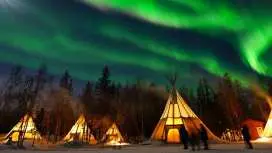
Yellowknife, located in the Northwest Territories of Canada, is one of the most ideal places in the world for aurora viewing. The aurora is visible about 240 nights a year, with a success rate of 90%. Travelers can enjoy the Aurora reflected on the lake in autumn, and experience Arctic activities such as dog sledding and ice fishing in winter. Yellowknife also has many excellent places to watch the aurora including Great Slave Lake, Aurora Village and Madeleine Lake.

Featured activity reviews in Yellowknife

Best time to visit Yellowknife

Data source: Meteostat・Last updated: 2025-09

Weather in Yellowknife throughout the year

Spring (March–May): Average -17.2–8.5°C, cold climate, still icy and snowy, but gradually warming with longer daylight hours. Common activities: Northern Lights viewing (less chance), snow activities (e.g., snowshoeing). Recommended clothing: warm jacket, hat, gloves, scarf, waterproof snow boots.

Summer (June–August): Average 14.6–18.6°C, mild climate, the warmest season in Yellowknife, but with a large diurnal temperature range. Common activities: boating, fishing, hiking, Northern Lights viewing (evenings). Recommended clothing: light jacket, long-sleeved shirt, long pants, comfortable shoes.

Autumn (September–November): Average 10.6–-10.9°C, climate rapidly cooling, higher rainfall, possible snowfall. Common activities: fall foliage viewing (limited opportunity), bird watching. Recommended clothing: warm jacket, sweater, waterproof jacket, comfortable shoes.

Winter (December–February): Average -19.1–-24.9°C, severely cold climate, frequent snowfall, short daylight hours. Common activities: snowmobiling, ice fishing, Northern Lights viewing (best viewing season). Recommended clothing: heavy down jacket, warm underwear, hat, gloves, scarf, waterproof snow boots.

Weather in Yellowknife

Annual average temperature: approx. -2.6°C / Annual rainfall: approx. 230 mm / Summer humidity: 60%–70% / Rainiest month: June

Yellowknife weather by month

MonthJanuaryFebruaryMarchAprilMayJuneJulyAugustSeptemberOctoberNovemberDecember
Temperature-24°C-24.9°C-17.2°C-4.1°C8.5°C14.6°C18.6°C16.3°C10.6°C0.9°C-10.9°C-19.1°C
Rainfall (mm)9.611.394.124.330.821.926.720.225.930.416.6

7-day weather forecast for Yellowknife

Date11/6Friday11/7Saturday11/8Sunday11/9Monday11/10Tuesday11/11Wednesday11/12Thursday
WeatherOvercastLight freezing rainOvercastOvercastOvercastCloudyCloudy
High0.5°C-2.5°C-1.3°C-1.8°C1.4°C1.3°C3.5°C
Low-3°C-6.3°C-6.8°C-4°C-3.8°C-0.9°C1.2°C

Yellowknife travel FAQs and useful info

Is Yellowknife worth visiting?

Yes, Yellowknife is worth visiting for its unparalleled access to the Northern Lights, rich Indigenous culture, gold rush history, and unique northern activities like dog sledding and ice fishing. It offers a small-town feel with attractions such as the Prince of Wales Northern Heritage Centre and vibrant summer festivals, with the best aurora viewing between mid-August to mid-April.

Why visit Yellowknife?

Yellowknife is considered one of the best places in the world to see the aurora, located directly under the auroral oval. The city is a hub for Indigenous culture, with the Prince of Wales Northern Heritage Centre providing insights into the Dene people's history and deep connection to the land. You can explore Yellowknife's gold rush past, adding another layer to its historical appeal.

What is the best month to visit Yellowknife for aurora and activities?

Winter is a great time to experience activities like dog sledding, snowmobiling, and ice fishing in Yellowknife. If you are interested in seeing both the northern lights and enjoying the outdoors, then the best time to visit Yellowknife is September to November or April to May.

Do they speak English in Yellowknife?

Yellowknife is a vibrant northern capital with a large urban centre that offers access to vast northern spaces. English is one of the city's official languages, alongside French and various Aboriginal languages.

How many days do I need for a trip to Yellowknife?

We highly recommend staying at least 4 days and 3 nights in Yellowknife. Statistics indicate there is a 98% chance of aurora viewing if you stay for 3 nights.